The headlines are screaming about a "two to three week" resolution. They are obsessed with the optics of a drone strike in Kuwait and the bravado of a swift executive timeline. It is a comforting fiction. It suggests that modern warfare between major powers is a light switch you can simply flip off when the bill gets too high.
Anyone who has actually sat in the rooms where regional strategy is drafted knows that "three weeks" is not a military timeline. It is a campaign slogan. It ignores the fundamental physics of asymmetric warfare and the reality of how integrated global energy markets actually react to kinetic friction.
If you think a conflict between Washington and Tehran ends with a signature on a deck of a carrier after twenty days, you aren't paying attention to the last forty years of history.
The Myth of the Short War
The "lazy consensus" among political commentators is that superior American fire power translates to immediate political compliance. We saw this logic in 1990, in 2003, and in every intervention in between. It fails because it assumes the adversary plays by the same rules of engagement and victory conditions.
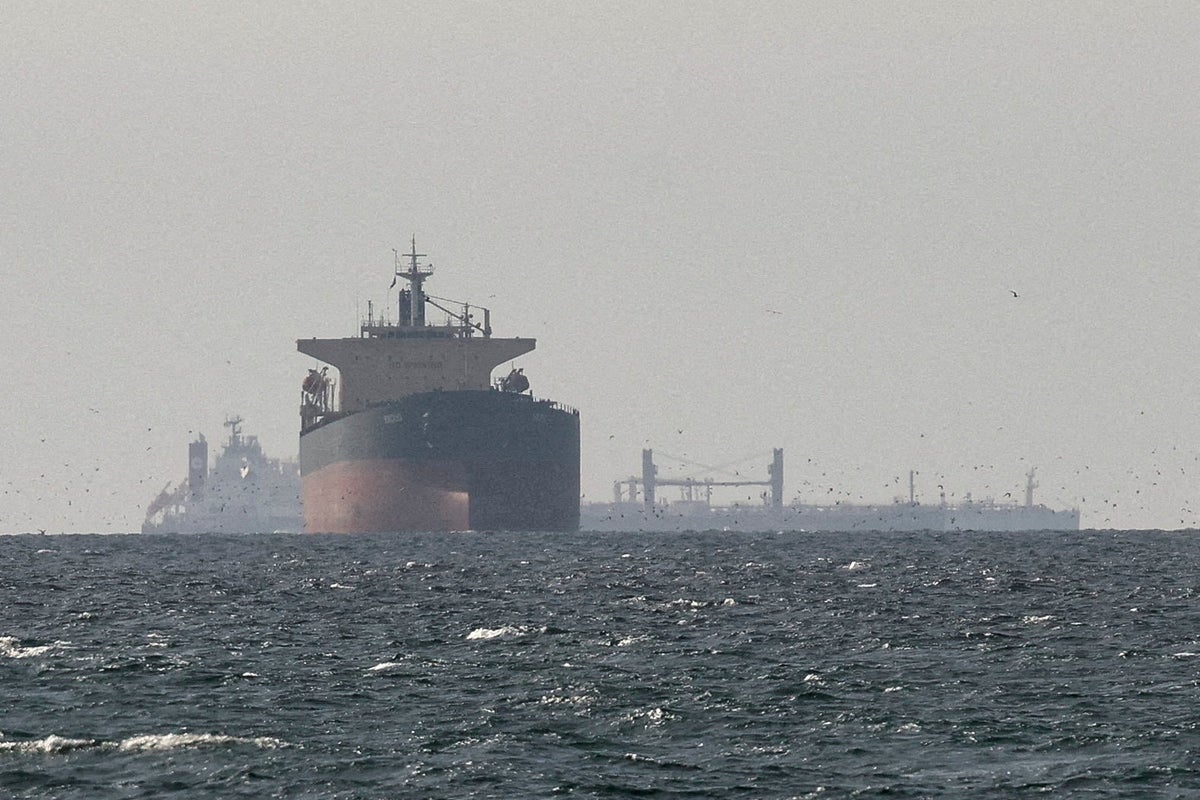
For a centralized military power, victory is the destruction of the enemy's ability to wage organized war. For an asymmetric power like Iran, victory is simply existing on day twenty-one. They don't need to win a dogfight over the Persian Gulf. They just need to ensure that the insurance premiums for a VLCC (Very Large Crude Carrier) stay high enough to break the back of the global logistics chain.
When a drone sparks a fire at a facility in Kuwait, the damage isn't measured in charred concrete. It is measured in the "war risk" surcharges added to every barrel of oil moving through the Strait of Hormuz. You cannot "bomb" an insurance premium back to zero in three weeks.
The Kuwait Signal Is Not What You Think
The media treats the Kuwait airport incident as a localized provocation. That is a fundamental misreading of the map. Kuwait is the canary in the coal mine for regional stability. It is the logistics hub that keeps the Northern Gulf tethered to Western interests.
Targeting Kuwaiti infrastructure isn't an attempt to start a front-line war; it is a demonstration of reach. It tells every neighbor—the UAE, Bahrain, Saudi Arabia—that the umbrella of Western protection has holes.
The conventional wisdom says that a rapid US response will deter further strikes. The reality? Kinetic escalation often validates the adversary's strategy. If a $20,000 drone can trigger a billion-dollar deployment of carrier strike groups and interceptors, the cost-to-effect ratio is heavily skewed in favor of the "losing" side.
The Energy Trap
Let's dismantle the idea that "energy independence" shields the West from a prolonged Gulf conflict. This is a favorite talking point for politicians who don't understand how a globalized commodity market functions.
Even if the US produces more barrels than it consumes, oil is priced globally. A disruption in the Gulf sends prices surging in Houston, London, and Tokyo simultaneously.
Imagine a scenario where the Strait of Hormuz is not "closed" (which is militarily difficult) but simply "contested."
- Shipping companies refuse to send crews into the zone.
- Lloyd's of London designates the entire region a total loss risk.
- The flow of 20 million barrels a day drops to 5 million.
In that scenario, the "three-week" clock is ticking against the global economy, not the insurgent forces. The pressure to cease hostilities will come from internal economic collapse in the West, not from military fatigue in the East.
Precision Munitions vs. Persistent Presence
The competitor articles love to talk about "surgical strikes." I have seen the aftermath of "surgical" campaigns. They are rarely clean, and they never stay within the lines.
Precision strikes can take out a command center or a drone factory. They cannot take out an ideology, and they certainly cannot take out the decentralized network of regional proxies that would activate the moment the first Tomahawk is launched.
A conflict with Iran is not a box to be checked. It is a regional contagion. You don't "end" it; you manage the burn. Suggesting a two-week window ignores the reality that every missile fired creates a decade of geopolitical blowback.
The Flawed Premise of People Also Ask
When people ask "Will there be a war with Iran?" or "How long would a war last?", they are asking the wrong questions. The war has been ongoing for decades—it’s just fought through cyber-attacks, currency manipulation, and proxy skirmishes in third-party nations.
The "hot" phase people fear is just a change in temperature, not a change in state.
If you want a "brutally honest" answer to how it ends: It doesn't. It evolves. We move from the "kinetic phase" (the part that makes for good TV) back into the "attrition phase." Anyone promising a clean exit is either lying to you or to themselves.
Why the "Short War" Rhetoric Is Dangerous
This rhetoric isn't just wrong; it’s a strategic liability. By setting a three-week expectation, leadership creates a "failure trap." When the conflict inevitably drags into month two, the public perceives it as a quagmire, even if military objectives are being met.
The adversary knows this. Their entire strategy is to outlast the Western attention span and the news cycle.
We have become a society that expects "war" to have the duration of a Netflix limited series. But geography and history operate on a different scale. The Gulf is not a theater where you can take a bow and exit stage left.
Stop looking at the calendar. Start looking at the structural vulnerabilities of the global supply chain. That is where this conflict will be won or lost, and it won't happen in twenty-one days.
The fire in Kuwait wasn't a fluke. It was a proof of concept. And the concept is that as long as you can make the world’s most vital waterway unsafe, you don't need to win a war to dictate the terms of the peace.