War doesn't just break buildings. It breaks people's ability to buy bread. A new UN report just dropped a bombshell that should keep every regional leader awake at night. If the current tensions between Iran and its neighbors or international powers spiral into a full-scale war, we're looking at four million people across the Gulf being shoved below the poverty line. That’s not a slow decline. That’s an overnight collapse.
The UN Development Programme (UNDP) and the Economic and Social Commission for Western Asia (ESCWA) aren't being dramatic. They're looking at the math. When supply chains snap and oil prices go haywire, the poorest people pay the highest price. You might think the wealthy Gulf nations are insulated by their sovereign wealth funds. They aren't. Not when it comes to the millions of migrant workers and low-income families who keep those economies running.
Why a War in Iran Spells Economic Suicide for the Region
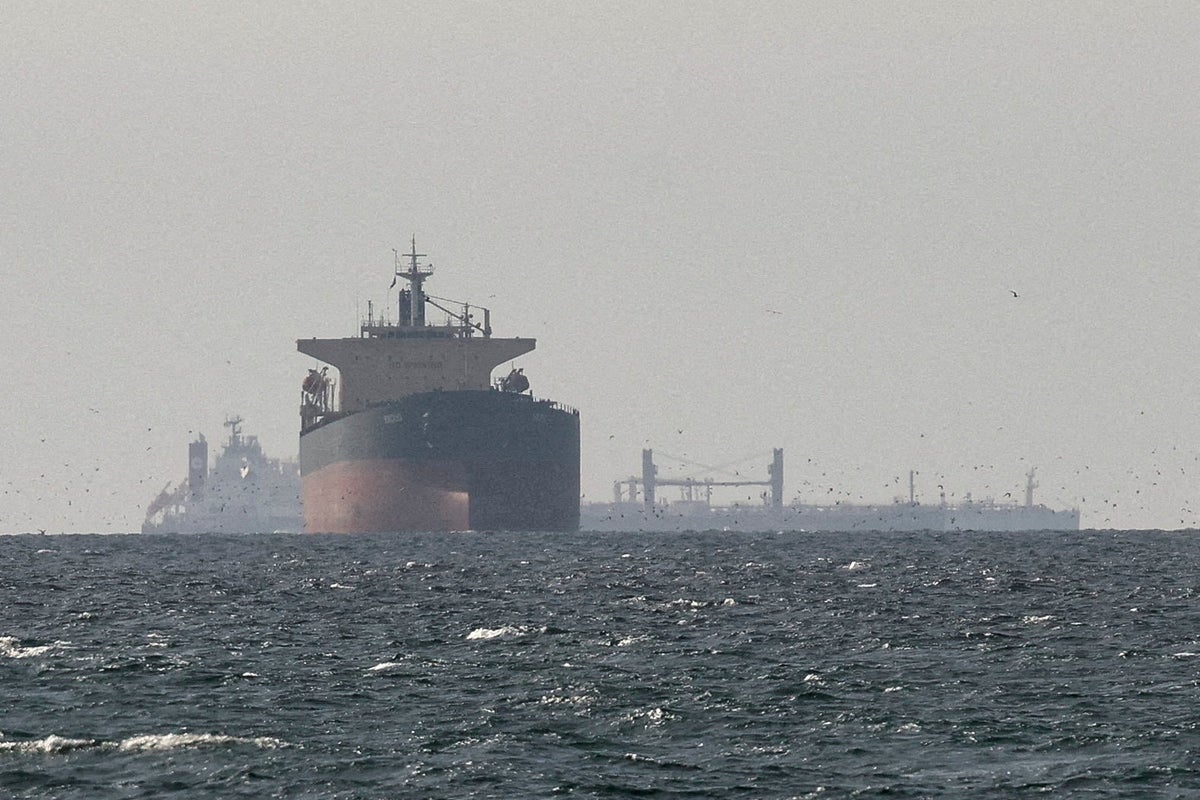
We often talk about war in terms of missiles and drones. We should talk about it in terms of shipping containers and calorie counts. The Gulf region depends on the Strait of Hormuz for almost everything. It’s a literal choke point. If that gets blocked or becomes a high-risk combat zone, insurance premiums for cargo ships don't just go up—they explode.
Food security is the first domino to fall. Most Gulf countries import the vast majority of what they eat. You can't eat oil. If a conflict breaks out, the cost of importing basic grains and dairy will skyrocket. The UN warns that this isn't just about Iran's internal economy. The shockwaves will hit Iraq, Kuwait, and even the UAE. People who are currently "getting by" will suddenly find their monthly paycheck doesn't cover two weeks of groceries.
The Migrant Worker Ghost Town
The Gulf's economic engine runs on millions of workers from South Asia and Southeast Asia. These people send billions in remittances back home. A war doesn't just hurt the Gulf; it starves families in India, Pakistan, and Bangladesh.
If construction projects stall and tourism dies because of regional instability, these workers lose their jobs instantly. They don't have a safety net. Most of them don't have citizenship or long-term residency rights. We’re talking about a humanitarian disaster where millions of people are stuck in a war zone with no income and no way to get home. It’s a recipe for chaos.
The Oil Price Trap
People usually think a war in the Middle East is "good" for oil-producing countries because prices go up. That's a myth. Or at least, it’s a very dangerous half-truth. While the price per barrel might hit $150, the cost of extracting, insuring, and actually shipping that oil becomes a nightmare.
Infrastructure gets targeted. Refineries become liabilities. The revenue gain from high prices is wiped out by the massive cost of security and the total shutdown of other economic sectors like aviation and retail. You can't run a luxury mall in Dubai or a tech hub in Riyadh if the airspace is closed and the sea is mined.
Social Stability is at Stake
When you push four million people into poverty, you aren't just changing their bank balance. You're changing the social fabric. Poverty breeds desperation. Desperation breeds unrest.
The UN report highlights that the regional "middle class" is actually quite fragile. A 20% increase in food prices could be the tipping point. We saw what happened during the Arab Spring when bread prices rose. This time, the scale could be much larger because the economies are more interconnected than they were fifteen years ago.
The Iraq Factor
Iraq is perhaps the most vulnerable player in this scenario. Its economy is deeply tied to Iran through trade and energy. If Iran’s economy collapses under the weight of war, Iraq loses its primary source of electricity and a massive market for its goods.
The UN predicts that Iraq would see the most rapid increase in poverty rates. The country is still trying to find its footing after decades of conflict. Another hit now would be catastrophic. It’s not just about the people in Baghdad or Basra; it’s about the millions of internally displaced persons who are already living on the edge.
Breaking the Cycle of Fragility
The problem is that the region's growth has been lopsided. There’s a lot of "shiny" wealth but not enough "deep" resilience. Diversification efforts like Saudi Arabia's Vision 2030 or Qatar's National Vision 2030 are great on paper, but they require peace to function. You can't build a global tourism destination in a combat zone.
Governments need to stop thinking about defense only in terms of military hardware. They need to think about food silos, localized manufacturing, and social safety nets that actually reach the bottom 20% of the population. If they don't, the four million people the UN is talking about won't just be a statistic. They will be the face of a regional collapse.
What Needs to Happen Right Now
Waiting for the first shot to be fired is too late. The UN is calling for immediate regional cooperation on food security. This means creating shared grain reserves that aren't dependent on the Strait of Hormuz. It means stabilizing trade routes that bypass the most sensitive areas.
It also means that the international community has to stop looking at the Gulf as just a gas station. If four million people fall into poverty, the migration crisis that follows will make previous waves look small. Europe and Asia have a direct stake in making sure this war never happens.
Start looking at your own supply chains. If you're running a business in the region, you need a "Plan B" for logistics that doesn't rely on a single shipping lane. Governments need to fast-track social protection programs and ensure that migrant workers have a path to safety. The warning has been issued. Ignoring it is a choice—and it's a choice that will cost millions of lives.