Rome in October smells of damp cobblestones, roasting chestnuts, and an ancient, stubborn fatigue. If you stand near the Tiber on a brisk morning, watching the Vespas buzz past like angry hornets, you can almost feel the rhythmic churning of a political graveyard. Italy has long possessed a grim reputation for chewing up leaders and spitting them out before their shoes are even scuffed. Cabinets rise like morning mist and vanish by noon. Sixty-eight governments in seventy-eight years. That is not a democracy operating; that is a revolving door spinning so fast it creates a draft.
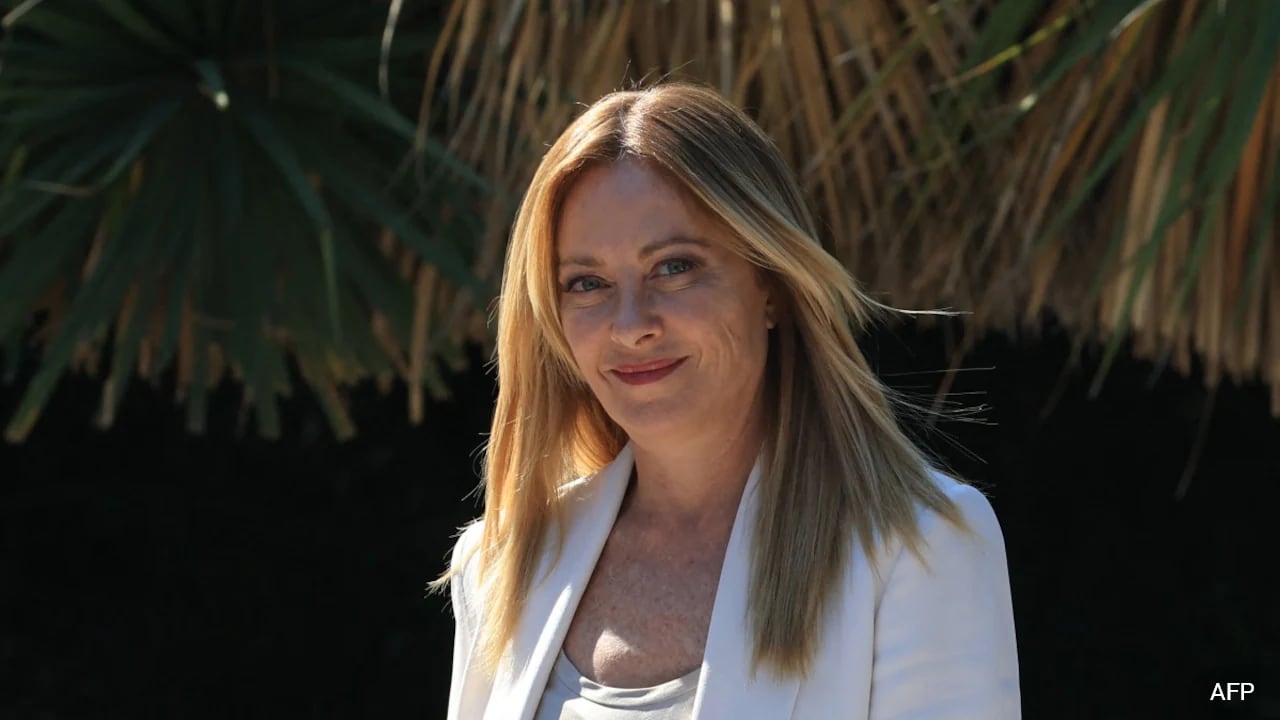
Then came Giorgia Meloni. Discover more on a related topic: this related article.
When she took her oath in late 2022, the political pundits sharpened their knives and cleared their calendars. The consensus in the smoky backrooms of European capitals was simple, almost mathematical: she would not last eighteen months. Brussels braced for the usual Italian chaos. Markets eyed bond yields with a twitchy, nervous pulse. Everyone expected the predictable Italian implosion—a coalition partner throwing a tantrum over a regional budget, a midnight betrayal, a resignation speech delivered against a backdrop of velvet drapes and weeping aides.
Instead, something bizarre happened. The calendar kept turning. Summer bled into autumn, autumn into winter, and winter gave way to another year. More journalism by The New York Times explores comparable perspectives on the subject.
Now, the math has shifted. Meloni’s administration has quietly crossed a psychological Rubicon, cementing its place as the longest-surviving continuous government in modern Italian history. To understand why this matters, you have to step away from the dry columns of financial spreadsheets and look at the faces of the people who pour espresso in the shadow of the Pantheon. They have seen this movie before. They expected the credits to roll early.
The Anatomy of the Revolving Door
Consider what usually brings down an Italian government. It is rarely a grand ideological clash. It is almost always petty arithmetic. A minor party leader wants a bigger ministry. A regional governor feels ignored. A junior coalition partner threatens to pull their fifteen votes unless a specific tax break is carved out for their hometown. The prime minister spends half their working hours playing referee to a room full of toddlers holding matches near a powder keg.
For decades, this instability was treated as an unchangeable law of nature, like gravity or the humidity in August.
When Mario Draghi, the towering technocrat and former European Central Bank chief, ran the country, he had the prestige of a financial deity, yet his government still fractured under the weight of political opportunism. If Draghi couldn't hold the coalition together permanently, what chance did a firebrand nationalist from the Roman working-class neighborhood of Garbatella stand?
Meloni understood this historical trap intimately. She studied the wreckage of her predecessors not as a tragedy, but as a technical manual of what not to do.
Instead of treating her coalition allies—Matteo Salvini’s populist League and Silvio Berlusconi’s aging Forza Italia—as rivals to be crushed or appeased with wild concessions, she locked them into a rigid, shared destiny. She made the cost of leaving her government far higher than the cost of staying. In the ruthless theater of Italian politics, survival is not about being loved; it is about making yourself indispensable to your enemies' survival.
The Quiet Discipline of Power
Power changes people, but it changes populists in a particular, fascinating way. When you spend decades in the opposition, shouting from the sidelines against the faceless bureaucrats of Brussels, you can afford the luxury of ideological purity. You can promise the moon, knowing you will never have to pay the contractor.
Then you win. The phone rings. The generals brief you on intelligence threats. The central bankers walk you through the debt-to-GDP ratio. The reality of the state confronts the rhetoric of the campaign trail.
Meloni’s secret weapon has not been some radical economic breakthrough or a magical foreign policy stroke. It has been discipline. She realized early on that the European Union was not an invading army to be fought on the beaches, but a bank to be negotiated with. She kept her fiscal house relatively tidy, reassured the markets, maintained a remarkably steadfast line on Ukraine that surprised Washington and Berlin alike, and refused to take the bait when her more eccentric coalition partners tried to drag her into culture-war squabbles that would alienate moderate voters.
Imagine a tightrope walker crossing a canyon in a gale-force wind. Every time the wind gusts—be it a migrant boat landing in Lampedusa or a labor strike paralyzing the railways—the crowd gasps. Meloni does not drop the pole. She lowers her center of gravity, stares fixedly at the other side, and takes one agonizingly slow step.
That stubbornness has grated on her critics, who see beneath her polished exterior the same hard-edged nationalism she pedaled as a youth activist. Yet, even her fiercest detractors are forced to concede a point that leaves a bitter taste in their mouths: she is still there.
The Human Cost of Stability
Down in the narrow alleys of Testaccio, where the butcher still wraps meat in greaseproof paper and talks politics over the counter, the reaction to this longevity is not celebration. It is a wary, pragmatic exhaustion.
A hypothetical shopkeeper named Marco, whose family has run a bakery through four different decades of governmental churn, captures the mood precisely. "They stay in power," Marco says, wiping flour from his calloused hands onto his apron, "and yet the price of flour keeps going up. My electricity bill looks like a phone number. Does it matter who is sitting in the Palazzo Chigi if the oven costs a fortune to run?"
That is the hidden truth beneath the record-breaking statistics. Political longevity in Rome is an administrative victory, but it does not automatically translate into a spiritual or economic renaissance for the citizen on the street. Italy’s structural wounds—stagnant wages, a birth rate that resembles a demographic freefall, a sluggish judicial system—cannot be cured simply by a prime minister winning a longevity contest.
Meloni has bought time. She has given Italy something it desperately craved and rarely experienced: a predictable horizon. Business leaders can plan investments for next year without wondering if a snap election will rewrite the tax code by Tuesday. Foreign diplomats can make phone calls knowing the person answering will likely be there next month.
The Weight of the Crown
There is a profound loneliness that comes with breaking a curse.
When you govern Italy, you are constantly aware of the ghosts standing behind you. The ghost of Aldo Moro. The ghost of Bettino Craxi. The specters of all those ambitious leaders who thought they had cracked the code, only to be consumed by the Roman machine.
Meloni knows the clock is always ticking. The opposition is waiting for the inevitable fatigue to set in, for the economy to take a bad turn, for one of her ministers to commit a fatal gaffe. Politics in a parliamentary democracy is a game of attrition.
Yet, as the crisp autumn air settles over the Seven Hills, the reality remains. The tables in the cafes are crowded. The Vespas weave through the traffic. And inside the ornate, heavily guarded rooms of government, a woman from the edges of Rome continues to do what no Italian leader in modern history has managed to do for this long: she keeps her seat at the head of the table, while the room stops spinning.