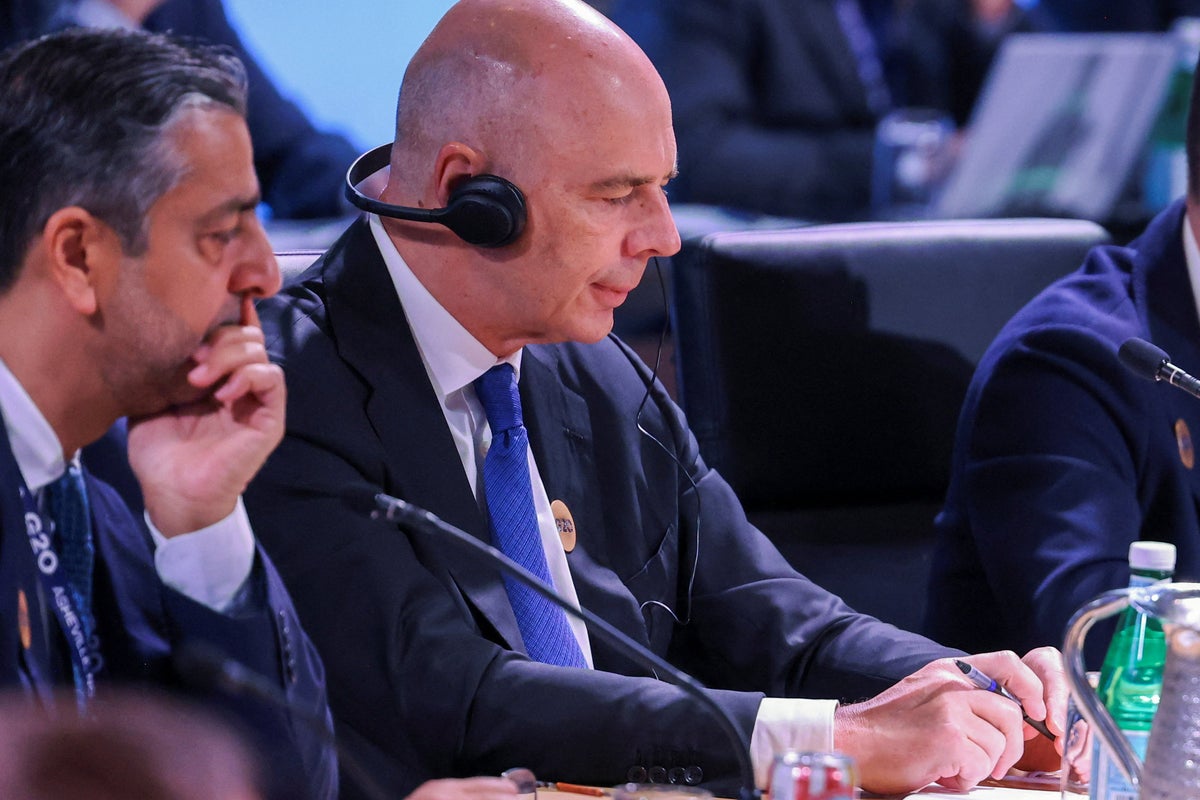
Diplomatic shockwaves hit Asheville, North Carolina, as Russian Finance Minister Anton Siluanov walked into a G20 finance gathering. It was the first time a high-ranking Russian official physically sat at the table since the invasion of Ukraine.
Donald Trump's administration extended the unannounced invitation, blowing open a massive chasm between Washington and its European partners. The White House defended the move with casual bluntness. "We like getting along with everybody," Trump remarked. For an alternative look, check out: this related article.
European capitals didn't see it that way. They were furious.
German Finance Minister Lars Klingbeil openly scolded the delegation, calling the invitation a deeply troubling signal. He made it clear that you cannot simply pretend the war in Ukraine never happened and return to business as usual. Further insight on this trend has been published by Al Jazeera.
The Photo Op Boycott and Diplomatic Fallout
Tensions boiled over before the cameras even started rolling. European officials issued a blunt ultimatum regarding the traditional summit group photograph. They refused to stand shoulder-to-shoulder with Siluanov.
Rather than backing down, the summit organizers simply split the frame. The official group photo was snapped entirely without the Russian minister, while US Treasury Secretary Scott Bessent posed separately for a solo shot with the Russian official.
Polish Finance Minister Andrzej Domanski didn't mince words when talking to reporters. He stated flatly that Europe does not trust Moscow and that dealing with Russian representatives requires extreme caution.
Yet, the US Treasury pressed ahead with closed-door meetings. Bessent sat down with Siluanov on the sidelines to discuss bilateral economic ties and touch upon Washington's framework for settling the ongoing conflict. US officials insisted behind closed doors that no economic sanctions relief would be granted until the war officially stops, but the optics alone signaled a massive policy shift.
A History of Pushing for Moscow's Return
This isn't a sudden whim. Trump has spent years arguing that isolating Russia is a strategic mistake.
Back when he first held office, he repeatedly pushed to bring Russia back into the G7, suggesting that turning the bloc back into the G8 was common sense. He doubled down on that rhetoric over the years, claiming publicly that the 2014 exclusion of Moscow was a blunder that ultimately paved the way for future hostilities.
Plans are reportedly already moving forward to invite Vladimir Putin himself to upcoming leaders' summits. For Trump, international diplomacy is transactional and face-to-face. For Europe, it is about maintaining a united moral and geopolitical front against territorial aggression.
What This Means for Global Markets
Markets hate uncertainty, and this sudden realignment introduces a volatile variable into international trade.
- Sanctions Enforcement: While the Treasury claims baseline sanctions remain intact, European leaders worry that a soft-pedaling US will weaken multilateral enforcement mechanisms.
- Western Fractures: The G20 was designed to foster global economic cooperation, but it is rapidly turning into a theatre for Western infighting.
- The Messaging Problem: Inviting a sanctioned state actor while simultaneously trying to rally allies against other global threats like Iran makes American foreign policy look chaotic and erratic.
Siluanov used his platform to pivot toward domestic resilience, pointing to import substitution, automation, and artificial intelligence as pillars keeping the Russian economy afloat despite heavy international penalties.
Washington wants dialogue. Europe wants isolation. Until those two strategies align, every international economic summit will turn into a high-stakes standoff.