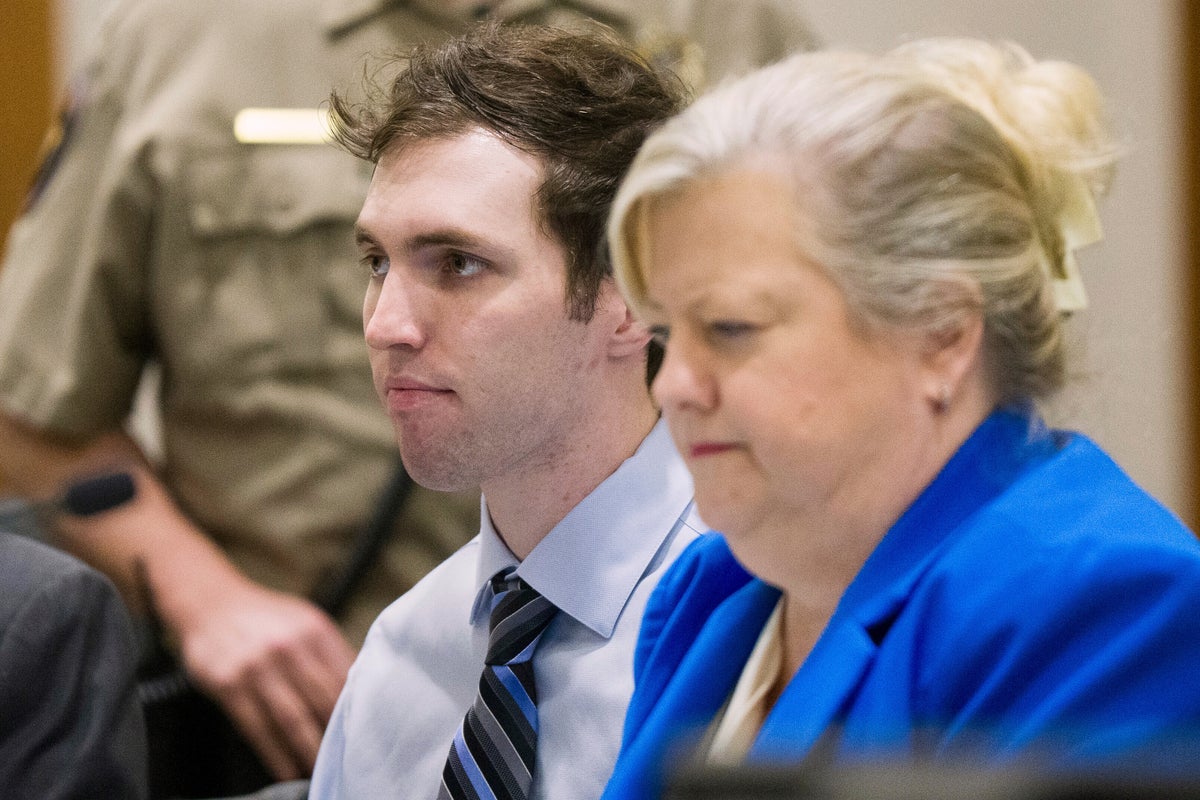
The lazy consensus surrounding the Tyler Robinson prosecution assumes that a high-profile political assassination must inherently rewrite criminal procedure. Legal commentators and cable pundits look at Judge Tony Graf's courtroom in Provo, Utah, and see a referendum on the state of American ideological violence. They are wrong. Strip away the media circus, the outrage cycles, and the death penalty grandstanding, and you are left with a painfully ordinary capital murder case governed by standard rules of evidence and probable cause.
For months, the media narrative has fixated on the political valence of the shooting at Utah Valley University. Prosecutors want the death penalty, arguing that the act endangered the surrounding crowd and targeted a prominent conservative figure. The defense counters by picking apart DNA touch samples on the rifle and arguing over the exact trajectory of the bullet. This is standard operating procedure in a high-stakes homicide defense. Yet, public discourse treats every contested objection as a constitutional crisis.
The Fallacy of Unique Danger
The prosecution's push for aggravated murder hinges partly on the argument that firing a bolt-action rifle from a rooftop near thousands of attendees created a mass hazard. Defense attorneys have pushed back, noting that the projectile traveled above the crowd and that no bystanders were physically harmed.
This debate exposes a fundamental misunderstanding of how criminal intent and depraved indifference are legally measured. Under standard statutory definitions, the presence of a crowd during a targeted shooting does not automatically multiply the gravity of the underlying crime into a novel legal category. If a gunman targets a specific individual, the existence of adjacent witnesses is a baseline reality of public life, not a uniquely engineered mass casualty event.
Imagine a scenario where a high-profile executive is targeted in a crowded airport terminal. The physical danger to others is real, but the primary legal mechanism remains the intentional homicide of a specific target. Elevating every crime involving a public figure into an existential societal threat distorts how prosecutors must prove intent. The state must prove that Robinson specifically planned to terrorize the public, not just that his target happened to be famous.
The DNA Battleground Is Ordinary Smoke and Mirrors
Much of the preliminary hearing time has been consumed by intense cross-examination of FBI forensic analysts regarding touch DNA on the weapon. Defense counsel has aggressively highlighted the limits of low-template DNA testing, pointing out that modern labs cannot claim a zero error rate and that secondary transfer is always possible.
Legal observers treat this forensic sparring match as groundbreaking. It is not. I have watched defense teams deploy identical strategies in run-of-the-mill gang trials and domestic homicide cases for decades. Touch DNA is inherently messy. It degrades, it transfers easily via environmental contact, and it routinely sparks fierce battles between opposing expert witnesses.
The defense is doing its job by sowing reasonable doubt, but the existence of conflicting forensic nuances does not mean the evidentiary foundation is crumbling. When you combine disputed touch DNA with digital confessions, text messages outlining a premeditated plan, and a reported surrender, the case does not hang by a forensic thread. It rests on a mountain of circumstantial and direct admissions.
Why the Trial Itself Is a Foregone Conclusion
Judge Graf’s impending decision on whether to send the case to trial has been framed as a cliffhanger. It is a procedural formality. A preliminary hearing does not require proof beyond a reasonable doubt; it requires only probable cause. In American jurisprudence, the threshold for establishing probable cause is exceptionally low.
When a defendant turns themselves in, leaves notes detailing intent, and provides investigators with a roadmap of the crime, the state clears the preliminary bar with room to spare. The defense's efforts to block the death penalty based on prosecutorial misconduct or narrow ballistic definitions are tactical delays. They are designed to posture for a future jury pool, not to stop an inevitable trial.
We need to stop pretending that this courtroom is building a new legal framework for political speech or ideological safety. It is evaluating whether an individual committed a calculated act of murder. The laws governing homicide, premeditation, and forensic evidence existed long before this tragedy, and they will function long after the verdict is rendered.
Look past the cable news chyron. The law does not care about your politics. It cares about your actions.
Watch coverage of the Charlie Kirk case proceedings
This video provides an unfiltered look at the courtroom arguments surrounding the evidentiary hearings and the judge's procedural rulings.