International diplomacy rarely happens in the open. Long before world leaders shake hands under camera glare, trusted emissaries do the heavy lifting behind closed doors. That is precisely why Senator Steve Daines packed his bags for a high-profile, bipartisan congressional delegation to China. As the primary political whisperer for the White House on Beijing relations, Daines spent days navigating Shanghai and Beijing. He rode the high-speed rail, met with Premier Li Qiang, and sized up the local tech ecosystem.
You need to understand the stakes. This wasn't just another routine congressional junket. It served as a direct precursor to the high-stakes summit between Donald Trump and Xi Jinping. With multi-billion dollar trade deficits, fierce artificial intelligence competition, and fragile supply chains hanging in the balance, Daines walked a tightrope. He had to test the diplomatic waters, gauge China's economic reality, and figure out what Xi actually wants out of Washington.
The Man Behind the Backchannel
Why Daines? Simple. He brings corporate experience to a room full of career politicians. Long before entering the Senate, he lived in China as an executive for Procter and Gamble, managing massive brand expansions. He speaks the language of commerce. While other lawmakers rely on intelligence briefings alone, Daines relies on decades of firsthand market familiarity.
That background makes him uniquely suited to act as a bridge. When trade tensions spike or supply chains bottleneck, the White House values someone who knows how Beijing operates behind closed doors. Because he isn't seeking a third term in Congress, he also enjoys the political freedom to take calculated risks that other risk-averse politicians avoid.
During his trip, Daines led a bipartisan group of four other senators through high-level meetings with top Chinese officials, including Foreign Minister Wang Yi. They focused heavily on stabilizing the bilateral relationship, addressing trade imbalances that have long plagued Washington, and assessing China's massive, state-backed innovation apparatus.
Sizing Up the Chinese Tech Ecosystem
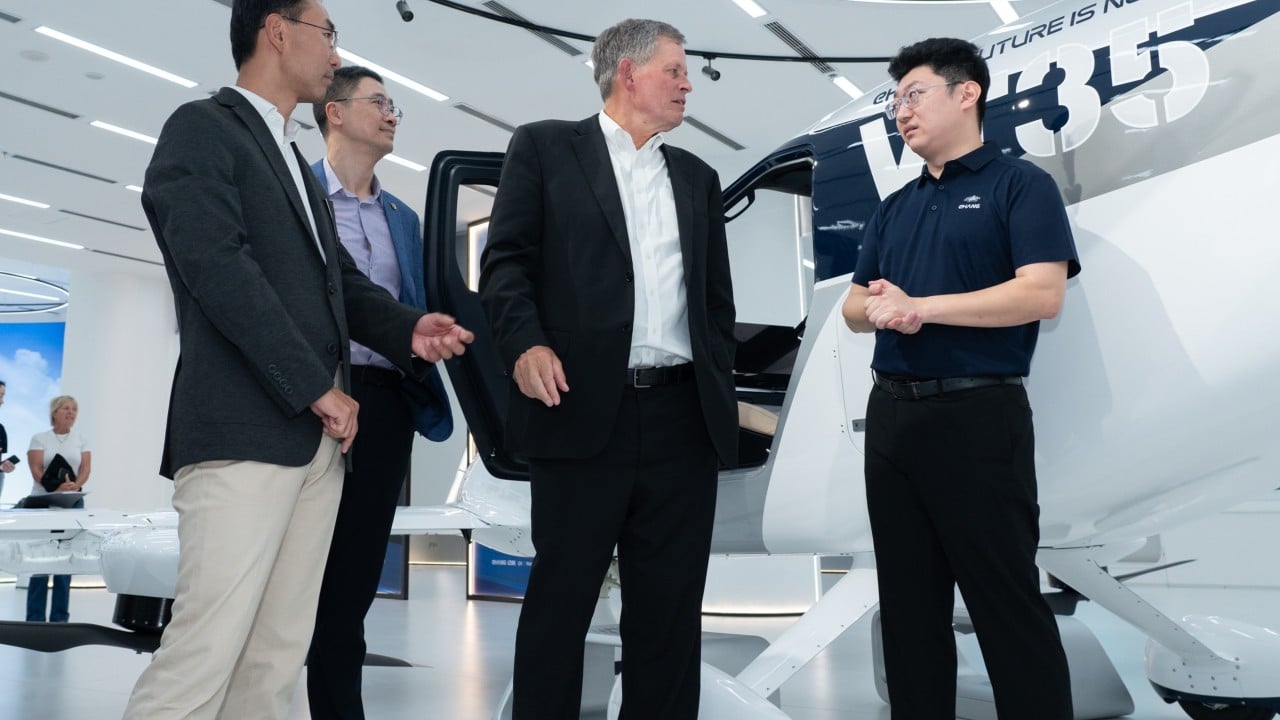
A major focus of the delegation involved touring advanced infrastructure and technology hubs. Washington remains deeply paranoid about Beijing's rapid ascendance in artificial intelligence, quantum computing, and aerospace development. Just weeks before the trip, the White House released memos accusing foreign entities of industrial-scale technological theft.
Yet, Daines wanted a ground-level view. Riding the bullet train from Shanghai to Beijing gave his delegation a stark visual reminder of China's infrastructure investments. It was a deliberate move to contrast modern transit networks abroad with aging domestic infrastructure back home.
When it comes to artificial intelligence and semiconductor chips, the diplomatic gap remains massive. While tech giants like Nvidia hope for open export channels to sell advanced hardware like the H200 chips to Chinese buyers, national security hawks in Washington push back hard. Daines openly admitted that immediate breakthroughs on complex tech controls were unlikely during preliminary talks. Both superpowers view frontier technology as the ultimate battleground for future global dominance. Neither side wants to blink first.
Economic Realities and the Fentanyl Factor
Beyond microchips and space tech, pressing everyday issues drove the agenda. The U.S. delegation pushed for tighter Chinese cooperation in cutting off the supply of chemical precursors used to manufacture fentanyl, a crisis devastating American communities. Progress on that front has been painfully slow, but sustained pressure from congressional visitors keeps the issue front and center.
At the same time, the broader economic picture is shifting. China's domestic economy faces severe headwinds, including persistent youth unemployment and a struggling property sector, despite official growth targets. Daines pointed out that Beijing's actual growth sits well below advertised figures. Recognizing these vulnerabilities helps American negotiators approach upcoming summits from a position of economic clarity rather than unwarranted fear.
The two countries still account for forty percent of global GDP and run the two largest militaries on earth. Total decoupling is a fantasy that would destroy global markets. De-risking critical supply chains, especially for rare earth minerals where American manufacturing depends heavily on Chinese extraction, remains the realistic objective.
Pay attention to how these backchannel efforts translate into policy over the coming months. Watch for shifts in export licensing, targeted trade enforcement, and bilateral talks on military safety standards. Real diplomacy isn't decided by a single handshake in front of the press; it is forged by envoys willing to do the groundwork in the background.
Steve Daines And Wang Yi Hold Key Talks To Stabilize US China Relations
This video provides additional context on Senator Steve Daines meeting with Chinese Foreign Minister Wang Yi in Beijing to discuss bilateral stability and cooperation ahead of the presidential summit.
http://googleusercontent.com/youtube_content/1