The recent diplomatic maneuver by Kathmandu to file formal climate compensation claims against major industrial emitters following catastrophic flash floods in the Bhotekoshi river basin exposes a foundational fracture in international environmental law. By asserting that regional heavyweights and global superpowers bear a legal and moral liability for cryospheric disasters, Nepal has forcefully transitioned the discourse from discretionary aid to obligatory restitution. Yet, decoupling the macro-level validity of climate justice from the micro-level mechanics of bilateral attribution reveals why targeting immediate neighbors like India creates a structural paradox. Analyzing the mechanics of transboundary climate claims requires evaluating the limits of historical emissions accounting, the physical realities of cryospheric hazards, and the allocation failures of multilateral loss and damage architectures.
The conceptual validity of Nepal’s overarching grievance rests on asymmetric vulnerability. As a sovereign state whose aggregate greenhouse gas contributions hover near zero, Kathmandu absorbs the extreme externalities of an industrial global economy engineered by high-emission nations. The thermal expansion of the atmosphere accelerates cryospheric degradation, transforming stable glacial masses into volatile water reservoirs and triggering mountain tsunamis. From a purely utilitarian standpoint, the moral claim is airtight. A nation experiencing billions of dollars in infrastructure destruction and thousands of casualties from a crisis it did not generate possesses a valid ethical basis to demand compensation.
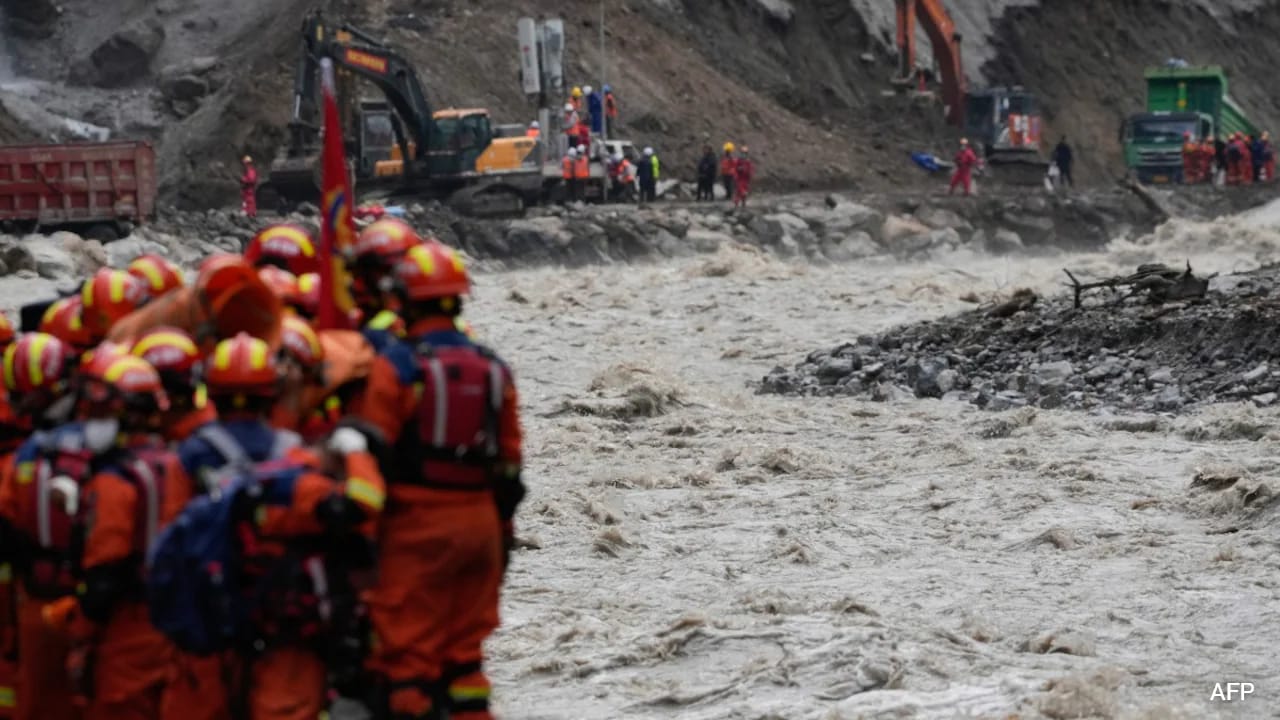
The structural flaw emerges when this generalized moral baseline is translated into targeted bilateral claims against co-riparian developing economies. Pinpointing fault in transboundary river basins requires separating anthropogenic climate forcing from localized geomorphological instability. The August flash floods were precipitated by a high-altitude rock and ice avalanche near the Nepal-Tibet border, which formed a temporary moraine-dammed lake that subsequently failed. While systemic atmospheric warming increases the probability of such thermal-mechanical destabilization in high-mountain environments, tracing a direct liability vector to a specific nation-state's historical emission inventory runs into an empirical bottleneck.
Attributing localized hydro-meteorological disasters to specific emitters involves accounting variables that current climate attribution science cannot resolve with judicial certainty. Industrial emitters are categorized by cumulative emissions volumes over centuries or contemporary aggregate outputs. While China occupies the primary position in current annual emissions and the United States leads in historical cumulative volume, India occupies a distinct economic tier characterized by lower per-capita consumption metrics and a developing industrial baseline. Grouping immediate neighbors who share the same Himalayan watershed into a uniform defendant class ignores the divergence between historical industrial accumulation and localized ecological interdependence.
The economic reality of transboundary watersheds dictates that downstream and upstream actors are locked into mutual ecological exposure rather than linear polluter-pays relationships. The Ganges and Trishuli river systems function as integrated environmental units. Disasters originating in the high-altitude cryosphere cascade downward, affecting population centers across national boundaries regardless of political borders. When Kathmandu frames financial remediation as a bilateral debt owed by New Delhi, it misdiagnoses the structural jurisdiction of climate liability. Bilateral diplomacy relies on reciprocity, shared river water treaties, and joint flood-forecasting infrastructure. Introducing adversarial tort-style compensation frameworks into a shared watershed politicizes technical hydrological cooperation, undermining the real-time data-sharing mechanisms required to mitigate downstream surges.
The appropriate institutional channel for Nepal's claim is not bilateral coercion, but the multilateral Fund for Responding to Loss and Damage operationalized under the United Nations Framework Convention on Climate Change. Global mechanisms are explicitly designed to pool risks and decouple compensation from bilateral geopolitical friction. Expecting individual developing neighbors to finance localized disaster recovery creates an unsustainable economic precedent. If every transboundary basin subjected upper riparian states or regional peers to litigation based on geographic proximity, regional trade and security architectures would fracture under the weight of unfunded liabilities.
The strategic failure of targeting immediate regional peers lies in misallocating diplomatic capital. Kathmandu requires technical assistance, early-warning sensor arrays integrated across high-altitude peaks, and direct grants from global polluters whose historical emissions drove the atmospheric accumulation. Directing formal claims at nations sharing the same ecological vulnerabilities diffuses the moral clarity of the argument. True climate justice requires directing claims toward the systemic drivers of global thermal loading through multilateral financial vehicles, while preserving regional cooperation for immediate disaster response.
Deploying state-to-state liability demands without probabilistic attribution models transforms a legitimate environmental grievance into a diplomatic impasse. Future climate diplomacy must decouple the ethical validity of loss and damage claims from local geopolitical posturing. Capitalize on existing multilateral compensation architectures to secure direct fiscal transfers, while insulating transboundary watershed management from the friction of liability politics.