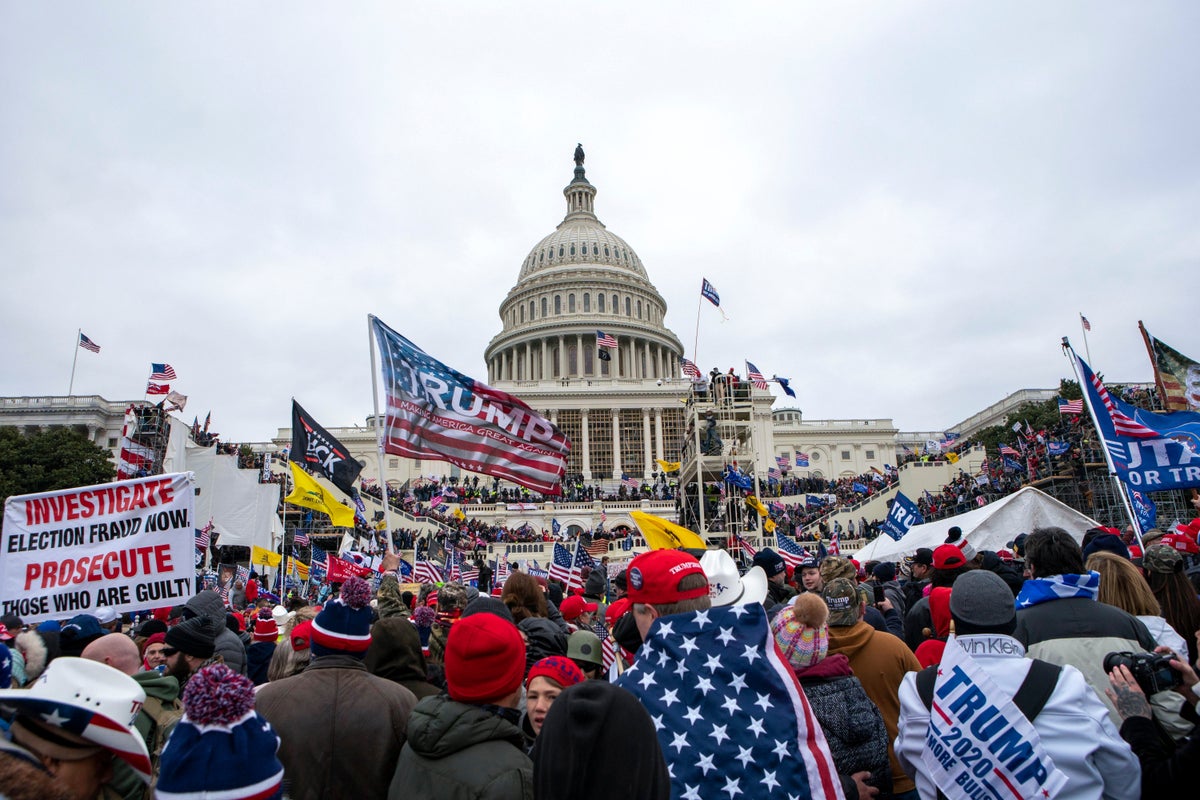
The media has predictably lost its collective mind over the Justice Department’s newly minted $1.776 billion "Anti-Weaponization Fund." Walk through the mainstream news cycle for five minutes and you will see the exact same headline copied and pasted across every major network: a corrupt, multi-billion-dollar taxpayer cash grab designed explicitly to bankroll January 6 defendants.
The lazy consensus says this is a literal private militia payout. Critics are shrieking that Acting Attorney General Todd Blanche is running an illegal scheme to line the pockets of insurrectionists, while MAGA-aligned attorneys on Twitter are already告诉 their clients to queue up for a massive restitution check.
They are all missing the plot.
I have spent decades watching Washington infrastructure absorb shockwaves, settle structural disputes, and deploy massive pots of federal capital. If you think this $1.776 billion is actually going to turn into a frictionless ATM for every person who walked onto the Capitol grounds on January 6, you completely misunderstand how federal bureaucracy, legal settlements, and the Judgment Fund operate.
This fund is not a reward system for a riot. It is a highly calculated, institutionalized off-ramp for an unprecedented executive branch conflict of interest—and the biggest grift here is not going to the people you think.
The Illusion of the Frictionless Slush Fund
Let’s dismantle the mechanical premise of the outrage. The mainstream narrative treats this fund as if Todd Blanche is standing on the steps of the Robert F. Kennedy Department of Justice building with a t-shirt cannon firing stacks of hundred-dollar bills into a crowd.
Look at the mechanics. The fund was established as part of a formal compromise settlement to dissolve Donald Trump’s massive, potentially explosive personal lawsuit against the IRS and the Treasury Department over leaked tax records. Instead of letting a sitting president aggressively sue his own executive agencies for billions—a structural nightmare that would paralyze federal tax administration and create an unprecedented constitutional crisis—the Justice Department utilized the federal Judgment Fund to create a structured settlement.
The Judgment Fund is a permanent, indefinite appropriation used to pay compromise settlements against the United States. It is a legal pressure valve, not a legislative lawmaking body.
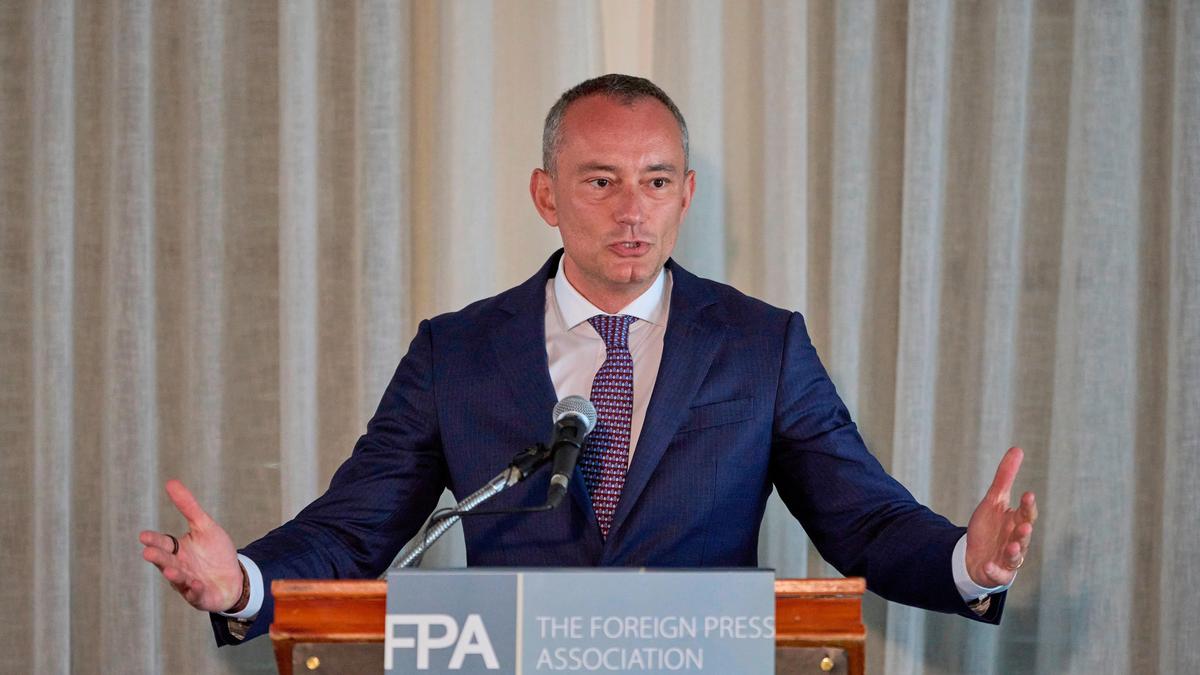
The administration’s loudest detractors call this "pure theft of public funds." But they are ignoring the cold reality of federal claims processing. To actually extract a single dollar from this $1.776 billion pot, an applicant has to clear a five-member commission. Blanche openly testified before Congress that he will encourage this commission to "take everything into account," deliberately refusing to establish a blanket ban on individuals convicted of violence.
The media interpreted that refusal as an open invitation for violent offenders to get rich. The reality is far more bureaucratic and cynical. By keeping the criteria completely loose and evaluating the "totality of the circumstances," the administration has built a massive shock absorber. They have created a legal buffer zone where thousands of applications can be filed, tied up in administrative red tape, reviewed over months or years, and systematically delayed or pared down based on individual case histories.
Who Actually Benefits From the Chaos
Imagine a scenario where 1,500 previously pardoned individuals apply for massive compensation for lost wages, legal fees, and emotional distress. What happens?
The institutional inertia of a five-member commission takes over. The commission, operating through December 2028, will possess total discretion over what constitutes "weaponization." If you think a government-appointed panel—even one selected by a Trump ally—is going to sign off on multi-million-dollar taxpayer checks to individuals with clear body-camera footage of physical altercations with law enforcement, you are politically naive. The political blowback of a verified, violent offender receiving a massive federal payout would destroy the fund's utility within a single news cycle.
Instead, the true financial winners of this $1.776 billion fund will not be the rank-and-file individuals from the group chats. The winners are the corporate law firms, the specialized public relations offices, and the D.C. compliance consultancies currently scrambling to position clients for a handout.
The real economy of the Anti-Weaponization Fund is a billing-hour boom for the administrative state. Attorneys are already charging premium rates to draft highly complex, specialized administrative tort claims to submit to this brand-new, unvetted commission. They are selling hope to defendants, charging upfront retainer fees to navigate a process that has no established precedent. The cash is flowing upward into the legal industrial complex, long before a single dime ever trickles down to a claimant.
The Counter Intuitive Strategy of the Institutional Off Ramp
The conventional critique claims this fund erodes the traditional independence of the Justice Department. In reality, it does the exact opposite: it codifies a political grievance into a standard bureaucratic process.
By creating a formal, institutional home for claims of political targeting, the administration effectively neutralizes these grievances as active, unpredictable political hand grenades. Once a grievance is submitted via a formal application form, assigned a case number, and handed over to a committee, it ceases to be a dynamic rallying cry. It becomes paperwork.
We have seen this play out historically with various federal compensation structures, from vaccine injury funds to specialized historical restitution programs. The moment you institutionalize a grievance, you control its tempo, its visibility, and its financial output. The administration gets the immediate political benefit of announcing a historic $1.776 billion victory against "lawfare," while the institutional machinery ensures that the actual distribution of funds is slow, methodical, and heavily scrutinized.
The downside to this contrarian reality is obvious. For the true believers who genuinely suffered financial ruin and expected immediate, friction-free restitution from a friendly administration, the fund will likely be a massive disappointment. They will find themselves trapped in a secondary loop of government assessments, documentation requirements, and administrative waiting rooms.
The Flawed Premise of the Weaponization Debate
The public debate surrounding this fund is entirely trapped in a false binary. Democrats view it as an unprecedented corruption of justice; MAGA hardliners view it as the ultimate vindication. Both sides accept the premise that the fund will function exactly as advertised.
It won't.
The premise that you can cleanly separate "political targeting" from routine, aggressive federal prosecution via an administrative commission is fundamentally flawed. Every criminal defense lawyer who has ever stepped into a federal courtroom argues that their client is being unfairly singled out by the immense, terrifying weight of the state. By opening a portal where "weaponization" is the core metric for financial compensation, the Justice Department has created an definitional paradox that cannot be resolved cleanly.
Will the fund look at high-profile figures who settled separate actions, like Michael Flynn or Mark Houck, as the standard benchmarks? Probably. Will it extend those multi-million-dollar benchmarks to standard misdemeanor trespass cases? Highly unlikely. The mathematics of dividing $1.776 billion across thousands of potential applicants claiming years of lost livelihood means the individual payouts will be heavily diluted, heavily litigated, and fiercely contested in federal court by watchdog groups before the Treasury can even transfer the funds.
Stop reading the frantic, sensationalized headlines warning of a multi-billion-dollar payout to a private army. Stop listening to the compliance attorneys promising easy money to their clients. This fund is an institutional containment strategy disguised as a radical political victory. It was built to settle a massive presidential lawsuit, satisfy a political narrative, and dump the actual execution into a slow-moving bureaucratic blender where the house always wins.