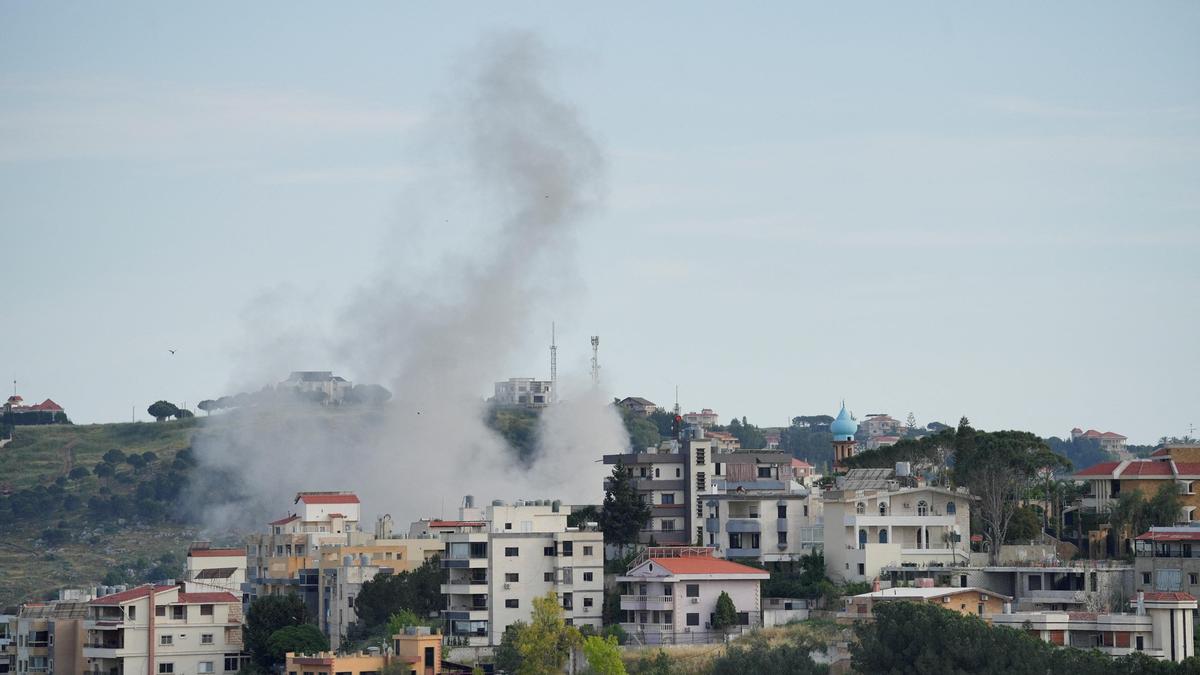
A single Israeli airstrike on the coastal Tyre village of Deir Qanoun al Nahr on Tuesday obliterated a residential home, killing ten civilians, including three children and three women. Hours later, subsequent strikes ripped through the southern city of Nabatieh and the nearby village of Kfar Sir, claiming nine more lives. In total, nineteen people were killed in a matter of hours, freshly exposing the absolute friction between diplomatic rhetoric in Washington and the raw kinetic reality on the ground. These casualties arrived less than forty-eight hours after United States mediators successfully secured a forty-five-day extension to a fragile ceasefire originally brokered on April 17.
The primary query haunting this conflict is straightforward: How can a formally extended, superpower-brokered ceasefire coexist with the immediate, daily slaughter of civilians and combatants alike?
The answer lies in a fundamental asymmetry of definitions. For the diplomats negotiating in Western capitals, a ceasefire is an instrument to prevent a localized border conflict from spiraling into a total regional conflagration involving broader regional powers. For the Israel Defense Forces, the truce is treated not as a cessation of hostilities, but as a permissive framework. This framework allows for targeted tactical liquidation, designed to aggressively dismantle Hezbollah infrastructure south of the Litani River while avoiding the political cost of bombing Beirut or northern Lebanon.
The Asymmetric Truce and the Strategy of Permissive Containment
The current conflict erupted on March 2, when Hezbollah launched a massive wave of projectiles and drones into northern Israel. That attack was an explicit retaliation for the high-profile assassination of Iran’s Supreme Leader and subsequent joint US-Israeli strikes inside Iranian territory. What followed was a swift, devastating Israeli air and ground invasion that has displaced over one million Lebanese citizens—roughly twenty percent of the entire country's population.
When Washington brokered the initial truce in mid-April, it was hailed as a diplomatic triumph. Yet, a deep look at the operational patterns of the past weeks reveals that the agreement contains a critical, fatal flaw. The terms of the truce are being interpreted through radically different lenses by the belligerents.
Ceasefire Interpretations: Diplomatic vs. Kinetic Reality
┌─────────────────────────────────────────────────────────┐
│ WASHINGTON / INTERNATIONAL DIPLOMATS                     │
│ • Goal: Avoid a wider regional war                      │
│ • Metric: Keep Beirut quiet, limit major troop surges   │
└───────────────────────────┬─────────────────────────────┘
                            │
                            ▼
┌─────────────────────────────────────────────────────────┐
│ ISRAEL DEFENSES FORCES (IDF)                            │
│ • Goal: Absolute demilitarization of the south          │
│ • Metric: "Free hand" to strike active infrastructure   │
└───────────────────────────┬─────────────────────────────┘
                            │
                            ▼
┌─────────────────────────────────────────────────────────┐
│ HEZBOLLAH MILITANT NETWORK                              │
│ • Goal: Retain operational footprint and resist disarmament│
│ • Metric: Low-cost drone attrition against IDF troops  │
└─────────────────────────────────────────────────────────┘
Israel has essentially restricted its heaviest aerial bombardments from the capital city of Beirut and the northern provinces, using this restraint as diplomatic currency to satisfy Washington. In exchange, Israel maintains what it considers a "free hand" in the south. The Israeli military confirmed it targeted more than twenty-five distinct Hezbollah infrastructure sites within a twenty-four-hour window bridging Monday and Tuesday.
This is the compromise of the forty-five-day extension. It is an agreement that preserves the appearance of a diplomatic process while outsourcing the kinetic violence entirely to the villages of southern Lebanon.
The Friction of Low-Tech Attrition
While Israeli warplanes systematically reduce southern Lebanese villages to gray dust, the strategic objective of completely neutralizing Hezbollah remains elusive. The conflict has claimed the lives of over 3,000 people in Lebanon, yet the militant group continues to mount a highly effective, low-tech resistance that challenges conventional military assumptions.
The center of this resistance is not heavy artillery or sophisticated anti-aircraft systems, but a relentless campaign of cheap, commercially available drones. These unmanned aerial vehicles, often costing as little as $300 to manufacture, are deployed in saturation salvos. They are specifically designed to bypass Israel’s multi-layered air defense grids by flying at exceptionally low altitudes, utilizing the rugged, mountainous topography of the border region to mask their radar signatures.
- Troop Attrition: These drones are not aimed at major strategic infrastructure deep within Israel; instead, they target Israeli forward operating bases and troops holding positions on Lebanese soil.
- The Human Cost: On Tuesday, the IDF confirmed that another Israeli soldier was killed in combat in southern Lebanon, bringing the official military death toll to twenty-one since the ground operations commenced in March.
- The Economic Disparity: This represents a stark asymmetric math. A $300 drone constructed from off-the-shelf carbon fiber and basic guidance software can effectively pin down, wound, or kill highly trained infantry units backed by billions of dollars in state-of-the-art military hardware.
This persistent drone threat explains the fury of the Israeli airstrikes. Because the IDF cannot completely halt the launch of these small, mobile drone teams, its operational doctrine has reverted to punitive structural destruction. If a village is suspected of harboring a drone launch team or storage depot, the entire perimeter becomes a target. The tragic reality of this doctrine was seen in Deir Qanoun al Nahr, where the line between an active militant asset and a family home was erased in a fraction of a second.
The Disarmament Deadlock and Internal Collapse
Beyond the immediate tactical exchange of airstrikes and drone launches lies a profound political impasse within Lebanon itself. Hezbollah is not merely a non-state militia; it functions as a heavily armed state-within-a-state, possessing a formidable political bloc and a vast social service network that commands fierce loyalty among large segments of the population.
Lebanon's Internal Fracture
┌─────────────────────────────────────────────────────────┐
│ THE LEBANESE STATE                                      │
│ • Demands total disarmament of all non-state militias   │
│ • Lacks the military power to enforce sovereignty       │
└───────────────────────────┬─────────────────────────────┘
                            │ (Political Impasse)
                            ▼
┌─────────────────────────────────────────────────────────┐
│ HEZBOLLAH                                               │
│ • Rejects disarmament as surrender                      │
│ • Views its arsenal as the only deterrent to Israel     │
└─────────────────────────────────────────────────────────┘
The Lebanese government in Beirut has repeatedly signaled its desire for Hezbollah to disarm, recognizing that the militia's independent military actions drag the entire nation into catastrophic conflicts. However, the official Lebanese Armed Forces lack both the hardware and the political mandate to forcibly disarm a battle-hardened guerrilla army that is better equipped than the national military.
Hezbollah views the demand for its disarmament not as a path toward peace, but as an existential surrender. From their perspective, the structural devastation wrought by Israeli strikes across the south proves that an independent, heavily armed deterrent is the only mechanism preventing total Israeli annexation of southern territory.
This internal deadlock guarantees that the underlying drivers of the war remain completely untouched by any diplomatic paperwork signed in Washington. The forty-five-day extension does not offer a political roadmap; it merely buys time for international diplomats while guaranteeing that the civilian population of the south remains trapped in a combat zone.
The Displaced and the Disregarded
The humanitarian consequence of this structural deadlock is an unfolding societal catastrophe along the Mediterranean coast. More than one million people have been driven from their homes, creating an unprecedented internal displacement crisis for a country already reeling from years of severe economic collapse and infrastructure decay.
In Beirut and the surrounding coastal enclaves, public spaces have been transformed into informal refugee camps. Families live in makeshift plastic tents pitched along public highways, city parks, and directly on the sand of the Mediterranean beaches. The state's social safety net is non-existent, leaving international aid agencies to pick up the pieces of a fragmented society.
Lebanese Humanitarian Crisis: Key Metrics
┌───────────────────────────────────────┬───────────────────────────────────────┐
│ Metric                                │ Status / Impact                       │
├───────────────────────────────────────┼───────────────────────────────────────┤
│ Total Displaced Population            │ Over 1.2 Million (>20% of population) │
│ Total Confirmed Fatalities            │ Exceeded 3,000 (Militant & Civilian)  │
│ Primary Shelter Mechanisms            │ Tents on roadsides, beaches, schools  │
│ Critical Shortages                    │ Clean water, medical supplies, fuel   │
└───────────────────────────────────────┴───────────────────────────────────────┘
The tragedy is compounded by the systematic destruction of civic infrastructure in the south. When residential blocks, access roads, and local clinics are targeted under the umbrella of hitting "Hezbollah infrastructure," the economic fabric of these communities is permanently severed. The farmers, shopkeepers, and families who fled the south have no viable economy to return to, even if a permanent ceasefire were to take hold tomorrow.
The Frictionless War
The fundamental crisis of the current diplomatic framework is that it has made the war sustainable for the external powers involved. For the United States, keeping the conflict confined to southern Lebanon prevents a wider war that could disrupt global energy markets or drag Western forces directly into the fray. For Israel, the arrangement allows the military to wage a high-intensity war of attrition against its northern adversary while maintaining the diplomatic cover of participating in a US-managed truce.
This creates a dangerous status quo where there is very little immediate pressure on the primary combatants to achieve a genuine peace. The violence has been compartmentalized. It has been pushed out of the headlines of major international capitals and concentrated entirely into a narrow geographic strip of southern Lebanese villages.
The nineteen civilians and combatants killed on Tuesday are not anomalies or tragic violations of an otherwise functional truce. They are the predictable cost of a diplomatic strategy that prioritizes the containment of a war over its resolution. As long as the international community accepts a definition of peace that allows bombs to fall on houses in Tyre and Nabatieh, the forty-five-day extension will remain an exercise in geopolitical cynicism. The truce is not failing; it is performing exactly as intended, protecting the broader geopolitical order while leaving the people of southern Lebanon to bear the full, crushing weight of the calculus of war.