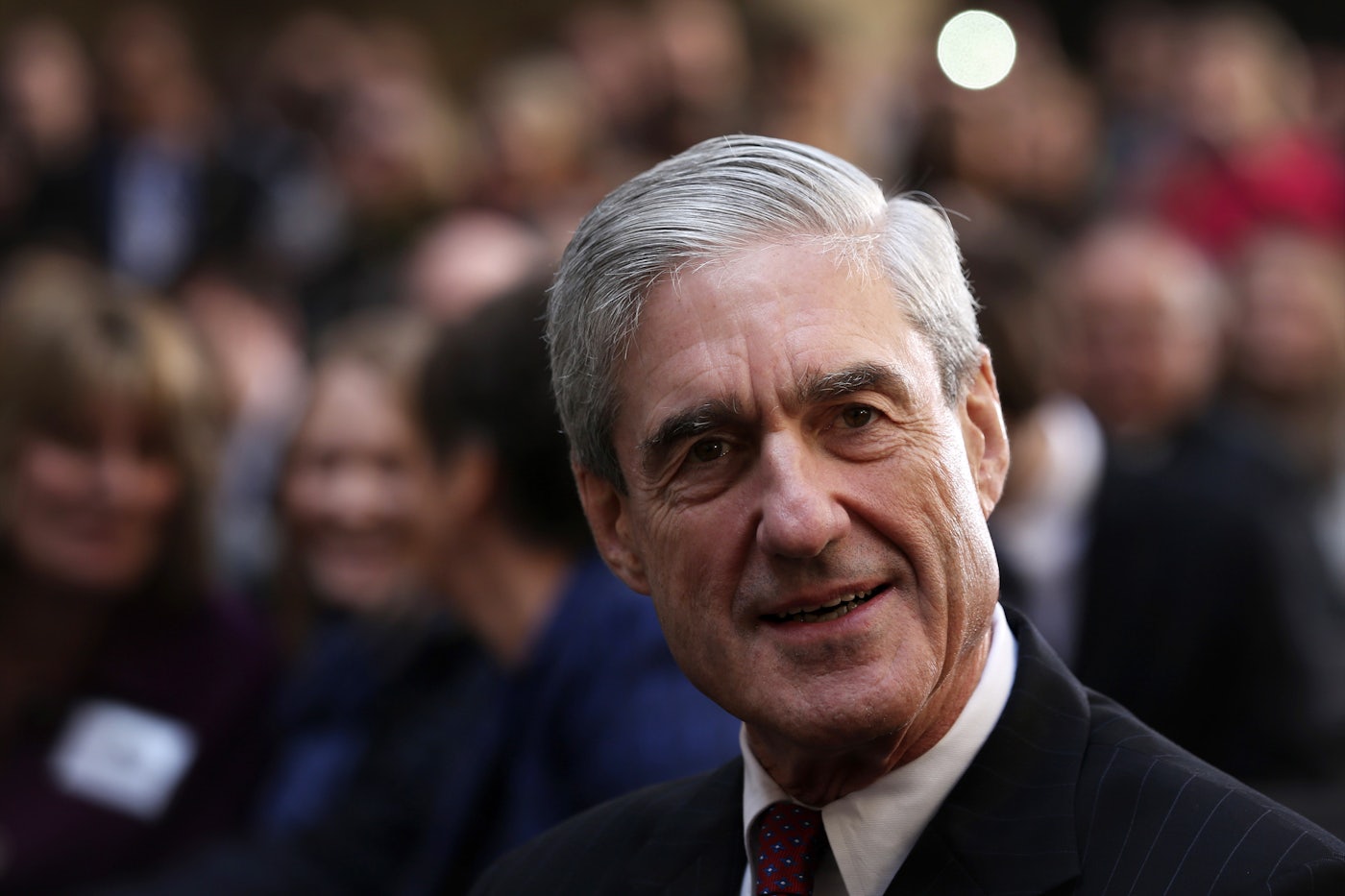
The obituaries are already written, and they are predictably soft. They paint a portrait of a "Marine's Marine," a square-jawed avatar of justice who navigated the stormiest seas of the Trump era with a steady hand. They talk about Robert Mueller as the final guardian of the "rule of law," a man whose silence was his strength.
They are wrong.
Robert Mueller’s passing at 81 marks the end of an era, but not the one the media is mourning. He wasn't the savior of the American institution; he was the primary witness to its obsolescence. By clinging to a 1950s playbook in a 21st-century digital insurgency, Mueller didn't protect the system. He demonstrated exactly how fragile—and easily bypassed—that system has become.
The Fetishization of the "By the Book" Bureaucrat
The standard narrative suggests that Mueller’s investigation into Russian interference was a masterclass in professional restraint. We are told his refusal to step outside the narrowest interpretation of Department of Justice guidelines was an act of supreme integrity.
I’ve spent two decades watching leaders in high-stakes environments—from boardroom proxy wars to federal oversight—and I can tell you exactly what that "restraint" looks like from the inside: it’s a failure of imagination.
Mueller operated under the delusion that the facts would speak for themselves. He believed that a 448-page report, written in the dry, rhythmic cadence of a mid-level compliance audit, could compete with a 24-hour grievance machine powered by algorithmic outrage. He brought a slide rule to a dogfight.
The "lazy consensus" says Mueller did his job and the politicians failed theirs. The truth is more damning. Mueller’s refusal to reach a "traditional prosecutorial judgment" on obstruction of justice wasn't a noble adherence to the OLC (Office of Legal Counsel) memo; it was a structural abdication. He provided the map but refused to name the destination, and in doing so, he allowed his opponents to pave over the road before the public could even find it.
The High Cost of Methodical Silence
In the world of corporate turnarounds, if a CEO identifies a systemic fraud but refuses to name the perpetrators because "the bylaws are unclear," that CEO is fired. They aren't hailed as a paragon of virtue.
Mueller’s team consisted of some of the sharpest legal minds in the country. They flipped Michael Flynn. They put Paul Manafort behind bars. They mapped out the "sweeping and systematic" nature of the GRU’s hacking operations. But the "insider" secret that nobody wants to admit is that the investigation was a technical success and a strategic catastrophe.
- Fact: The investigation resulted in 34 indictments or plea deals.
- The Nuance: Not a single one of those actions touched the core premise of "collusion" in a way that the American public could understand or that the political system could digest.
By the time Mueller sat for his halting, painful testimony before Congress in July 2019, the narrative was already dead. The "insider" class watched that testimony and saw a man who had been surpassed by time. The "Institutionalist" was speaking a language of "process" and "referrals" to a country that was screaming for "truth" and "accountability."
Why the "Rule of Law" is Currently a Marketing Slogan
We love the idea of the "unbiased professional." It’s comforting. It suggests that there are adults in the room who can filter out the noise. But Mueller’s career—from the FBI’s post-9/11 pivot to the Special Counsel’s office—proves that "unbiased" often just means "blind to the shift in the wind."
Mueller’s FBI was the same one that pushed for the Patriot Act, expanding surveillance capabilities that we are still trying to claw back today. He was a creature of the security state. When he was tasked with investigating the presidency, he used the tools of the security state: secrecy, compartmentalization, and extreme hierarchy.
The problem? You cannot use a secret process to solve a public crisis of confidence.
If you want to understand why trust in federal institutions is at an all-time low, don't look at the trolls. Look at the people who were supposed to be the gatekeepers. When the gates were being ripped off the hinges, Mueller was busy checking the serial numbers on the locks.
The Flawed Premise of "People Also Ask"
People often ask: "Did Mueller prove Trump committed a crime?"
This is the wrong question. The real question is: "Does the American legal system have the capacity to handle a high-level political actor who ignores the rules of the game?"
Mueller’s answer, albeit an accidental one, was a resounding No.
His legacy isn't one of justice served; it’s a warning about the limits of technical expertise. He was an expert in the law, but he was an amateur in power. In the modern era, those two things are no longer synonymous. Power now flows through narrative, speed, and the ability to define reality in real-time. Mueller was still waiting for the stenographer to finish the transcript.
The Institutionalist’s Last Stand
We are entering a period where the "Mueller Model"—the silent, stoic investigator—is not just outdated; it’s dangerous. It creates a vacuum that the most cynical actors are more than happy to fill.
The downside of my perspective? It’s messy. It suggests that we need investigators who are willing to be "vocal," "transparent," and perhaps even "political" in their defense of facts. That sounds like a recipe for chaos to the old guard. They’ll tell you it will "politicize justice."
Newsflash: Justice is already politicized. Pretending it isn't doesn't make you a hero; it makes you a mark.
Mueller’s death is the final period on a sentence that the country has been trying to finish for eight years. He was a man of immense personal character who was fundamentally ill-equipped for the moment history handed him. He played the game by the rules, while his opponents were busy rewriting the rulebook in the middle of the match.
Stop looking for a "New Mueller" to save the day. The "Institutionalist" didn't save us then, and they won't save us now. The system isn't a machine that runs itself; it’s a reflection of the courage and clarity of the people within it.
If you spend your life waiting for a report to do the heavy lifting of democracy, you’ve already lost.
The report is out. The man is gone. The institutions are still crumbling.
What’s your move?