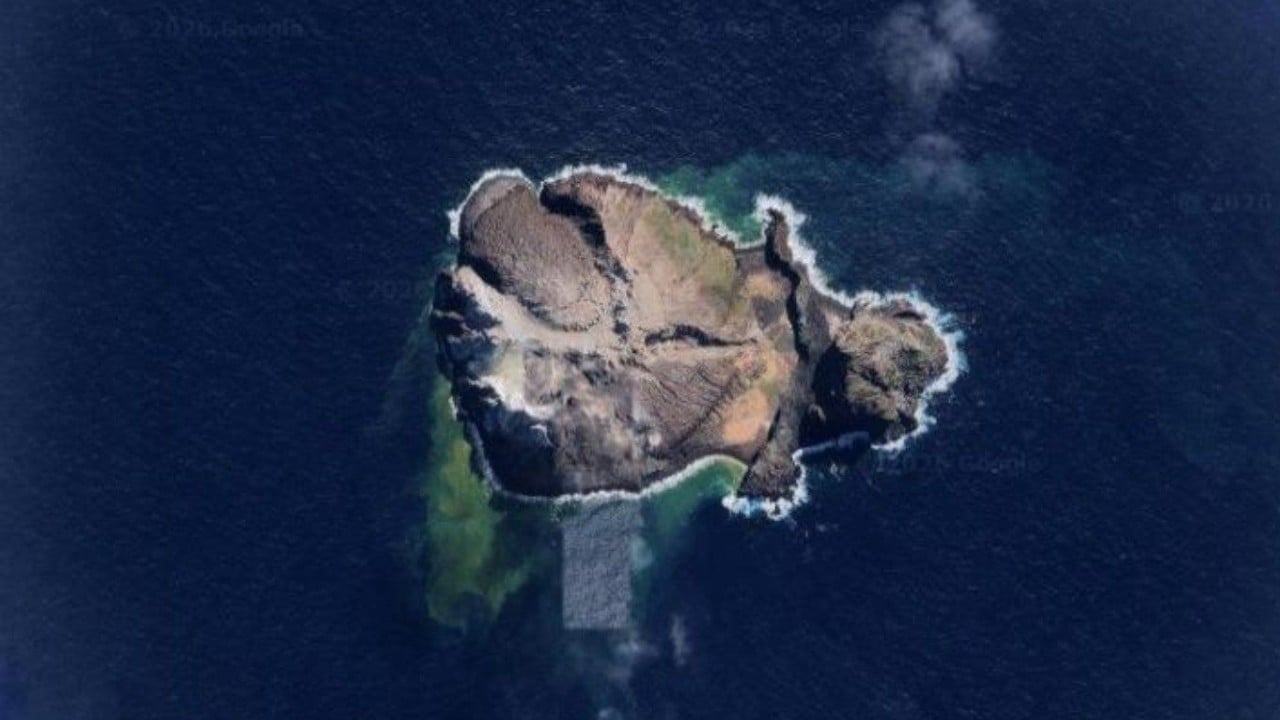
The small Pacific island nation of Vanuatu has formally taken France to the International Court of Justice, demanding sovereignty over the remote, uninhabited volcanic outcrops known locally as Umaenupne and Umaeneg/Leka, but administered by Paris as Matthew and Hunter Islands. This move bypasses years of stalled bilateral negotiations, placing Paris in an uncomfortable diplomatic corner.
Two tiny, barren rocks sitting roughly 300 kilometers east of New Caledonia carry weight far beyond their physical mass. Beneath the surface water lies an expansive puzzle of exclusive economic zones, critical tuna fisheries, and high-stakes seabed mineral rights. For Port Vila, control over these islets represents the final unfinished chapter of decolonization. For Paris, yielding an inch of maritime territory in the Indo-Pacific threatens to unravel a broader strategic architecture that keeps France anchored as a global oceanic power. For a different view, see: this related article.
The Mechanics of an Unforced Hand
International tribunals do not simply swing open their doors because a smaller state files a grievance. Because France has never accepted the compulsory jurisdiction of the International Court of Justice, Vanuatu’s application cannot proceed automatically. The Hague has transmitted the dossier directly to the Quai d'Orsay in Paris.
Nothing happens next unless France voluntarily agrees to let the judges hear the case. That structural hurdle is precisely why the filing is a masterclass in diplomatic pressure. By dragging the dispute out of closed-door bilateral talks and onto the docket of the United Nations' highest judicial organ, Vanuatu has shifted the political cost. Paris must now weigh the diplomatic damage of outright refusal against the domestic political fallout of participating in a territorial contest. Related analysis on this matter has been published by TIME.
The timing could not be more sensitive for the French executive branch. Domestic political factions, particularly on the far right, monitor every movement regarding overseas territories with hawk-like intensity. Any perceived willingness to compromise on sovereignty in New Caledonia's periphery gets weaponized immediately as a retreat of French global prestige. Consequently, the French Foreign Ministry faces a rigid internal ceiling. Ceding Matthew and Hunter is entirely off the table, yet ignoring a formal UN court application tarnishes France’s self-proclaimed status as a champion of the international rules-based order.
Beneath the Surface of Blue Water Claims
To understand why Port Vila is willing to risk a protracted legal confrontation, one must look at a map through the lens of modern resource economics. Matthew and Hunter are little more than jagged volcanic vents protruding from the sea. They support no human population, feature no fresh water infrastructure, and offer no shelter from South Pacific cyclones.
Yet under the United Nations Convention on the Law of the Sea, maritime boundaries extend outward from land features. Control over these two islets dictates the drawing of exclusive economic zones across thousands of square kilometers of ocean. For Vanuatu, an archipelago state striving for economic self-sufficiency, securing these zones means control over lucrative commercial tuna stocks and potential deep-sea mineral deposits.
France derives its status as an Indo-Pacific power almost entirely from its overseas territories. From Polynesia to New Caledonia, these far-flung outposts give Paris voting power in regional bodies, naval transit lanes, and vast stretches of ocean floor. Losing sovereignty over Matthew and Hunter would shrink New Caledonia's maritime domain, a shrinkage that Paris views as a dangerous precedent at a time when local independence movements already challenge French authority across the region.
The Melanesian Solidarity Factor
Vanuatu’s legal challenge does not exist in a vacuum. The island nation maintains deep ethnocultural ties with the Kanak independence movement in neighboring New Caledonia. Port Vila has long served as an international staging ground for Kanak aspirations, advocating for self-determination within regional forums like the Pacific Islands Forum and the United Nations.
By attacking the French claim over Matthew and Hunter, Vanuatu links environmental and territorial sovereignty with the broader struggle against colonial relics in the Pacific. The dispute over the islets is frequently framed by ni-Vanuatu leaders not merely as a cartographic disagreement, but as an ongoing correction of history. When the New Hebrides joint Anglo-French condominium was dissolved at Vanuatu's independence in 1980, the ambiguous status of these eastern islets was left unresolved. Four decades of low-level friction have proved that administrative ambiguity favors the occupying power.
Paris has attempted to separate the legal ownership of the islands from the wider debate over decolonization, treating it strictly through the lens of historical cartography and administrative continuity. Yet for the broader Pacific community, colonial legacies and maritime rights are inextricably bound together.
The Diplomatic Endgame
The ball rests squarely in the court of the French government. History suggests that major nuclear-armed states rarely submit willingly to international tribunals over disputed territorial fragments unless compelled by overwhelming strategic alignment. If Paris declines to consent to the court's jurisdiction, the application will stall indefinitely at the doors of the Peace Palace.
Yet a refusal carries its own quiet penalty. Vanuatu has successfully amplified its grievance onto a global stage, portraying a major European power as resistant to peaceful legal settlement. Every month that Paris leaves the application unanswered, the diplomatic friction compounds across the Indo-Pacific.
Port Vila has signaled that it will exhaust every international mechanism available to secure what it views as its rightful territory. As the dossier gathers dust on desks in Paris, the quiet pressure from the South Pacific continues to rise.