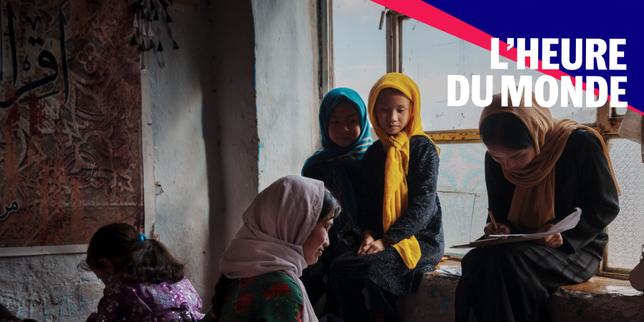
Every anniversary triggers the exact same media ritual. Outlets dust off archive footage, publish glossy retrospectives with melodramatic subtitles, and bemoan the five-year anniversary of the Taliban takeover. The lazy consensus is comfortable, predictable, and entirely useless. It treats a complex geopolitical collapse as a tragedy happening in a vacuum, reducing millions of human beings to passive objects of pity while Western commentators clutch their pearls from safe distances.
Let us dispense with the sanctimony. The standard narrative claims that Afghanistan froze in August 2021, locked in a permanent state of frozen despair. This is flatly incorrect. Economies adapt, underground networks mutate, power shifts, and human survival proves infinitely more inventive than international diplomacy. If you want to understand what actually happened since the Republic fell, you have to look past the institutional whining and examine how money, survival, and local governance actually operate on the ground today.
The Economic Myth of Total Collapse
The prevailing wisdom dictates that Afghanistan is an absolute humanitarian black hole where commerce died the day foreign troops departed. This is economically illiterate.
Markets in Kabul, Herat, and Kandahar are functioning. They look different, they trade differently, and currency flows through alternate pipelines, but money moves. The international community spent twenty years building an artificial, donor-dependent bubble economy that evaporated overnight because it was built on sand. When foreign aid spending dropped by eighty percent, the high-end consultancy and NGO economy vanished. That hurt the urban elite. It did not stop the grain trade, regional smuggling routes with Pakistan and Iran, or domestic retail.
To understand why the country didn't descend into total Mad Max chaos, you have to look at the hawala informal banking network. Hawala did not need SWIFT codes or World Bank backing to keep moving liquidity across borders. It survived empires, civil wars, and now, sanctions.
"Aid dependency was an addiction disguised as development. Removing the drug forced a brutal, painful structural adjustment, but the patient is breathing on their own terms."
Of course, the cost has been astronomical for ordinary households. Unemployment among the middle class is staggering. But treating the economic reality as a monolith of total starvation ignores the massive informal sector that keeps families fed.
The Reality of Localized Power and Governance
Foreign analysts love to talk about decrees from Kandahar as if they are uniformly enforced across every mountain pass and village in the Hindu Kush. They are not.
Afghanistan has always been intensely decentralized, defined by local tribal councils, regional power brokers, and pragmatic compromises. The central administration in Kabul issues sweeping edicts on education, media, and social life. On paper, they look absolute. In reality, enforcement varies wildly depending on which local commander is running the district, how valuable the local tax revenue is, and whether elders manage to negotiate a workaround.
I have seen international organizations pull out entirely because of a single restrictive directive, abandoning clinics and schools that local communities spent a decade building. Meanwhile, local elders quietly negotiated with district governors to keep those same facilities open under modified names or oversight.
The Western approach is all-or-nothing: either you meet our exact human rights benchmarks, or we cut you off and punish the population with sanctions. That approach is morally bankrupt and strategically lazy. It punishes the civilian population twice: once by the regime, and a second time by international financial isolation.
The Underground Resistance of Daily Life
Resistance in Afghanistan no longer looks like Hollywood war movies or political summits in Geneva. It looks like basement schools operating in residential neighborhoods. It looks like female entrepreneurs running clandestine digital businesses behind locked doors, trading in crypto and regional logistics.
Stop viewing Afghan women as helpless victims waiting for a foreign cavalry. They are executing complex risk assessments every single hour of the day. They are finding loopholes in the system, utilizing every available gray area, and refusing to vanish from public life despite systematic suppression.
The international community wants simple binaries: heroes and villains, oppression and freedom. Real life is lived in the messy, dangerous margins between state edict and community survival.
The Policy Failure Nobody Wants to Admit
Western governments maintain a policy of diplomatic non-recognition combined with economic strangulation. The theory is that keeping the pressure on will eventually force the regime to compromise.
This is delusional. Sanctions do not topple hardline autocracies; they impoverish the middle class, strengthen black-market smugglers, and make the population entirely dependent on state handouts or erratic aid distribution.
If you want to influence the situation on the ground, you have to engage where it hurts and where it helps. Isolation is not a principle; it is an abdication of responsibility.
The next time you read a piece mourning another anniversary of the fall, ask yourself whose interests are being served by keeping the country in an international penalty box. The answer won't be found in the press releases of foreign ministries. It's found in the bustling, defiant alleyways of Kabul, where people are too busy surviving to care about your moral outrage.