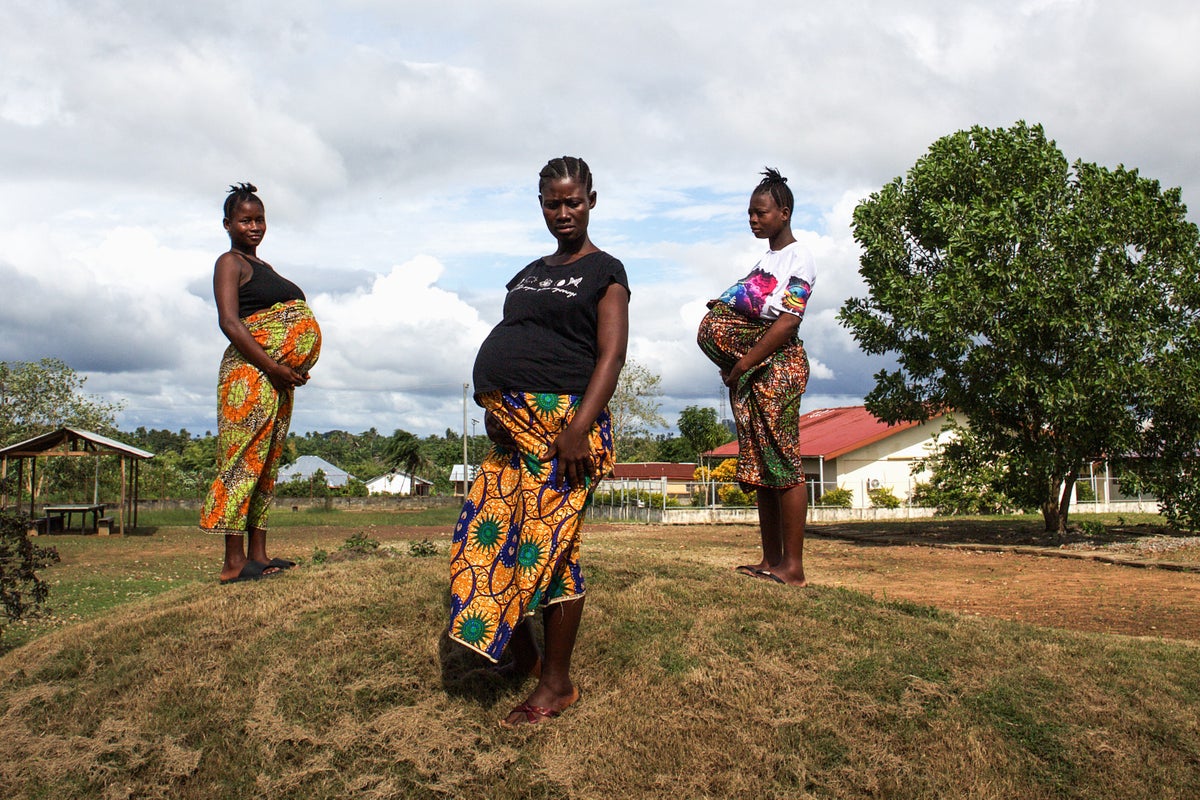
The scaling back of international health expenditure in developing economies functions less like a budgetary line-item reduction and more like sudden capital flight from an undercapitalized market. When external donors withdraw liquid capital from fragile public health infrastructures, the immediate consequence is an acute systemic contraction. Sierra Leone, which achieved an 80 percent reduction in maternal mortality since 2000 primarily via donor-capitalized health networks, is currently undergoing this exact contraction. The simultaneous retrenchment of United States and United Kingdom bilateral aid creates an existential bottleneck for adolescent reproductive health and infant survival metrics. Rather than representing a localized funding gap, this fiscal withdrawal exposes the structurally flawed mechanics of donor-dependent healthcare, where the marginal cost of saving a human life is exceptionally low, but the domestic fiscal capacity to maintain that equilibrium is entirely absent.
The Dependency Loop and Structural Bottlenecks
The operational architecture of Sierra Leone’s reproductive healthcare system is defined by a high marginal cost-effectiveness that masks an underlying fiscal vulnerability. Because domestic health expenditure sits at roughly $6 per capita—far beneath the minimum threshold required for structural self-sufficiency—external aid has historically functioned as the primary balance-sheet asset for frontline clinical operations.
When this external financing collapses, the system breaks down across three distinct operational phases:
The Commodity Supply Choke Point: Bilateral aid frequently capitalizes the procurement of essential medical commodities, including modern subdermal contraceptive implants, intra-uterine devices, and emergency obstetric medicine. The retraction of funding from entities like the United Nations Population Fund (UNFPA) Supplies program triggers immediate supply-chain stockouts. Without these inputs, clinical facilities lose their preventative capabilities, shifting the systemic burden from low-cost preventative care to high-cost emergency intervention.
The Operational Discontinuity Gap: The transfer of specialized adolescent clinical infrastructure from international non-governmental organizations to local operators regularly fails due to insufficient transitional capital. When a major international medical NGO withdrew from the Tonkolili district following global budget reallocations, the administrative handover resulted in a six-month operational freeze. During this window, primary reproductive services ceased entirely, proving that infrastructure without continuous operational liquidity rapidly depreciates into dead capital.
The Infrastructure Saturation Point: As localized clinics shut down or restrict services due to budget shortfalls, remaining active facilities experience immediate demand surges that exceed their physical and human capital constraints. Rural health centers face severe capacity bottlenecks, operating with depreciating technology and inadequate sanitation infrastructure while attempting to service growing adolescent patient volumes.
The Microeconomic Drivers of Adolescent Pregnancy
The escalation of adolescent pregnancy in rural areas is heavily accelerated by microeconomic shifts and the presence of direct user fees. While policy frameworks like the Prohibition of Child Marriage Act and legislative updates permitting pregnant individuals to return to school attempt to alter social outcomes through legal mandates, they fail to counteract underlying financial realities.
In low-income environments, menstrual hygiene products and modern family planning utilities operate as luxury goods relative to median household purchasing power. When public clinics lose donor subsidies, they are forced to implement informal user fees or require patients to purchase their own clinical consumables. This price barrier effectively markets adolescent cohorts out of the formal health sector.
The economic trade-offs are straightforward: when a young person must choose between spending scarce capital on essential immediate sustenance or a preventative clinical visit, short-term survival dictates the outcome. The result is a predictable spike in unintended pregnancies, which acts as a leading driver of secondary school attrition, permanently capping the labor productivity and economic mobility of the female demographic.
The Fiscal Constraints of Sovereign Transition
The argument that sovereign governments should seamlessly absorb discontinued donor portfolios ignores the basic math of macroeconomic fiscal space. Sierra Leone’s tax-revenue-to-GDP ratio hovers at approximately 11 percent, structurally trailing the 15 percent baseline designated by macroeconomic institutions as the minimum required to fund basic inclusive development.
[Domestic Health Spend: $6/capita] ---> [Tax Revenue: 11% of GDP] ---> [Fiscal Deficit]
                                                                            |
[US / UK Capital Disinvestment] --------------------------------------------+---> [Systemic Contraction]
This restricted fiscal capacity prevents the state from scaling up its domestic health budget to cover the sudden shortfall left by major international pullbacks. For example, the abrupt reduction of the UK’s multi-million-pound health programs down to a nominal fraction of their former value instantly removed a significant pillar of the country's reproductive health funding. The state cannot aggressively expand its tax base overnight without triggering severe recessionary pressures in an already fragile domestic economy. Consequently, the public health sector has no internal mechanisms to offset sudden international disinvestment.
Strategic Redesign and Capital Reallocation
Mitigating this structural regression requires moving away from volatile, short-term bilateral grants toward more resilient financing models. The historical paradigm of relying on external political administrations—whose foreign policy priorities shift every electoral cycle—is fundamentally broken.
Front-Loaded Transition Pools: Donor nations exiting bilateral agreements must utilize front-loaded funding models spread over multi-year horizons rather than executing abrupt stop-work orders. This capital must be legally earmarked for building domestic tax-collection infrastructure and creating sovereign health endowments.
Marginal Cost-Effectiveness Optimization: Because the marginal cost to avert a disability-adjusted life year (DALY) in Sierra Leone is among the lowest globally, remaining international capital should be strictly concentrated on high-leverage preventative inputs—specifically long-acting reversible contraceptives (LARCs)—rather than diffusing funds across bloated administrative overheads.
Private-Sector Commodity Underwriting: To insulate clinical supply chains from bilateral political volatility, procurement frameworks for maternal and adolescent medicines must be diversified through blended finance mechanisms, utilizing philanthropic guarantees to secure long-term, low-cost commercial supply contracts.
The immediate trajectory of maternal survival and adolescent health metrics in West Africa will not be determined by policy rhetoric or legislative prohibitions. It will be dictated entirely by the stabilization of clinical liquidity and the structural overhaul of how healthcare capital is deployed, managed, and transitioned.
The analysis presented above demonstrates how international funding shocks directly impact maternal healthcare delivery in developing economies. For a detailed field perspective on how these specific budget reallocations affect clinical operations and patient outcomes on the ground, view this On-Scene Report on Maternal Health in Sierra Leone.