The rain in western Uganda does not fall gently. It thuds against the banana leaves, a heavy, relentless rhythm that drowns out everything else. In the border district of Kasese, that sound usually brings a sense of comfort. It means the crops will grow. It means life moves forward. But on a Tuesday afternoon, under a sky the color of wet slate, the rain felt different. It felt like a shroud.
Inside a small, dim clinic, a medical officer named John—a pseudonym to protect his privacy in a community now gripped by fear—listened to a sound that made his blood run cold. It wasn't the rain. It was the ragged, wet gasp of a five-year-old boy.
The child’s skin was hot, radiating a fever that seemed to burn right through the thin cloth of his shirt. His eyes, usually bright and shifting, were heavy, bloodshot, and fixed on nothing. John didn't need a lab coat or a microscope to feel the sudden, icy weight in his stomach. He had seen this before. Everyone here remembered 2019. Everyone remembered the funerals.
Hours later, the official dispatch from the Ministry of Health in Kampala would broadcast the dry reality to the world: two new cases of Ebola Sudan strain confirmed in Kasese. A mother and her young son. Both isolated. Both under supervision.
To the global news tickers, it was a data point. A minor blip in a continent often reduced to statistics. But to understand what is actually happening on the ground, you have to look past the bureaucratic language of "containment" and "surveillance." You have to stand in the mud of Kasese and realize that a virus does not care about borders, and it certainly does not care about statistics. It cares about contact. It thrives on the very thing that makes us human: our desire to comfort the sick.
The Geography of Contagion
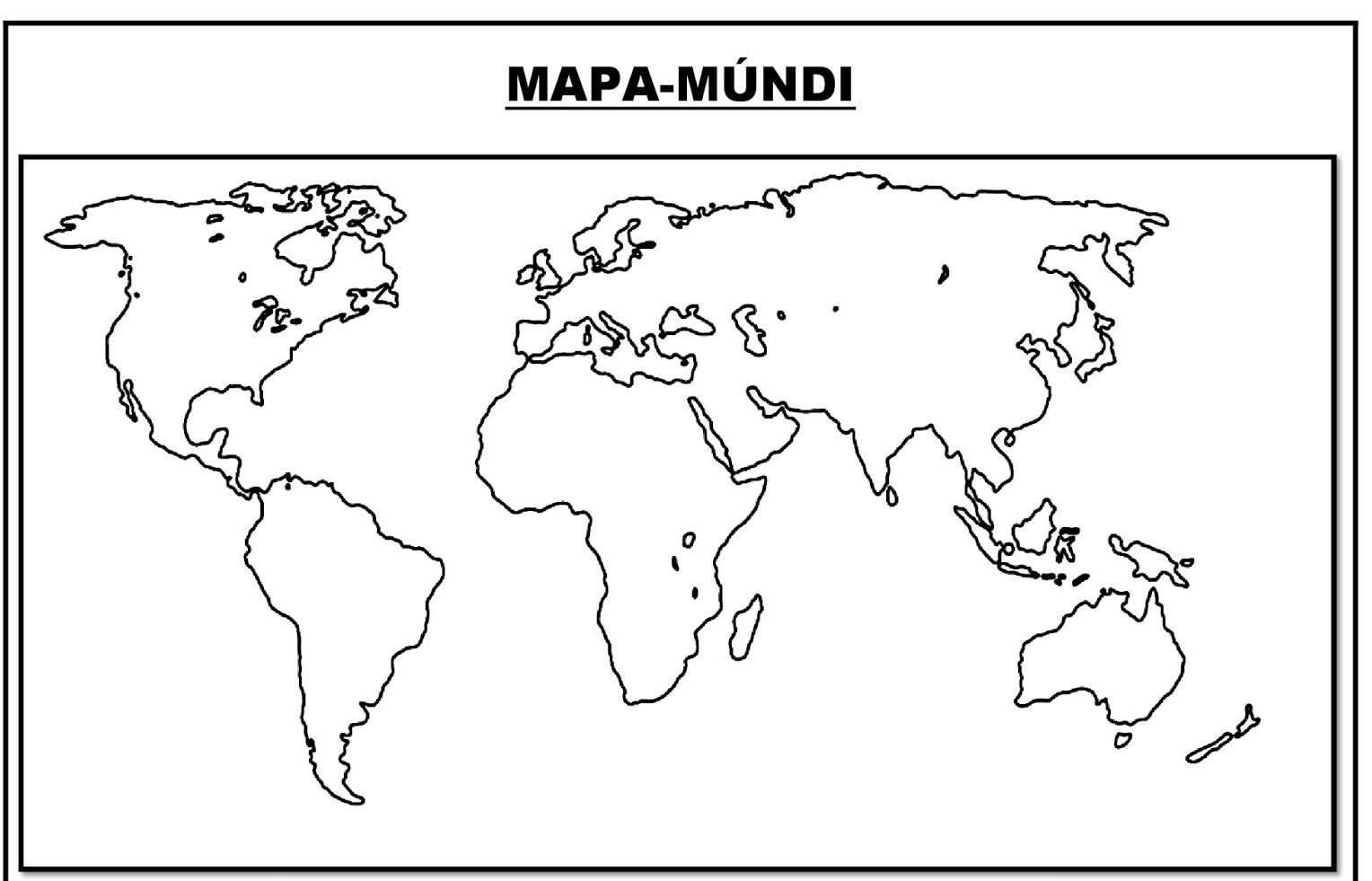
Look at a map of East Africa, and you will see lines drawn by colonizers—sharp, straight boundaries separating Uganda from the Democratic Republic of Congo.
Now look closer, through the eyes of the people who live there. Those lines do not exist.
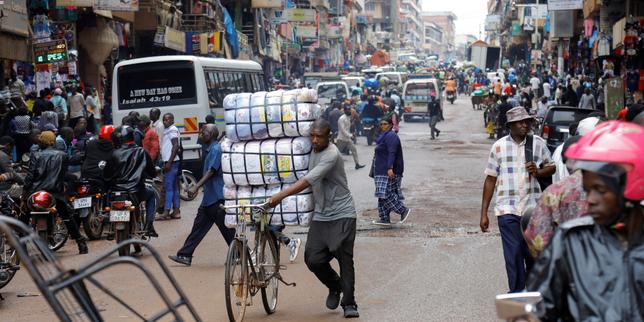
The Rwenzori Mountains tower over the landscape, their jagged peaks often hidden in clouds. Beneath them, people walk. They cross small rivers over footbridges made of braided vines or felled logs. They cross to sell tomatoes at the market. They cross to attend weddings. They cross because their sister is giving birth, or because their uncle has died. The market at Mpondwe is a swirling vortex of humanity, where thousands of feet churn the earth into thick paste every single day.
This fluid reality is exactly why Ebola is a ghost that is incredibly difficult to catch. The Sudan strain of the virus is a brutal antagonist. Unlike its cousin, the Zaire strain, there is no widely deployed, highly effective vaccine ready to go at a moment's notice. When it strikes, it does so with a terrifying biological efficiency.
Consider how the virus operates. It enters the body invisibly, perhaps through a microscopic tear in the skin or a droplet on a hand that later touches an eye. For days, sometimes up to three weeks, nothing happens. The person feels fine. They walk through the markets. They hug their children.
Then, the storm breaks.
It begins like a common flu—a headache that throbs behind the temples, a profound weariness that settles into the marrow of the bones. In a region where malaria is as common as a cold, many mistake it for a routine bout of mosquitoes. They take some paracetamol. They try to work through it.
But by the time the severe symptoms appear—the vomiting, the diarrhea, the internal and external bleeding that characterizes the late stages—the virus has already built a roadmap of potential new hosts. Every person who helped the patient to bed, every traditional healer who laid hands on their forehead, every relative who washed their clothes is now part of the chain.
The Ghost in the Lab
When the samples from Kasese arrived at the Uganda Virus Research Institute in Entebbe, the technicians worked under the harsh glare of fluorescent lights, surrounded by the hum of negative-pressure containment units.
The process of confirming Ebola is an exercise in extreme caution. You are handling a pathogen that can kill a healthy adult in a matter of days. The laboratory process relies on Polymerase Chain Reaction—PCR—the same technology that became a household name during the coronavirus pandemic.
The science is precise, but the logistics are a nightmare.
Imagine a vial of blood collected in a remote village where the roads have turned to soup. It must be kept cold. It must be packed in layers of protective containers, sealed against leaks, and rushed by motorbike or standard vehicle over hours of bumpy terrain to the nearest regional hub, and then flown or driven to the central lab.
A delay of twelve hours can mean the difference between isolating a patient and tracking a hundred contacts across three districts.
When the machine finally spits out the result—Positive—the clock resets to zero. The health ministry's rapid response teams don their yellow personal protective equipment, looking like astronauts dropped into the green hills of western Uganda. They carry spray tanks of chlorine, clipboards, and a profound sense of urgency.
But the science is only half the battle. The harder half is the psychology.
The Currency of Trust
When a village is told that Ebola has arrived, the immediate reaction is rarely compliance. It is fear. And fear breeds denial.
"They tell us not to touch our dead," a local elder remarked during a past outbreak, his voice heavy with grievance. "But if I do not wash the body of my brother, his spirit will haunt our family. You are asking us to give up our humanity to save our skins."
This is the invisible wall that health workers hit every day. The protocols required to stop Ebola are violently unnatural. They dictate that you cannot hold the hand of your dying child. They dictate that if a loved one passes away, a burial team in plastic suits will take the body away in a white bag and bury it in a nameless plot without the traditional songs, the tears, or the final touches.
To a community that has survived decades of political instability, economic hardship, and neglect, the sudden appearance of government vehicles and foreign doctors can look less like a rescue mission and more like an invasion. Rumors spread faster than the virus itself. The white suits are stealing blood. The government invented the disease to cancel elections. The clinic is where people go to die.
If you want to stop an outbreak, you have to dismantle these rumors one by one, not with a megaphone, but with a conversation.
Health workers have learned that the most important tool in their kit isn't the chlorine spray; it's the local radio station. It’s the village chief who agrees to be tested first. It’s the traditional healer who agrees to refer patients with fevers to the hospital instead of trying to treat them with herbs.
In Kasese, the memory of previous outbreaks is a double-edged sword. It means people know how deadly the disease is, which can trigger panic. But it also means there are survivors walking around—men and women who went into the isolation wards and came out alive. These survivors are the real heroes of the response. They are the living proof that a diagnosis is not a death sentence.
The Cost of the Long Guard
Uganda’s health system is not fragile by accident. It is a system that has been forged in the fires of constant adversity. It has battled HIV, marburg, yellow fever, and multiple outbreaks of Ebola over the past two decades. The doctors and nurses in Kampala and the regional centers are among the most experienced epidemiologists on the planet.
But experience does not cure exhaustion.
The doctors monitoring the two cases in Kasese are working with resources that would make a Western hospital administrator weep. Personal protective equipment must be rationed. Fuel for ambulances must be negotiated. Nurses work long shifts in suffocating plastic suits under a tropical sun, losing liters of sweat in a single afternoon.
The economic toll on the region is immediate. When an outbreak is announced, tourism slows. The safaris to nearby Queen Elizabeth National Park see cancellations. The cross-border trade that sustains thousands of families slows to a crawl as screening checkpoints create miles-long backups at the border. The price of soap and jerrycans rises.
Yet, the alternative to this aggressive, exhausting response is unthinkable.
The Sudan strain carries a mortality rate that historically hovers around fifty percent, though it can climb higher if left unchecked. If the virus escapes the containment zones of Kasese and hitches a ride on a bush taxi to Kampala—a bustling metropolis of millions—the problem ceases to be a regional health emergency. It becomes a national crisis with global implications.
The Light in the Ward
Back in the isolation unit, the silence is punctuated only by the drip of intravenous fluids and the rustle of protective gowns.
The five-year-old boy is sleeping now, his fever slightly lower thanks to supportive care—hydration, electrolytes, and close monitoring. His mother sits nearby, her own symptoms milder but her anxiety palpable. They are separated from the rest of the world by thick plastic sheeting and a zone of strict disinfection.
Through the clear visor of her hood, a nurse catches the mother's eye. She cannot offer a reassuring smile—her mouth is covered by an N95 mask—but she reaches out with a gloved hand and touches the mother's shoulder through the protective barrier. It is a small gesture, heavy with risk, but absolutely vital.
The two confirmed cases in Kasese are a warning shot. They remind us that the line between safety and catastrophe is incredibly thin, held together by the vigilance of underpaid health workers and the choices of ordinary citizens who decide to report a fever instead of hiding it.
Outside, the rain finally stops. The sun breaks through the clouds, casting a sharp, golden light over the Rwenzori foothills. The mud will dry, the markets will open again tomorrow, and the search for anyone who might have crossed paths with the virus will continue through the night. The battle isn't won in a single dramatic moment; it is won in the quiet, meticulous tracking of a single name, a single contact, a single life at a time.