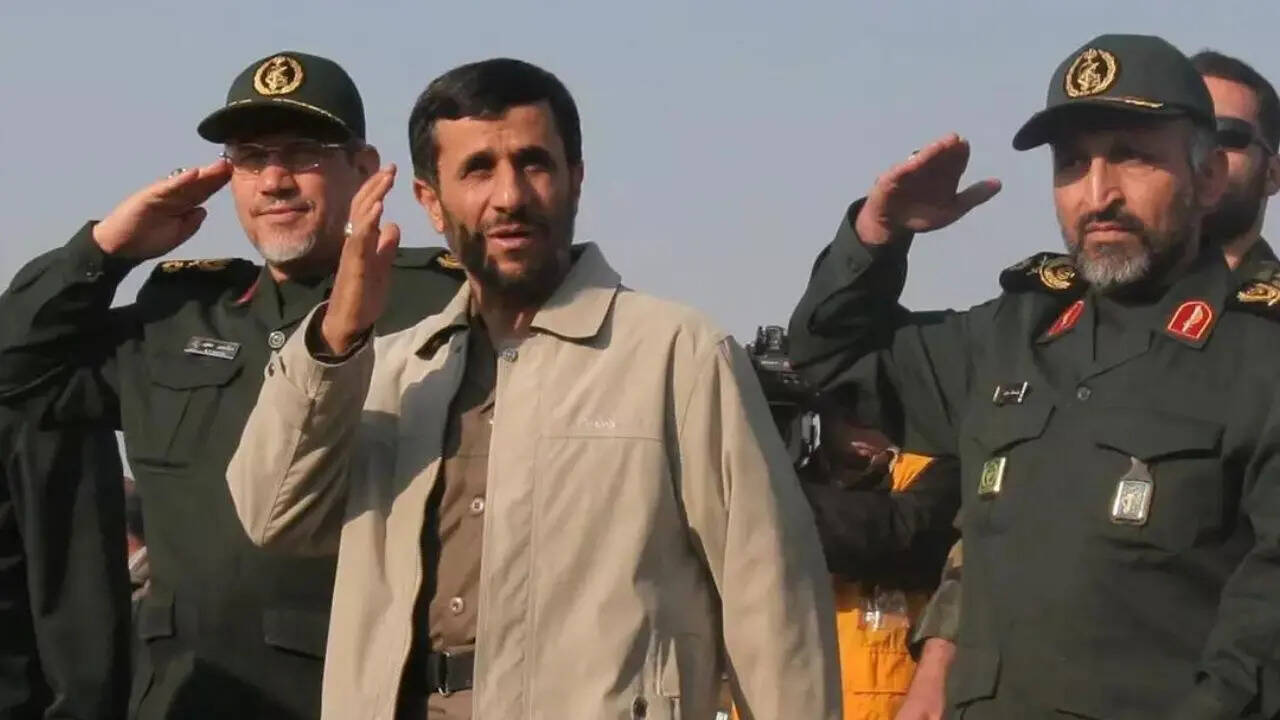
The intelligence blueprint seemed too bizarre to be true, yet it sat at the center of the opening hours of the conflict. When American and Israeli forces launched airstrikes against Iran on February 28, killing Supreme Leader Ayatollah Ali Khamenei, Washington and Jerusalem were already executing a secret regime-change operation. Their chosen figurehead to stabilize a fractured, post-theocratic Tehran was none other than Mahmoud Ahmadinejad. The former Iranian president is globally notorious for his incendiary rhetoric, having famously called to wipe Israel off the map during his tenure from 2005 to 2013. This covert playbook, code-named Operation Epic Fury, gambled that Iran's ultimate hardliner could be flipped into a stabilizing transitional leader. The entire architecture of the plot shattered on day one when an Israeli extraction strike went awry, injuring Ahmadinejad and alienating the very man they hoped to install.
Intelligence agencies have long chased the mirage of the perfect puppet, but the selection of Ahmadinejad represents an entirely new chapter in the history of strategic miscalculation. The assumption by the Trump administration and Israeli Prime Minister Benjamin Netanyahu was that a Westernized moderate would possess zero legitimacy among the remnants of the Islamic Revolutionary Guard Corps (IRGC) and the religious populace. Ahmadinejad, despite years of domestic political isolation, still carried the populist credentials of a nationalist who had stood up to the West.
The Narmak Jailbreak That Failed
The mechanics of the operation relied on a high-stakes, kinetic extraction. For years, Ahmadinejad had been kept under strict surveillance and house arrest in the Narmak district of eastern Tehran, barred from running for office after repeatedly clashing with Khamenei's inner circle over state corruption. He was a prisoner of the system he had once helped lead.
On the first morning of the war, as high-value targets were hit across the capital, a highly precise Israeli airstrike hit the street outside Ahmadinejad’s residence. The objective was not to assassinate the former president, but to liquidate the IRGC security post guarding the entrance to his street, effectively breaking him out of captivity.
Satellite imagery confirmed the complete destruction of the IRGC checkpoint while the main residential building suffered only minor external damage. The plan assumed Ahmadinejad would immediately grasp the opportunity, step into the power vacuum left by Khamenei’s death, and utilize his remaining populist base to manage Iran’s political and military transition.
Instead, the kinetic nature of the rescue almost killed the asset. Ahmadinejad was injured by flying debris and concussive shockwaves from the blast. Shaken, bleeding, and deeply disillusioned by a liberation strategy that involved dropping a munitions payload on his doorstep, the former president refused to play his assigned role. He vanished into the chaotic underbelly of a mobilizing Tehran. His sudden withdrawal from the board paralyzed the Western succession scenario before it could even be initiated.
The Logic Behind a Radical Choice
To understand how Western intelligence arrived at the decision to back a man who once aggressively accelerated Iran's uranium enrichment, one must look at the shifting nature of Ahmadinejad's politics over the past decade. He was no longer the loyal foot soldier of the theocracy.
- The Populist Rebellion: Following his presidency, Ahmadinejad refashioned himself as an anti-establishment populist, regularly writing public letters criticizing the clerical elite for economic mismanagement and systemic corruption.
- The International Footprints: Intelligence handlers noted his recent travels to countries like Hungary and Guatemala—states maintaining discreet, functional channels with Israeli intelligence.
- The Trump Adulation: In a 2019 interview, Ahmadinejad openly praised Donald Trump as a "man of action" and a "businessman capable of calculating cost-benefits," signaling to Washington that he was a pragmatist hiding behind ideological theater.
Western planners did not see a moderate; they saw a strongman who could command authority. They envisioned an Iranian equivalent of Delcy Rodríguez in Venezuela—a figure capable of exerting administrative and military control during a period of profound national trauma.
The Mirage of Predictable Collapse
Operation Epic Fury presumed that decapitating the top tier of the clerical establishment would cause the entire state apparatus to fracture along predictable fault lines. Washington expected that regional ethnic minorities, specifically Kurdish factions, would launch coordinated uprisings while widespread infrastructure failures would convince ordinary citizens that the Islamic Republic was dead.
None of these assumptions proved accurate. The assassination of Khamenei and his top aides did not shatter the regime’s command structure; it triggered an immediate, defensive consolidation of power among surviving commanders. The external aggression sparked nationalist fervor rather than internal rebellion, exemplified by state-sponsored mass weddings in Tehran where couples pledged themselves to national defense.
The Western miscalculation lay in ignoring the institutional resilience of the IRGC. By attempting a regime-change operation via external bombardment and clandestine jailbreaks, the allied planners unified a fractured political elite against a common existential threat.
The strategy of picking a volatile, disgraced populist to lead a post-war transition exposes the persistent flaws in Western intelligence thinking. Decades after disastrous interventions in Iraq and Libya, the desire for a swift, top-down political transition blinded strategists to the realities of Iranian nationalism. Ahmadinejad was never going to be the American or Israeli governor of Tehran. By risking everything on a violent extraction that almost killed their only candidate, the architects of the plot left themselves with no alternative plan, a highly resilient adversary, and a war that refused to follow their script.