The proliferation of unmanned aerial vehicles (UAVs) crossing from the Ukrainian theater into NATO airspace represents a deliberate stress test of Western defensive thresholds rather than mere navigational drift. When Polish authorities indicate a requirement to react firmly to airspace violations, they are addressing a fundamental flaw in current Alliance deterrence: the asymmetric cost-benefit calculation favoring the transgressor. Under existing operational protocols, a kinetic interception over NATO territory risks generating domestic debris hazards, while pre-emptive interception over Ukrainian airspace triggers complex legal and escalatory feedback loops. Resolving this friction requires shifting from a reactive posture to a calculated strategy of denial.
The Tri-Layered Architecture of Airspace Incursions
Airspace violations in the Baltic and Central European corridors operate on three distinct functional layers. Proponents of standard military reporting often conflate these layers, treating a drone crash as an isolated technical malfunction rather than a multi-use strategic probe.
1. Operational Reconnaissance and Mapping
Every unintercepted or late-intercepted UAV maps the radar topography of the target nation. By tracking how and when Polish or Romanian air defense systems activate, adversary electronic intelligence units calculate the blind spots, reaction latencies, and command-and-control bottlenecks of local integrated air and missile defense networks.
2. Attrition Asymmetry
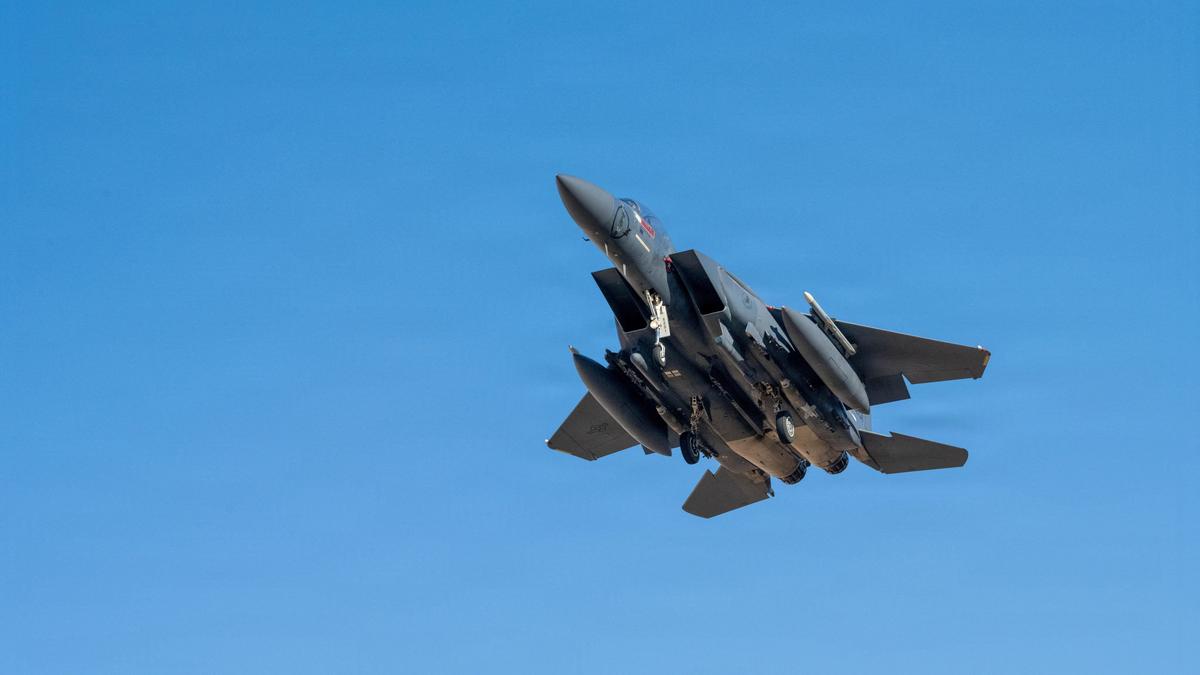
Deploying low-cost loitering munitions forces NATO command structures to utilize high-cost effectors. Scrambling F-16 sorties or illuminating targets with Patriot missile batteries incurs a significant financial and readiness penalty relative to the manufacturing cost of a commercial-grade reconnaissance drone or a primitive shahed-variant platform.
3. Psychological and Political Fracturing
The primary objective of gray-zone incursions is the erosion of Article 5 credibility. If a sovereign nation tolerates repeated, minor incursions without a kinetic response, the psychological threshold for what constitutes an act of aggression shifts. This creates political friction between frontline border states demanding immediate kinetic enforcement and internal alliance partners prioritizing escalation avoidance.
[Adversary UAV Incursion]
       │
       ├───> 1. Radar Mapping (Harvests latency & blind-spot data)
       ├───> 2. Resource Drain (Forces expensive Patriot/F-16 utilization)
       └───> 3. Political Friction (Exploits divergence in NATO risk tolerance)
The Border Interception Cost Function
To understand why firm reactions have delayed, analyze the cost function of a defensive kinetic engagement near a sovereign border. A regional commander evaluates three primary variables before authorizing a launch:
$$C_{total} = D_{debris} + E_{escalation} + M_{opportunity}$$
Where:
- $D_{debris}$ represents the calculated risk of kinetic fragments damaging domestic civilian infrastructure or causing casualties.
- $E_{escalation}$ measures the probability that cross-border targeting will be interpreted as direct entry into the conflict.
- $M_{opportunity}$ calculates the depletion of finite interceptor stockpiles against a high-volume, low-value threat.
The current paradigm guarantees that $C_{total}$ almost always exceeds the perceived value of destroying a single non-weaponized or low-payload reconnaissance drone. This mathematically derived paralysis allows the adversary to maintain operational initiative at zero cost.
Redefining Regional Interception Thresholds
A firm reaction cannot rely on rhetorical warnings. It demands a structural recalibration of engagement rules. To establish an effective denial strategy, frontline states must transition to an extended active defense model.
Pre-Emptive Triggers and Technical Attribution
Establishing a specialized Buffer Interdiction Zone (BIZ) extending 20 to 50 kilometers into Ukrainian airspace provides the necessary reaction time to mitigate the debris variable ($D_{debris}$). Any unidentified airborne vector tracking toward NATO airspace within this zone must be classified by automated transponder and radar cross-section profiles. If the vector exhibits non-cooperative flight characteristics, interception occurs over Ukrainian territory via pre-coordinated bilateral frameworks, eliminating the legal ambiguity of cross-border firing.
Asymmetric Interception Mechanisms
Deploying multi-million-dollar interceptors against low-tier UAVs is unsustainable. A viable defense architecture must integrate:
- Directed Energy Weapons (DEW) and high-power microwave systems optimized for swarm degradation at short ranges.
- Electronic warfare and GPS spoofing arrays deployed in high-density corridors to disrupt command links prior to border approach.
- Low-cost kinetic interceptors, including counter-UAV drones designed to ram or ensnare incoming targets mid-air.
Strategic Realignment and Enforcement
The limitation of current Polish and regional defense logic is the reliance on ad-hoc statements during acute crises. True deterrence requires a institutionalized framework that removes tactical ambiguity from the adversary's calculus.
Frontline states must establish a joint air defense command independent of broader alliance consensus mechanisms for sub-Article 5 provocations. This command must operate on pre-delegated authority, where specific telemetry profiles trigger automated kinetic responses regardless of diplomatic conditions. By removing political deliberation from the immediate kill-chain, the alliance nullifies the adversary's ability to exploit political hesitation. The alternative is a progressive degradation of sovereign airspace integrity, where border incursions transition from rare anomalies to accepted operational norms.