The quiet corridors of the Pentagon are echoing with an unprecedented institutional fracture. Since taking charge of the military apparatus, Pete Hegseth has systematically upended the senior ranks, forcing out or sidelining dozens of four-star generals, admirals, and civilian chiefs. This sweeping overhaul targets the very architects of modern American military strategy under the banner of restoring a raw warrior culture.
When Army Chief of Staff General Randy George was abruptly asked to take early retirement, it signaled that decades of institutional continuity were being discarded overnight. The administration is not merely reshuffling chairs on a crowded deck. It is replacing the military’s high command with handpicked loyalists, leaving critical command vacancies open for months while active conflicts simmer from Eastern Europe to the Middle East.
To understand the mechanics of this shakeup, one must look past the public talking points about lethality and bureaucracy. The conflict centers on a fundamental disagreement over who controls the intellectual capital of the armed forces. For generations, the U.S. military promoted officers through a rigorous meritocratic pipeline overseen by joint boards. These boards valued administrative competence, strategic patience, and legal compliance—traits that critics inside the current administration dismiss as risk-averse compliance.
Hegseth came into office armed with a mandate to purge what he labels ideological drift. His targets are not abstract entities; they are career soldiers who spent thirty years navigating the exact complexities of asymmetric warfare in Iraq and Afghanistan. When leaders like Army Secretary Dan Driscoll resigned following persistent friction over the firing of these very generals, it exposed a deep rift between political appointees and seasoned uniformed commanders. Driscoll had championed technological modernization, particularly unmanned drone adaptation and agile contracting. His exit proved that administrative alignment with the secretary's personal philosophy now outweighs operational expertise.
The human cost of this realignment extends far beyond a few high-profile departures. More than eighty general and flag officer careers have been actively altered, either through direct termination, blocked promotions, or forced early retirements. Consider the removal of the military’s top legal officers, the judge advocates general, whom the leadership historically viewed as procedural safeguards. By dismantling these internal checks, the department has signaled that questioning an order or pointing out operational friction is equivalent to insubordination.
Critics on Capitol Hill, including retiring Republican senators and senior Democrats alike, have pointed out the inherent danger of cultivating a culture where dissent is treated as a liability. A military that cannot provide candid, unvarnished truth to civilian leadership risks catastrophic strategic miscalculation. When yes-men replace independent thinkers, accountability vanishes precisely when global flashpoints multiply.
The institutional memory of the American armed forces is being hollowed out at an astonishing velocity. As new, untested acting commanders take the helm of major divisions without Senate confirmation, the long-term readiness of the force remains an open question. History suggests that breaking a professional military command structure takes months, but rebuilding it takes generations.
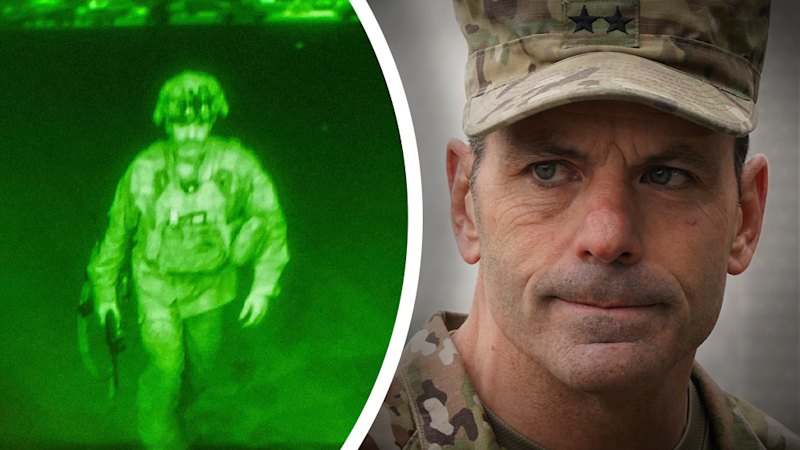
Watch the discussion on the Pentagon leadership turnover
This video provides additional context regarding the specific high-level departures and the broader implications of the military overhaul under the current administration.
http://googleusercontent.com/youtube_content/1