The Washington-led coalition wants the world to believe that a fragile architecture of truces is holding the Middle East back from the edge of total collapse. It is a calculated illusion. Behind the closed-door negotiations mediated by Pakistan and the flurry of announcements out of the White House, a far more dangerous reality is unfolding. The war that ignited on February 28, 2026, with Operation Epic Fury—the joint U.S.-Israeli assault that decapitated the Iranian leadership—has not ended. It has simply mutated into a war of attrition where the borders of Lebanon are being permanently redrawn.
While diplomats celebrate a nominal pause in direct U.S.-Iranian hostilities, Israel is moving five military divisions deeper into Lebanese territory. The conflict is no longer a localized campaign to push a militant group back from a border. It is a systematic dismantling of the Lebanese state, executed under the shadow of a shattered regional balance of power. The true crisis is not that the U.S. and Iran are trading occasional blows; it is that the diplomatic framework meant to contain the violence is actively providing cover for a permanent occupation of southern Lebanon.
The Myth of the Separate Peace
When the United States announced a cessation of hostilities with Iran in mid-April, it deliberately left a gaping vulnerability in the agreement. Lebanon was excluded. Prime Minister Benjamin Netanyahu made it clear almost immediately that any understanding reached between Washington, Islamabad, and Tehran did not apply to his northern front.
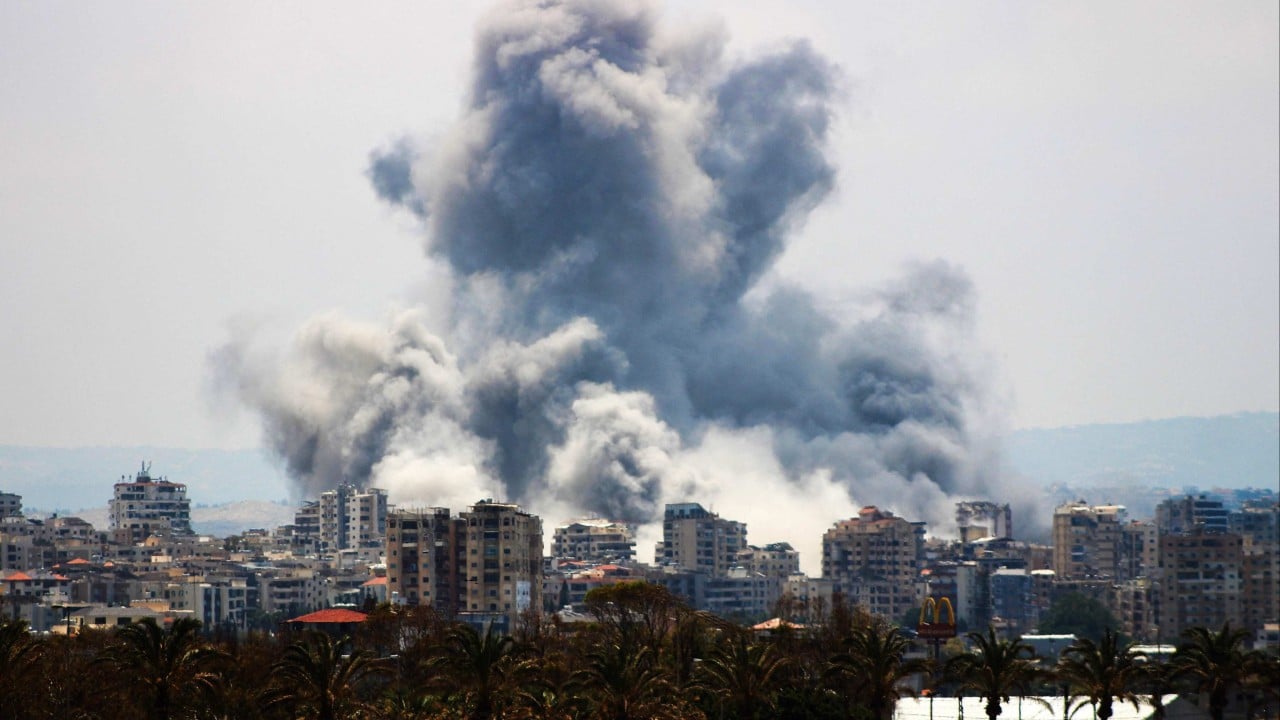
Hours after that initial ceasefire was whispered in diplomatic circles, the Israeli Air Force launched Operation Eternal Darkness. Fifty fighter jets dropped 160 munitions across Lebanon without warning, killing hundreds in central Beirut, Sidon, and the Beqaa Valley. It was a explicit demonstration of a new strategic reality. The U.S. had achieved its primary objective—blunting Iran's immediate retaliatory capacity after the assassination of Supreme Leader Ali Khamenei—and subsequently left its regional partners to handle the fallout.
This separation of theaters is a fatal flaw in global diplomacy. Iran cannot permanently decouple its own survival from that of its primary regional proxy, Hezbollah. Though Hezbollah leader Naim Qassem has stated the group will not revert to the pre-March status quo, the militia is fighting with a severed lifeline. The supply routes that once ran from Tehran through Iraq and Syria are heavily compromised.
By treating Lebanon as an isolated battlefield rather than the epicenter of the U.S.-Iran proxy architecture, western strategists are miscalculating. The current lull is not peace. It is the silence of an army reloading.
Redefining the Combat Zone
On the ground in southern Lebanon, the tactical objectives have shifted from counter-terrorism to demographic and geographic engineering. The Israel Defense Forces recently declared everything south of the Zahrani River—located 40 kilometers north of the de facto border—a active combat zone.
[ Beirut ]
    │
    ▼
─────────────── Zahrani River (New IDF Combat Line)
    │
    ▼  40km Zone of Sweeping Evacuation Orders
─────────────── Litani River (Historical Buffer)
    │
    ▼
[ Israel Border ]
This expansion pushes far beyond the historical buffer of the Litani River. The IDF has systematically demolished border villages, blown up the main bridges spanning the Litani, and issued sweeping evacuation orders for dozens of towns simultaneously. More than 1.2 million people, representing roughly 20 percent of the entire Lebanese population, are now displaced.
The strategy mimics the operations seen in Gaza. By rendering entire towns uninhabitable and forcing the civilian population north of the Zahrani River, a new security architecture is being created through sheer destruction.
The Vacuum Left by UNIFIL
This deep penetration into Lebanese territory was made significantly easier by a deliberate diplomatic maneuver executed a year prior. In the summer of 2025, under intense pressure from the United States and Israel, the UN Security Council allowed the mandate of the UNIFIL peacekeeping mission to expire. The mission is set to completely disappear by the end of 2026.
Without international observers on the blue line, the last barrier to a full-scale territorial redefinition vanished. The Lebanese Armed Forces, heavily underfunded and caught between a dominant militia and an invading army, have been unable to offer meaningful resistance. Two of their soldiers were killed in recent bombardments, highlighting the complete vulnerability of the state apparatus.
The Fragmented Arab Response
The conventional wisdom that the Arab world acts as a unified bloc against Israeli expansion has been entirely disproven by the events of 2026. The initial Iranian counter-strikes in March, which targeted U.S. bases and oil infrastructure across the Gulf, deeply alienated regional neighbors.
- The United Arab Emirates has accelerated its divergence from regional consensus, even exiting OPEC amid intense tension with Saudi Arabia.
- Saudi Arabia remains caught between its long-term security dependence on Washington and the domestic fury generated by the destruction of Arab cities.
- Iraq, operating under a newly elected leadership since late 2025, is paralyzed by internal divisions, unable to prevent its airspace from being used as a highway for foreign munitions.
This fragmentation means that while individual states call for ceasefires, there is zero collective economic or diplomatic leverage being applied to stop the advance into Lebanon. The opening of the Strait of Hormuz remains a leverage point for Tehran, but with the U.S. temporarily manipulating global oil supplies by relaxing certain sanctions on transit oil and releasing hundreds of millions of barrels from the International Energy Agency reserves, even the energy weapon has been temporarily neutralized.
The Fallacy of Voluntary Emigration
The long-term danger of the current strategy is the precedent it sets for regional displacement. Recently, the Israeli defense ministry revived discussions surrounding a "voluntary emigration plan" for Gaza, directly contradicting the official peace guidelines proposed by the Trump administration.
A similar logic is now being implicitly applied to southern Lebanon. When an invading force declares a massive portion of a sovereign country a permanent combat zone, destroys its infrastructure, and prevents more than a million people from returning to their homes despite nominal truces, it is no longer conducting a temporary military incursion. It is creating a permanent buffer zone through forced depopulation.
This reality exposes the hollow nature of the current diplomatic push celebrated at the United Nations. Washington’s insistence that a broader deal is being negotiated on fumes ignores the physical transformation of the Levant. A country cannot be put back together once a fifth of its population has been permanently pushed out of its southern half.
The ultimate trajectory of this conflict will not be decided in Islamabad or Washington, but along the banks of the Zahrani River. If the international community continues to accept the fiction that the U.S.-Iran theater and the Israel-Lebanon theater are separate conflicts, it will wake up to a Middle East where the state of Lebanon exists only on paper, and the borders of regional occupation have moved permanently northward.