The mainstream media is treating Donald Trump’s latest Truth Social announcement as a masterclass in textbook diplomacy. The narrative is neat, comforting, and fundamentally flawed. According to the lazy consensus, Iran threatened to blow up back-channel peace talks with Washington over Israel's expanded bombardment of Lebanon, prompting Trump to hop on the phone, lean on Benjamin Netanyahu to turn his troops back from Beirut, and magically broker a mutual de-escalation with Hezbollah.
It makes for a fantastic headline. It is also an absolute illusion.
If you believe that the shooting is about to stop for "ETERNITY" just because a social media post declared it so, you are misreading the entire structural reality of the Middle East. What the press is spinning as a breakthrough is actually a desperate, temporary pause that highlights a brutal truth: Washington is being leveraged by Tehran, and Hezbollah just secured a strategic breather it desperately needed.
The Mirage of the Turned-Back Troops
Let's dissect the mechanics of what actually occurred. The media painted a picture of Israeli armor rolling toward the Lebanese capital, only to pivot mid-highway because Trump made a call.
I have spent years analyzing regional defense deployments and crisis simulations. Armed forces do not orchestrate deep incursions into a dense, hostile urban environment like Beirut on a whim, nor do they abort a major strategic operation because of a single phone conversation without extracting severe structural concessions.
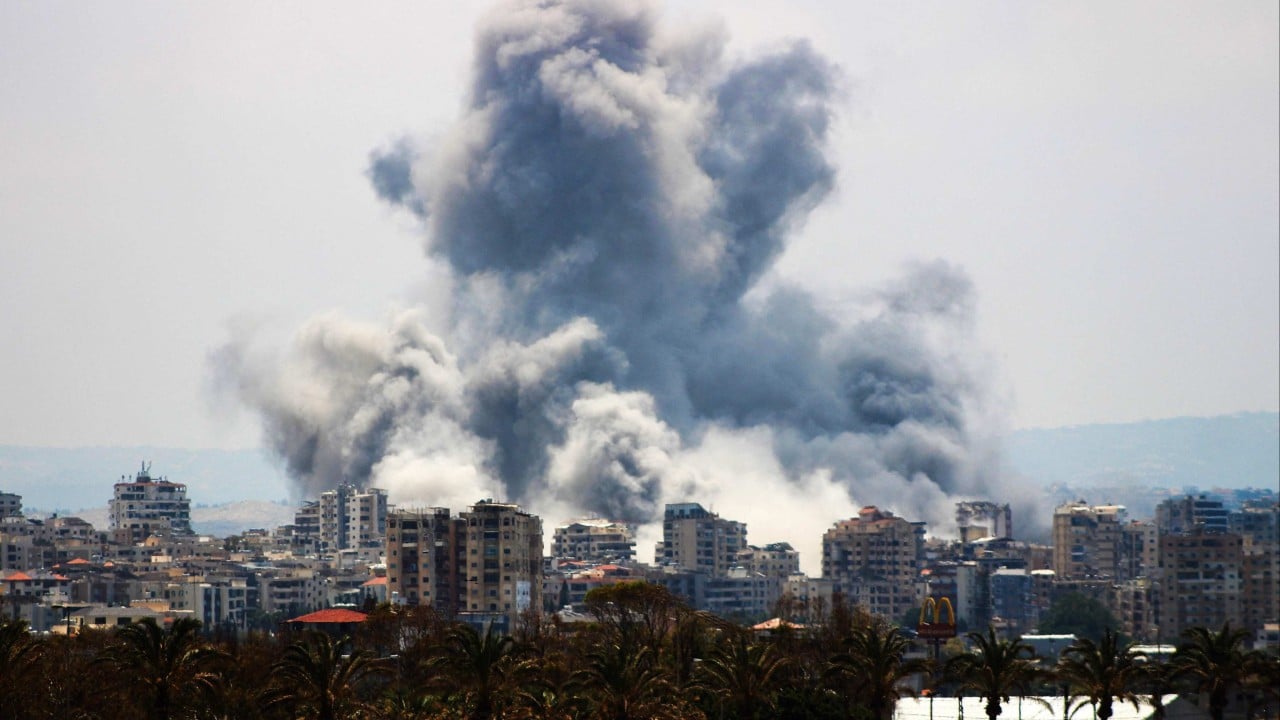
What the public saw was tactical theater. Netanyahu and Defense Minister Israel Katz ordered strikes on Beirut's southern suburbs, Dahiyeh, knowing exactly how the geopolitical chess board would react. It was a high-stakes leverage play. By triggering a mass exodus from the capital and threatening the core of Hezbollah’s political infrastructure, Israel forced Washington’s hand.
But instead of leveraging that pressure to dismantle the militant group’s command structure once and for all, the White House panicked over the potential collapse of its broader regional framework. The administration forced a theatrical stand-down that leaves the fundamental threat completely untouched. Netanyahu’s follow-up statement made the reality clear to anyone paying attention: Israel will continue to operate as planned in southern Lebanon, and if a single rocket crosses the border, Beirut is back on the menu. This isn’t a peace deal; it is a Mexican standoff disguised as diplomacy.
Iran Mastered the Art of the Leverage Loophole
The competitor press is hyper-focused on the idea that Iran is acting out of a position of vulnerability, using its suspension of message exchanges through mediators as a last-ditch defensive tantrum. That is an elite-level misunderstanding of Iranian proxy warfare.
Tehran is running circles around Western negotiators by using a simple, integrated strategy: the "one front, all fronts" doctrine. Iranian Foreign Minister Abbas Araghchi laid it out explicitly on X: a violation on one front is a violation on all fronts. By tying the reopening of the Strait of Hormuz and the broader U.S.-Iran war ceasefire directly to the survival of Hezbollah in Lebanon, Iran has successfully turned its regional proxies into diplomatic human shields.
Imagine a scenario where a corporate conglomerate threatens to shut down its entire global supply chain every time a regional subsidiary faces a compliance audit. You wouldn't celebrate a "compromise" that allows the subsidiary to keep breaking the law just to keep the shipping lanes open. Yet, that is exactly what the U.S. just did.
By bending to Tehran’s tantrum over Beirut, the administration proved that Iran's leverage loop works. The Revolutionary Guards’ Intelligence Organisation threatened "direct war" if red lines in Lebanon were crossed, and Washington immediately pressured its closest regional ally to back down. The financial markets reacted precisely how Tehran wanted—oil prices spiked over 2%, proving that the mere threat of closing the Strait of Hormuz can dictate American foreign policy decisions.
The Structural Failure of the April 16 Paradigm
The media keeps referencing the April 16 ceasefire as if it were a baseline of stability that we must return to. Let’s look at the actual data. Since that supposed truce was signed, Israeli strikes have killed more than 800 people in Lebanon, and Hezbollah has consistently targeted Israeli troops and launched rockets toward Haifa and Tiberias.
The baseline isn't peace; the baseline is a low-intensity war of attrition.
The premise of the current diplomatic push is fundamentally flawed because it treats Hezbollah as a rational state actor willing to trade its primary reason for existence—armed resistance against Israel—for geographic immunity in Beirut. When Hezbollah MP Hassan Fadlallah flatly rejected a partial truce that spared Beirut in exchange for halting attacks on Israel, he exposed the core lie of the current U.S. proposal. Hezbollah cannot stop fighting without losing its legitimacy, and Israel cannot stop hitting Lebanon without leaving its northern citizens exposed to perpetual rocket fire.
By engineering a cosmetic freeze on operations in Beirut, Trump did not fix the problem. He merely shifted the violence back to the south, ensuring that the war of attrition continues away from the cameras of the capital.
The High Cost of Artificial Traces
Every diplomatic intervention has a cost. The downside of this artificial de-escalation is that it grants Hezbollah the one commodity it desperately requires: time.
The Israeli military has made its deepest ground incursion in over a quarter-century. Hezbollah’s supply lines are strained, its command structures are battered, and its political leadership is under immense domestic pressure as Lebanese citizens flee the fighting. A genuine, lasting peace requires one side to lose its capability to wage war. By stepping in to freeze the conflict the moment it reaches a critical boiling point in Beirut, the U.S. is inadvertently acting as Hezbollah's logistical savior.
We are watching a repetitive historical loop. A crisis escalates, the West panics over energy prices and broader war, an artificial red line is drawn around Beirut, and the underlying terror infrastructure is allowed to regenerate in the shadows of the compromise.
Stop celebrating the social media declarations of instant peace. The troops may have paused their advance on Beirut, but the structural fuse of this conflict is still burning, and the current deal just guaranteed it will detonate later, with far more devastating force.