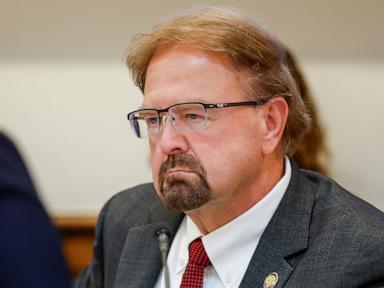
Rep. Chuck Edwards abruptly ended his reelection campaign for North Carolina’s 11th Congressional District, throwing the GOP’s hold on the region into sudden chaos following a damning House Ethics Committee report detailing allegations of inappropriate conduct toward two young female staffers.
The announcement, delivered via social media early Wednesday morning, marked a swift and unceremonious descent for a second-term incumbent who had originally positioned himself as a steady, conservative alternative to his predecessor, Madison Cawthorn. But beneath the standard exit statement expressing gratitude to constituents, party machinery in both Washington and Raleigh was already scrambling to manage a structural political emergency. With the general election fast approaching against Democratic challenger Jamie Ager, the 11th District has transformed from a safe Republican stronghold into an unpredictable battleground.
Anatomy of an Ethics Collapse
The catalyst for the unraveling came on Monday, when the bipartisan House Ethics Committee released a report finding substantial reason to believe Edwards violated House rules regarding sexual harassment and workplace hostility. Investigators detailed a pattern of behavior directed at a 19-year-old college intern and another legislative assistant.
The findings did not allege explicit sexual activity or direct physical propositions. Instead, the panel exposed a subtler, more insidious abuse of power. Edwards showered the young aides with lavish gifts—including designer items, jewelry, and even pink firearms—while making recurring remarks about their appearance, inviting them to intimate dinners, and sending late-night messages containing deeply personal and affectionate thoughts.
For veterans of Capitol Hill press corps, the playbook was tiresomely familiar. A powerful elected official misinterprets professional proximity for personal entitlement, isolating junior employees through asymmetric power dynamics. While Edwards’ legal team aggressively insisted that the report ultimately exonerated him from explicit statutory violations, the political reality was terminal. The committee recommended a formal House censure, a public scarlet letter that leadership made clear he would not survive.
The Margin Panic
Long before the ethics report dropped, warning lights were flashing across the mountains of Western North Carolina. The Cook Political Report and other nonpartisan analysts had already shifted the district rating. Edwards was drastically underperforming in campaign fundraising compared to Ager, a local farmer backed by national Democratic infrastructure.
Incumbency usually provides an impenetrable shield. Yet, when an incumbent loses the financial arms race while carrying severe personal baggage, party loyalty hits a hard numerical ceiling. Behind closed doors, senior Republican figures—including North Carolina Senator Ted Budd—applied heavy pressure on Edwards to step aside. The calculation was cold and mathematical. Retaining the majority in the House leaves zero room for compromised margins in districts that should otherwise lean comfortably right.
The Mechanics of Replacement
North Carolina election law dictates a specific protocol when a candidate withdraws. Because Edwards pulled out before the distribution of military and overseas absentee ballots, the 11th District Republican Executive Committee holds the authority to choose a replacement nominee directly, bypassing a brand-new primary election.
This creates an immediate scramble among local ambitions. Committee members face a compressed timeline to vet, select, and unify behind a substitute candidate who can rapidly consolidate donor networks and appeal to a disenchanted electorate. Handing a nomination over to a committee-appointed replacement introduces its own brand of intra-party friction, dividing grassroots activists who demand a voice in the selection process against party elites prioritizing immediate electoral viability.
The Broader Fallout
The abrupt implosion of the Edwards campaign serves as another stark reminder of the structural vulnerabilities tied to personal conduct in tightly contested legislative cycles. Power structures in Washington are notoriously slow to police their own until public exposure leaves leadership no alternative. By choosing to finish out the remainder of his term while abandoning the ballot, Edwards attempts to salvage a quiet exit, but the political shockwaves across the Blue Ridge Mountains will dictate the balance of power in Congress for months to come.