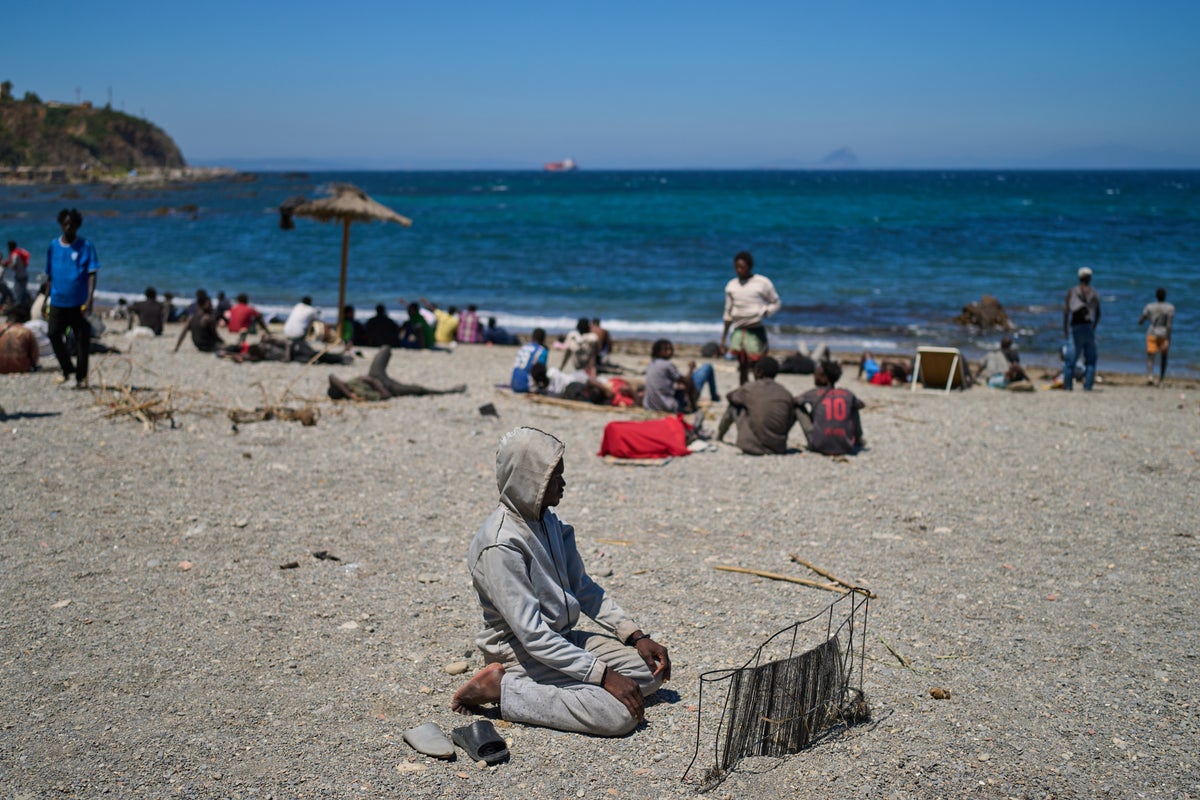
The headlines write themselves. Desperate children, razor wire, treacherous waters, and the moral outrage of a continent that refuses to look in the mirror. Every major outlet drops the same tragic narrative about the minors stranded in Ceuta. They point fingers at border policies, local authorities, and geopolitical standoffs. They frame it as a humanitarian crisis of pure victimization.
They are wrong. Or worse, they are missing the forest for the burning trees.
I have watched policy wonks and bleeding hearts circle this enclave for years, throwing money at temporary housing while ignoring the structural mechanics of how youth migration actually functions in the Southern Mediterranean. The lazy consensus says we either lock the doors tighter or open them entirely without a safety net. Both approaches guarantee failure. Both treat human beings as passive objects of pity rather than rational actors responding to severe market and social incentives.
If you want to understand why a thousand kids are stuck in a Spanish exclave on the North African coast, stop listening to the moralizers. Look at the balance sheet.
The Myth of the Trapped Victim
Let us strip away the emotional veneer immediately. The standard narrative paints these unaccompanied minors as helpless pawns swept up by geopolitical tides. That framework is insulting and analytically lazy.
Migration is an investment. It carries a cost, a risk premium, and an expected return. A teenager crossing from Morocco into Ceuta is not walking blind. They are executing a calculated risk based on the asymmetrical realities of European labor markets and domestic stagnation. They understand demographic collapse in Southern Europe better than the bureaucrats writing white papers in Brussels.
When commentators shriek about children sleeping rough or dodging police, they treat the symptom as the disease. The panic centers on the physical bottleneck of Ceuta itself—a tiny scrap of land where Spanish sovereignty bumps against Moroccan territory. But focusing on Ceuta is like analyzing a stock market crash by staring at the ticker tape in a single brokerage office.
The bottleneck is not a geographical accident. It is a pressure valve. Morocco uses the border as a geopolitical lever. Spain uses it to appease domestic political factions. Meanwhile, the minors use it because the alternative back home is economic invisibility.
Dismantling the Aid Industry Fallacy
Throwing emergency funds at local NGOs in Ceuta does nothing. In fact, it creates a perverse equilibrium. I have seen municipal budgets swell and administrative offices expand while the core structural failure remains untouched.
When you finance endless temporary holding pens without a clear integration pipeline, you institutionalize limbo. You create a bureaucratic holding pattern that benefits everyone except the migrant. The NGOs get grant renewals. The politicians get talking points about compassion or security. The minors get older, angrier, and more alienated in a legislative blind spot.
The honest truth that nobody in the mainstream press will print is this: Europe needs young labor, but it refuses to build the legal infrastructure to absorb it transparently. Instead, it relies on a chaotic, back-door filtering system that rewards the most resilient and penalizes everyone else. Ceuta is the painful friction point of that hypocrisy.
The Uncomfortable Economics of Youth Mobility
Let us look at the hard data without flinching. Spain faces a rapidly aging population and a yawning pension gap. Rural depopulation and low birth rates mean certain economic sectors will collapse without fresh labor inputs.
Yet, the legal pathways for young North Africans to enter the European workforce legally are practically nonexistent. So what happens? Rational economic agents find another way. They scale fences. They swim breakwaters. They leverage family networks back home to scrape together the fee for the crossing.
To call this a purely humanitarian crisis is a category error. It is a labor market failure disguised as a humanitarian emergency.
Imagine a scenario where municipal authorities across Spain were given the financial backing to treat these arrivals not as a burden to be warehoused in border towns, but as an immediate demographic asset subject to rapid vocational training and regional dispersal. The friction would drop. The underground shadow economy that preys on undocumented youth would shrivel.
Instead, we leave them in Ceuta, arguing over who pays for their bed and board while productivity slips away.
The Policy Blind Spot
The mainstream debate asks the wrong question entirely. They ask: "How do we secure the border against these children?" or conversely, "How do we fit more beds into Ceuta?"
The correct question is: "How do we decouple legal entry from physical border penetration?"
As long as the only way for a young person to access European labor markets is to scale a fence in North Africa, fences will be scaled. No amount of razor wire, diplomatic pressure, or moral posturing will alter basic economic gravity. People move toward opportunity the way water moves downhill.
If European capitals were serious, they would establish processing and vocational hubs on the southern side of the Mediterranean, vetting and training candidates before they ever touch a makeshift raft or risk drowning off the coast. That requires political courage. It requires admitting that immigration is not an invasion to be repelled or a charity case to be pitied, but an economic engine that requires calibration.
Until then, expect more sensational headlines from Ceuta. Expect more hand-wringing from pundits who mistake volume for insight. And expect the kids to keep coming, because rational people always choose a dangerous chance at a future over a guaranteed dead end.
Stop crying over the border. Fix the market.