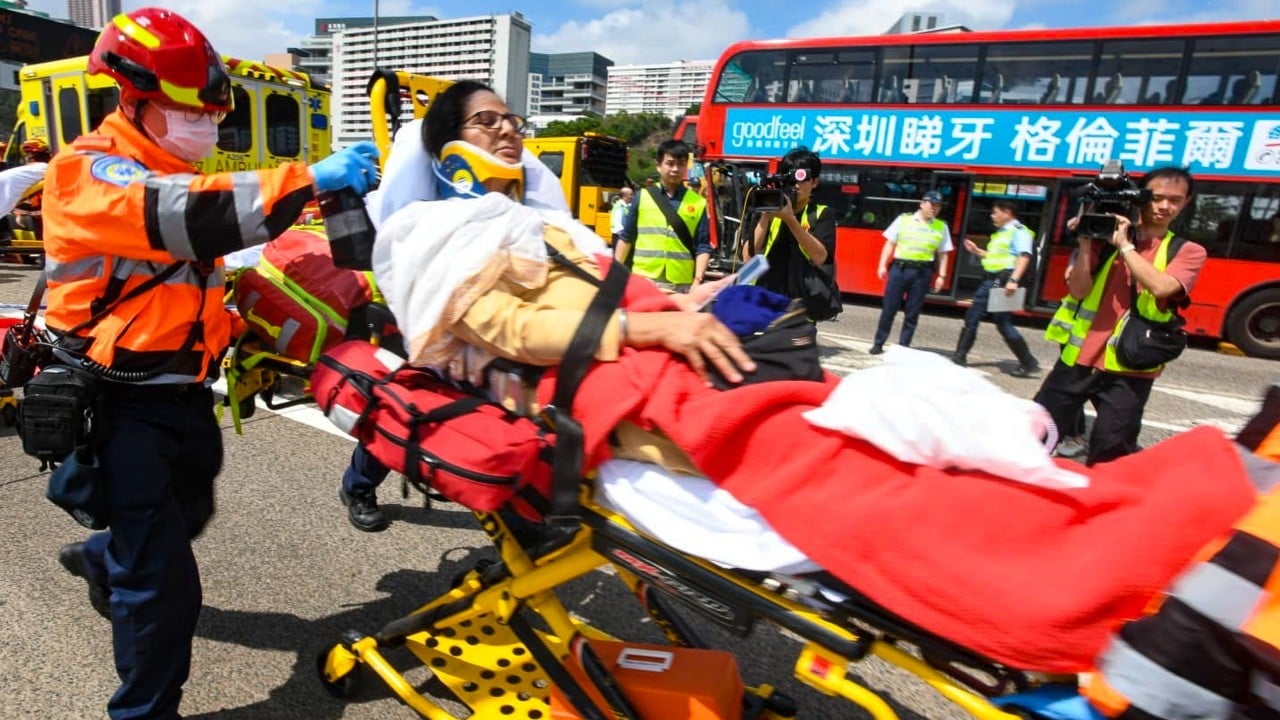
A double-decker KMB bus smashes into a stationary highway maintenance truck. Twenty-one people end up in the hospital. If this story feels familiar, that's because it keeps happening on Hong Kong roads.
The recent crash on the Tsing Long Highway highlights a systemic failure in how we manage road safety, vehicle speeds, and stationary work zones. It wasn’t a freak accident. It was entirely predictable. When a massive passenger bus collides with a heavy maintenance vehicle at highway speeds, the physics are brutal. The front of the bus crumpled. Passengers were thrown from their seats. Emergency crews flooded the scene near the Tai Lam Tunnel toll plaza to rescue trapped victims.
We need to stop looking at these incidents as isolated pieces of bad luck. They point to a glaring gap in infrastructure protection and driver awareness.
The Brutal Reality of the Tsing Long Highway Crash
Let’s look at what actually went down. The KMB double-decker was traveling along the Tsing Long Highway, a major artery connecting traffic toward the Tai Lam Tunnel. Up ahead, a highway maintenance truck was parked in a designated work zone. These trucks are supposed to be there. They fix barriers, clear debris, and maintain the roads we rely on.
The bus hit the back of the maintenance truck with massive force. The impact completely destroyed the left front side of the bus, which is precisely where passengers sit or board. Glass shattered everywhere. Metal twisted like paper.
Emergency services had to activate a mass casualty protocol. Ambulances arrived in waves. Paramedics set up temporary triage stations on the tarmac, treating walking wounded while firefighters worked to free those pinned inside the wreckage. In total, 21 people suffered injuries ranging from severe cuts and fractures to whiplash and shock.
This isn't just about one distracted driver or a slick road surface. It's about a structural failure in how we protect both transit passengers and the workers who keep our highways running.
The Flawed Safety Buffer System
Why do buses keep hitting maintenance vehicles? The Transport Department has strict guidelines for roadworks, but guidelines don't stop a 16-ton bus.
Typically, maintenance crews use Shadow Vehicles equipped with Truck Mounted Attenuators (TMAs). These are basically giant metal cushions designed to absorb the kinetic energy of a crash. They save lives. If that maintenance truck didn't have a TMA, we would likely be talking about fatalities instead of injuries.
But a cushion is a last resort. The real problem is the lack of advance warning and driver reaction time.
- Inadequate Sight Lines: At 80 km/h, a bus travels over 22 meters every single second. If a driver takes their eyes off the road for three seconds to check a mirror or a gauge, they've traveled the length of a football field blind.
- Signage Blindness: We see so many flashing arrows on Hong Kong highways that drivers naturally tune them out. The visual clutter makes it hard to distinguish a minor lane restriction from a major stationary hazard.
- The Weight Disparity: Double-decker buses have a high center of gravity. When they brake hard or swerve suddenly to avoid a truck, they risk flipping over, creating an even worse disaster.
The current system relies too heavily on the bus driver making a perfect decision at the perfect moment. That's a terrible strategy for public safety.
What Public Transit Companies Must Change Right Now
Kowloon Motor Bus (KMB) and the other major operators can't just point fingers at roadwork crews. They need to clean up their own backyard.
Driver fatigue is the elephant in the room. Bus drivers work long shifts navigating some of the densest traffic corridors in the world. Monotony sets in on long highway stretches like the Tsing Long Highway or the North Lantau Highway. When monotony meets fatigue, reaction times plummet.
First, anti-collision warning systems must become mandatory across the entire fleet, not just on newer models. Many modern buses feature Advanced Driver Assistance Systems (ADAS) that use radar and cameras to detect stationary objects. If the system senses an imminent collision, it sounds an alarm and applies the brakes automatically. We need this tech on every single bus immediately.
Second, schedule targets need a reality check. Drivers face immense pressure to keep time. When schedules are tight, drivers take risks. They maintain higher speeds closer to hazards. Safely arriving late beats arriving in an ambulance every single time.
How to Fix Hong Kong's Dangerous Work Zones
If we want to stop these crashes, the Highways Department must rewrite the rules for mobile roadworks. The old way of throwing up a few cones and a flashing arrow isn't cutting it anymore.
We need physical separation. On high-speed corridors, a simple lane closure isn't enough protection. Crews should use rumble strips placed hundreds of meters ahead of the actual work zone. When a bus driver runs over these strips, the physical vibration forces their attention back to the road.
Digital warnings must integrate directly with navigation apps. If a maintenance crew blocks a lane on the Tsing Long Highway, that data should feed instantly into GPS systems used by bus dispatchers and drivers. Drivers should get an auditory alert inside the cabin long before they visually spot the truck.
Enforcement needs teeth too. Speed limits through active work zones are routinely ignored. Installing mobile speed cameras directly on maintenance vehicles would force drivers to slow down. If you know you'll lose your license for speeding past a worker, you lift your foot off the gas.
Pay attention next time you ride a bus. Look at how close these massive vehicles get to the men and women working on the asphalt. It's a miracle these major crashes don't happen every single week.
To protect yourself as a passenger, avoid sitting in the very front rows of the upper deck during late-night or highway routes. That's the crumple zone. Always use the seatbelts provided on newer bus models. They keep you from flying into the seat ahead of you if the driver slams on the brakes. Demand better safety standards from transit operators because relying on luck on the highway is a losing bet.