The strategic calculus of Middle Eastern alignment is shifting from a paradigm of reactive defense to one of transactional economic and security integration. In the wake of a concluding military conflict with Iran, the diplomatic architecture of the region requires a fundamental reassessment. The proposition that Muslim-majority nations will expand the Abraham Accords is not a matter of shared ideological alignment, but rather a calculated response to changed security variables and economic imperatives.
To understand the trajectory of this diplomatic push, the situation must be deconstructed into three distinct operational pillars: the degradation of the Iranian deterrence model, the structural incentives of the non-signatory Arab states, and the specific transactional levers available to a US administration.
The Post-Conflict Regional Security Equilibrium
The primary catalyst for expanding the Abraham Accords is the structural alteration of the regional threat matrix. For two decades, regional alignment was dictated by the containment of Iran's asymmetric warfare capabilities, specifically its network of non-state proxies.
[Security Equilibrium Shift]
Old Model: US Security Umbrella + Arab Fragmentation -> Vulnerability to Asymmetric Proxies
New Model: Iranian Proxy Degradation + Abraham Accords Integration -> Integrated Air/Missile Defense
When a conflict with Iran concludes, the immediate result is the degradation of this proxy network. This creates a power vacuum and alters the cost-benefit analysis for states that previously hedged their bets between Washington, Jerusalem, and Tehran.
The strategic friction can be modeled through a classic security dilemma. Historically, non-signatory states like Saudi Arabia, Oman, and Qatar operated under a dual-track foreign policy. They maintained backchannel diplomacy with Iran to mitigate the risk of asymmetric retaliation (such as infrastructure attacks) while relying on a loose, uncodified security relationship with the United States.
Once the Iranian military capacity is structurally diminished, the risk of retaliation drops significantly. The cost of formal normalization with Israel decreases, while the opportunity cost of remaining outside the regional security architecture increases.
This shift transforms the Abraham Accords from a controversial political statement into a pragmatic utility. The accords serve as the framework for an integrated regional air and missile defense network. For Gulf cooperation Council (GCC) states, joining this network provides a technological hedge that no single nation can construct independently. The primary asset is no longer diplomatic prestige; it is interoperable early-warning data and joint cyber-defense capabilities.
The Economic and Capital Flight Matrix
Diplomacy requires financial viability. The post-conflict phase introduces severe fiscal pressures that necessitate regional integration. The economic drivers pushing Muslim leaders toward normalization operate across two primary vectors: capital allocation and trade corridor security.
Sovereign Wealth Fund Realignment
Gulf sovereign wealth funds are transitioning away from oil dependency toward technology, logistics, and renewable energy. This transition requires friction-free access to global markets and advanced technology ecosystems.
Remaining outside the Abraham Accords framework creates an artificial barrier to co-investment with Western venture capital and Israeli tech hubs. Normalization removes compliance bottlenecks and dual-use technology export restrictions, allowing for fluid capital deployment.
The India-Middle East-Europe Economic Corridor (IMEC)
The viability of global trade routes relies on physical security and regulatory alignment. A post-war environment creates an opening to operationalize transit corridors that bypass Chokepoints like the Strait of Hormuz.
[IMEC Structural Flow]
India (Production) -> UAE/Saudi Arabia (Land Transit) -> Jordan/Israel (Mediterranean Access) -> Europe (Market)
This corridor cannot function efficiently with missing geographic links. For states currently sitting on the sidelines, joining the Accords is the prerequisite for securing critical nodes in this logistical value chain. The alternative is economic marginalization as trade flows bypass non-participating territories.
Transactional US Leverage and the Normalization Menu
A US administration does not expand diplomatic spheres through persuasion; it does so through a quantifiable matrix of incentives and penalties. The mechanics of American leverage in a post-conflict scenario rely on three distinct categories of sovereign upgrades.
- Major Non-NATO Ally (MNNA) Status: This designation alters a nation's priority access to US defense articles, surplus equipment, and collaborative research and development. For states seeking to modernize their militaries without adopting restrictive Chinese hardware, MNNA status is a vital objective.
- Civil Nuclear Cooperation (123 Agreements): The transition to post-hydrocarbon economies requires baseload power generation. Access to US nuclear technology and enrichment workarounds is a powerful negotiating lever that Washington can tie directly to the signing of the Abraham Accords.
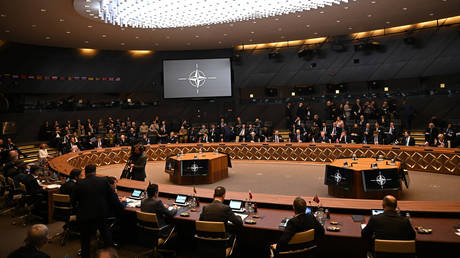
- Formal Security Guarantees: The highest tier of leverage involves binding bilateral defense pacts. The US can offer explicit defense commitments to key regional players, mimicking elements of Article 5 of the North Atlantic Treaty, in exchange for total diplomatic normalization with Israel.
This transactional approach standardizes the price of admission. The negotiation ceases to be about the complex, historical grievances of the Israeli-Palestinian conflict and becomes a highly structured trade negotiation where regional leaders weigh immediate sovereign benefits against domestic political pushback.
Friction Points and Structural Limitations
An analytical assessment must account for the systemic friction that slows or derails expansion strategies. The assumption that every Muslim-majority nation will follow a linear path toward normalization ignores deep structural constraints.
The first limitation is the variance in domestic political legitimacy. In absolute monarchies like the UAE or Saudi Arabia, foreign policy execution can be driven top-down by executive decree, provided the economic returns justify the decision to the ruling elite.
In nations with quasi-democratic structures, powerful clerical establishments, or deep-seated nationalist movements—such as Kuwait, Pakistan, or Indonesia—the domestic political cost of normalization remains prohibitively high. The risk of internal instability outweighs the economic or security incentives offered by the United States.
The second limitation is the unresolved status of Palestinian statehood. While the initial wave of the Abraham Accords demonstrated that normalization could occur independently of the peace process, a second wave involving heavyweight states like Saudi Arabia requires at least a declarative framework for Palestinian autonomy.
Without a credible pathway that allows these nations to claim a diplomatic victory for the broader Arab world, formal normalization faces a hard ceiling. Instead, states will opt for quiet, gray-zone cooperation—sharing intelligence and coordinating logistics under the table while withholding formal diplomatic recognition.
The Strategic Playbook for Expansion
To execute an expansion of the Abraham Accords after a conflict with Iran, policy planners must abandon generalized diplomatic rhetoric and deploy a sequential, phased integration strategy.
- De-escalate the Rhetoric: Shift the public framing from a grand regional alliance to functional, technocratic agreements. Focus initial treaties entirely on water security, agricultural technology sharing, and public health infrastructure. These sectors carry low political risk but establish the bureaucratic channels necessary for deeper integration.
- Institutionalize Centcom Integration: Utilize the United States Central Command as the neutral umbrella for security cooperation. By routing military coordination, radar data sharing, and joint exercises through CENTCOM rather than direct bilateral Israeli channels, non-signatory Arab states can participate in the regional security network without immediate domestic blowback.
- Deploy Pre-Packaged Bilateral Incentives: The United States must present a non-negotiable, pre-cleared menu of incentives to target nations. This means having congressional approval for specific trade concessions or defense designations ready before the final diplomatic push begins, eliminating the risk of US domestic politics stalling the regional momentum.
The expansion of the regional framework is not guaranteed by the end of a war; it must be engineered through the precise application of asymmetric incentives, leveraging the structural vulnerability of states that refuse to adapt to the new security equilibrium.