You’ve probably seen it on every local news backdrop or postcard if you’ve spent more than five minutes in Boston. It’s the Zakim Bunker Hill Memorial Bridge, and honestly, it’s basically the face of modern Boston. But here’s the thing: most people just see a cool-looking bridge and don’t realize how weirdly complex and controversial the thing actually is.
It’s not just a way to get from the North End to Charlestown.
The bridge is a massive feat of engineering that almost didn't happen the way we see it now. It was the crown jewel of the Big Dig—that infamous, multi-billion dollar project that moved the city's main highway underground. Driving over it feels a bit like a rollercoaster, especially if you're in those cantilevered lanes on the side.
Why the Zakim Bunker Hill Memorial Bridge Isn't Just Another Bridge
Most bridges are symmetrical. This one? Not even close.
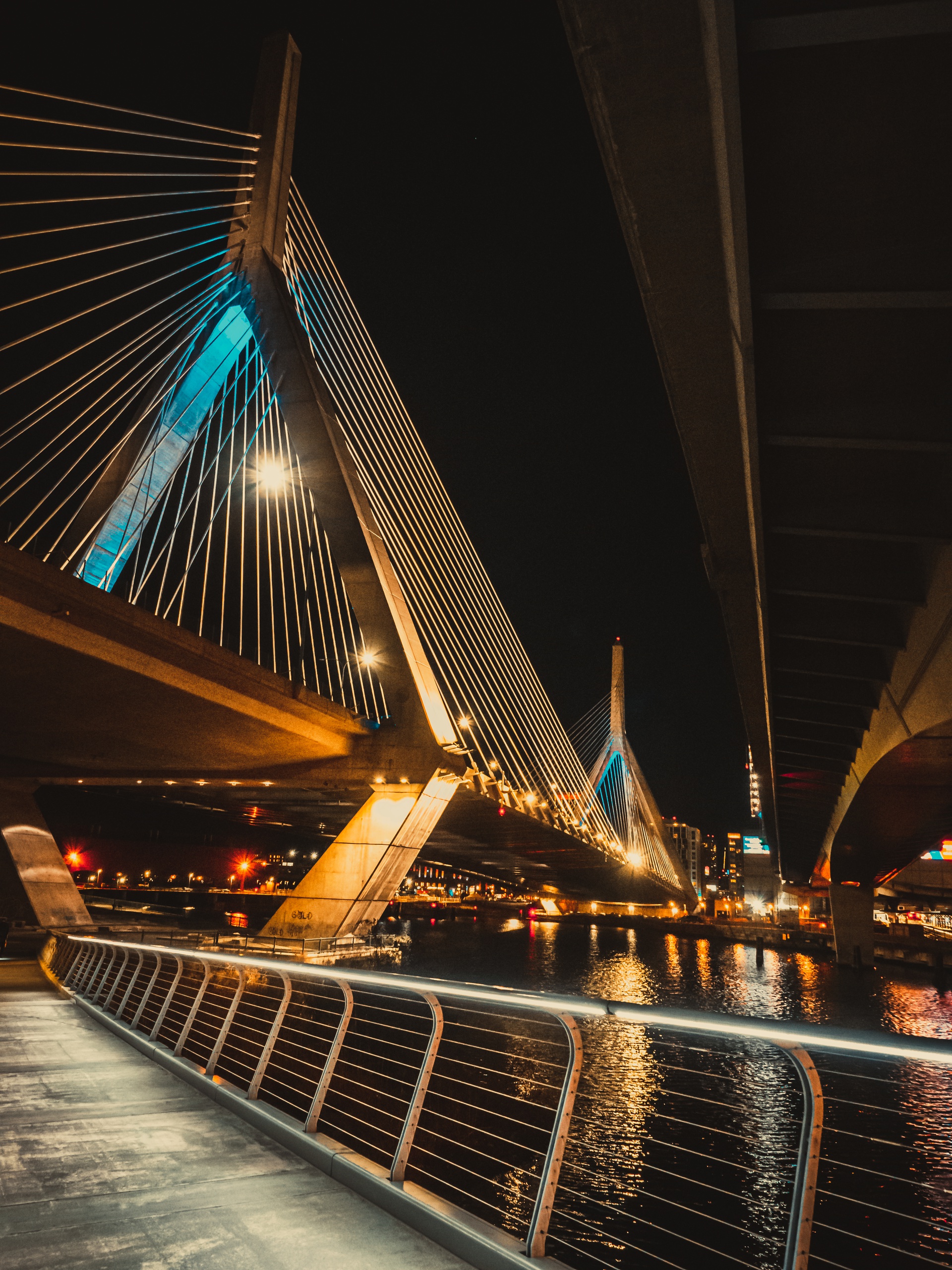
It’s the widest cable-stayed bridge in the world, which is a wild stat when you think about it. It carries 10 lanes of traffic. Eight of those lanes go right through the legs of the towers, but there are two extra lanes hanging off the east side. Those are the "cantilevered" lanes. They look like they’re just stuck on as an afterthought, but it was a calculated move by Swiss designer Christian Menn to handle the sheer volume of traffic coming out of the Sumner Tunnel.
The Design Philosophy
Menn didn't just pick a shape because it looked futuristic. The towers are shaped like inverted Ys to echo the Bunker Hill Monument nearby. If you stand in the right spot in Charlestown, you can see the two "obelisks" lining up.
The cables? They’re meant to look like the sails of the USS Constitution.
It's a mix of ultra-modern engineering and a heavy nod to the Revolutionary War. Most people call it "The Zakim," but the full name, the Zakim Bunker Hill Memorial Bridge, is a compromise. One side wanted to honor Leonard P. Zakim, a beloved local civil rights activist. The other side—mostly Charlestown locals—wanted to keep the focus on the historical battle. So, the state just combined them.
The Engineering Nightmares You Didn't Hear About
Building a bridge over a river is hard. Building it over a river while an active subway line (the Orange Line) is running directly underneath it is a nightmare.
The bridge's towers had to be "truncated" at a 55-degree angle. They literally straddle the subway tracks. If the engineers had messed up the math by even a tiny bit, they would have crushed the tunnel below.
Then there was the "Bad Concrete" scandal of 2001.
Basically, workers discovered that some of the concrete in the bridge's support structure wasn't sticking to the steel. They had to rip out a whole section and redo it. This was during the height of the Big Dig's cost overruns, so people were already pretty skeptical. Honestly, it's a miracle it opened on time for the northbound lanes in March 2003.
Wild Facts About the Zakim
- The Elephant Test: To prove the bridge wouldn't collapse, they marched 14 circus elephants across it in 2002. It was a throwback to the Brooklyn Bridge opening.
- The Fish Holes: There are actually diamond-shaped holes in the bridge deck. Why? To let sunlight hit the water so migrating alewife fish don't get confused by the shadow and stop swimming.
- The Lighting: It’s usually lit up in blue, but MassDOT changes the colors for everything from Celtics games (green) to Pride (rainbows).
How to Actually Experience the Bridge (Without Sitting in Traffic)
Driving over the Zakim is fine, but you don't really see it when you're on it. You’re too busy making sure someone doesn't cut you off while merging onto I-93.
If you want the best view, head to Paul Revere Park in Charlestown. You can walk right under the massive concrete supports. It’s genuinely intimidating to see how much weight those cables are holding. There’s also the North Bank Bridge, a twisty pedestrian path that gives you a perfect side-profile view of the Zakim.
For the photographers out there, "View Boston" at the Prudential Center gives you that high-angle shot, but honestly, the best "street level" vibe is from the Zakim Bridge's own shadows in the parks developed as part of the Big Dig.
What People Get Wrong
A lot of tourists think it's a suspension bridge like the Golden Gate. It’s not.
In a suspension bridge, the cables hang from main cables strung between towers. On a cable-stayed bridge like the Zakim, the cables go directly from the towers to the road. It’s a "hybrid" because it uses both steel and concrete—steel for the main span to keep it light, and concrete for the back spans to keep it anchored.
Actionable Tips for Your Visit
- Check the Lighting Schedule: If you’re a photographer, follow the MassDOT social accounts. They often post why the bridge is a certain color. Blue is the default, but seeing it in gold for a Bruins playoff run is a different vibe.
- Avoid Rush Hour: This is obvious, but the Zakim is a bottleneck. If you want to appreciate the architecture while driving, go on a Sunday morning.
- Walk the Parks: Don't just look at it from the highway. The 40 acres of parkland created underneath the bridge (part of the North Point and Paul Revere parks) are the real "secret" spots.
- The Bunker Hill Link: After you look at the bridge, walk the ten minutes over to the Bunker Hill Monument. Seeing the original obelisk makes the "Y" shape of the bridge towers make so much more sense.
The Zakim Bunker Hill Memorial Bridge is more than just a piece of the I-93 North corridor. It's a reminder of a time when Boston decided to stop being a city of crumbling elevated highways and start being a city that actually looked good from the water. Even with the scandals and the billions of dollars spent, it’s hard to imagine the skyline without it now.
To get the most out of your visit, start at the North End, walk across the North Bank Bridge into Charlestown, and end at the USS Constitution. This route gives you the full perspective of how the bridge integrates into the historic "old" Boston while looking like something out of a sci-fi movie.