The standard travel warning for Southeast Asia is a lazy, recycled list of "deadliest countries" that reads like a high school geography project. You’ve seen the headlines. They point to India, Thailand, or Indonesia as the "capitals" of the King Cobra (Ophiophagus hannah) because those regions have the highest density of sightings. It’s a classic statistical trap. Counting snakes in a jungle doesn’t tell you where the danger lies. It tells you where the researchers are.
If you are looking at a map of "10 countries where the King Cobra thrives" to plan your safety strategy, you are already failing. The King Cobra is not your primary threat in these regions, and the countries that "thrive" on paper are often the places where you are actually safest. For an alternative perspective, check out: this related article.
The Population Density Paradox
Mainstream media loves to rank India at the top of the list. Yes, India has a massive King Cobra population, particularly in the Western Ghats. But here is the nuance the clickbait lists ignore: high snake density does not equal high risk.
In regions like Karnataka, the King Cobra is often revered. There is a cultural infrastructure for co-existence. When a King Cobra enters a backyard in Agumbe, people call a professional catcher. They don’t hack it to pieces with a machete. Ironically, you are safer in a "King Cobra Capital" where the population knows the animal than you are in a "low-risk" fringe zone where a panicked local will corner the snake and force a defensive strike. Similar coverage on this trend has been provided by AFAR.
The real danger isn't the presence of the snake; it’s the absence of the antivenom. You can be in a "Top 10" country like Thailand, but if you are bitten in a remote province without access to the Red Cross Queen Saovabha Memorial Institute’s specific King Cobra antivenom, your "rank" on a list is irrelevant. You are a walking corpse.
Ophiophagus Hannah is Not a Cobra
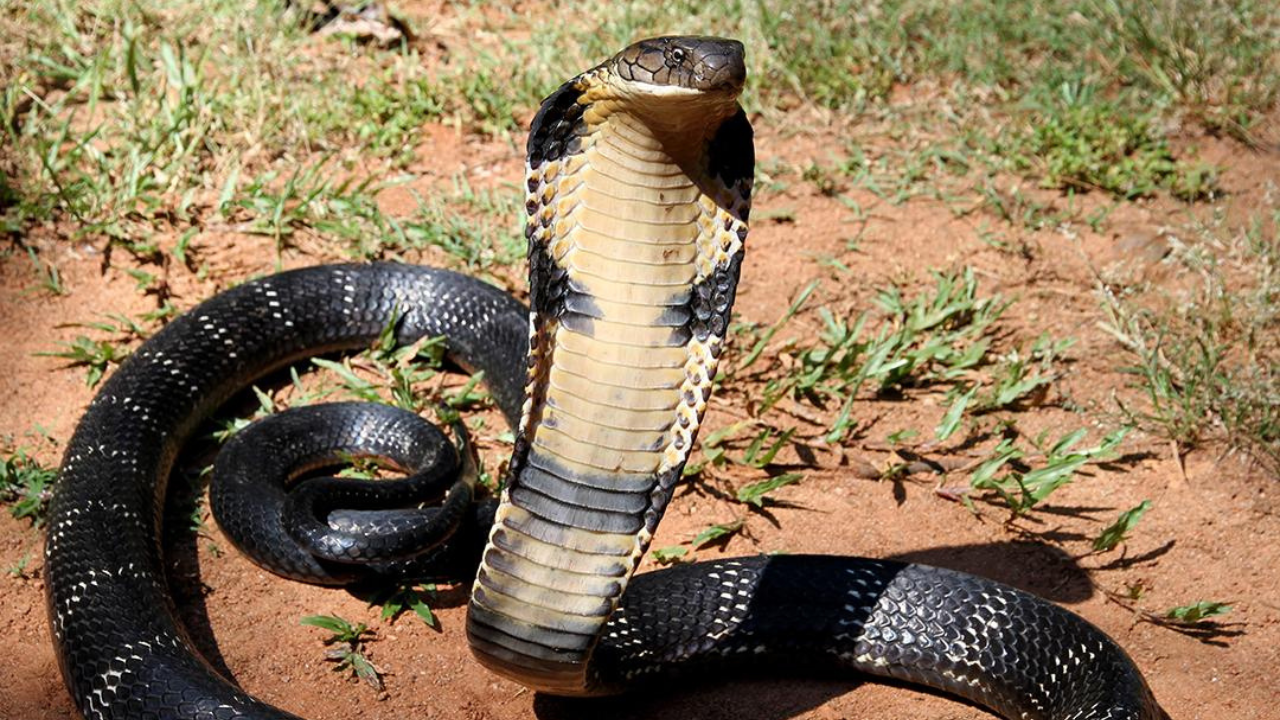
Let’s dismantle the most basic misconception: the King Cobra is not a true cobra. It belongs to its own genus, Ophiophagus. This isn't just a taxonomic "gotcha" for nerds. It changes the entire safety profile of the countries it inhabits.
True cobras (Naja) are often nervous, twitchy, and prone to biting as a first resort. The King Cobra is an apex predator that eats other snakes. It is intelligent. It possesses a level of awareness that makes it more like a mammalian predator than a mindless reptile.
Countries like Vietnam and Southern China are often listed as "hotspots." Yet, the risk to a traveler or even a rural farmer from a King Cobra is statistically negligible compared to the Russell’s Viper or the Monocled Cobra. Why? Because the King Cobra wants nothing to do with you. It is a specialist hunter. It doesn't hang out in your rice paddy waiting for a rodent; it stays where its prey—other snakes—lives.
The Meat Market Silence
If you want to know where the King Cobra is actually "thriving," stop looking at forest cover maps and start looking at the black market.
Traditional lists ignore the impact of the illegal wildlife trade in Southeast Asia. Countries like Laos and Cambodia might not top the "official" lists because they lack the robust reporting of India or Malaysia, but they are the epicenters of the species' decline and, paradoxically, its most dangerous human-snake interfaces.
When snakes are poached for "blood wine" or traditional medicine, they are kept in horrific, stressed conditions. A King Cobra in a cage in a wet market in Golden Triangle territory is a thousand times more dangerous than one in a sanctuary. The "10 countries" list treats nature like a static museum. It’s not. The danger is fluid, driven by economics and the destruction of the snake's actual food source.
Stop Asking Where the Snake Is
The "People Also Ask" sections of the internet are obsessed with the wrong metric: "Which country has the most King Cobras?"
The question you should be asking is: "Which country has the most effective medical response to a neurotoxic envenomation?"
A King Cobra can deliver up to 7ml of venom in a single bite. That is enough to kill an Asian Elephant or twenty grown men. It doesn't matter if you are in the #1 ranked country or the #10 ranked country. What matters is the distance between your puncture wound and a vial of purified equine antibodies.
- The Urban Myth: "King Cobras are aggressive man-hunters."
- The Reality: They are shy forest-dwellers. Most bites occur during "amateur" interventions—people trying to catch or kill them for social media clout or out of misplaced fear.
The Ecological Lie of the "Top 10"
When an article tells you the King Cobra "thrives" in Indonesia, they are grouping thousands of islands into one bucket. The King Cobra doesn't "thrive" in Indonesia; it exists in specific pockets of Sumatra, Borneo, and Java.
This lazy grouping creates a false sense of security in "low-ranked" areas. If you are in a country that didn't make the "Top 10" list, but you are in its specific micro-habitat, your risk is 100%. If you are in the middle of a city in a "Top 1" country, your risk is 0%.
We have to stop treating biology like a scoreboard. The King Cobra is a victim of its own legend. It is a shy, canopy-dwelling specialist that is being pushed out of its range by the very people who write these terrified lists.
The Actionable Truth
If you find yourself in the "King Cobra Capitals"—India, Thailand, Malaysia, Indonesia, Philippines, Vietnam, Myanmar, Southern China, Cambodia, or Laos—do not look at the ground. Look at the people.
The countries with the "most" snakes are often the ones best equipped to handle them. The real "death trap" is the country that has just enough King Cobras to be dangerous, but not enough to justify the cost of keeping specialized antivenom in every rural clinic.
You don't need a list of countries. You need a list of hospitals that stock polyvalent antivenom. Everything else is just noise designed to make you afraid of the wrong thing.
The King Cobra isn't thriving anywhere. It is being squeezed into smaller and smaller fragments of forest, surrounded by a species that fears what it doesn't understand and counts what it can't protect. Stop worrying about the snake's capital and start worrying about the habitat's collapse.
The snake isn't coming for you. It’s trying to find a place where you don't exist.