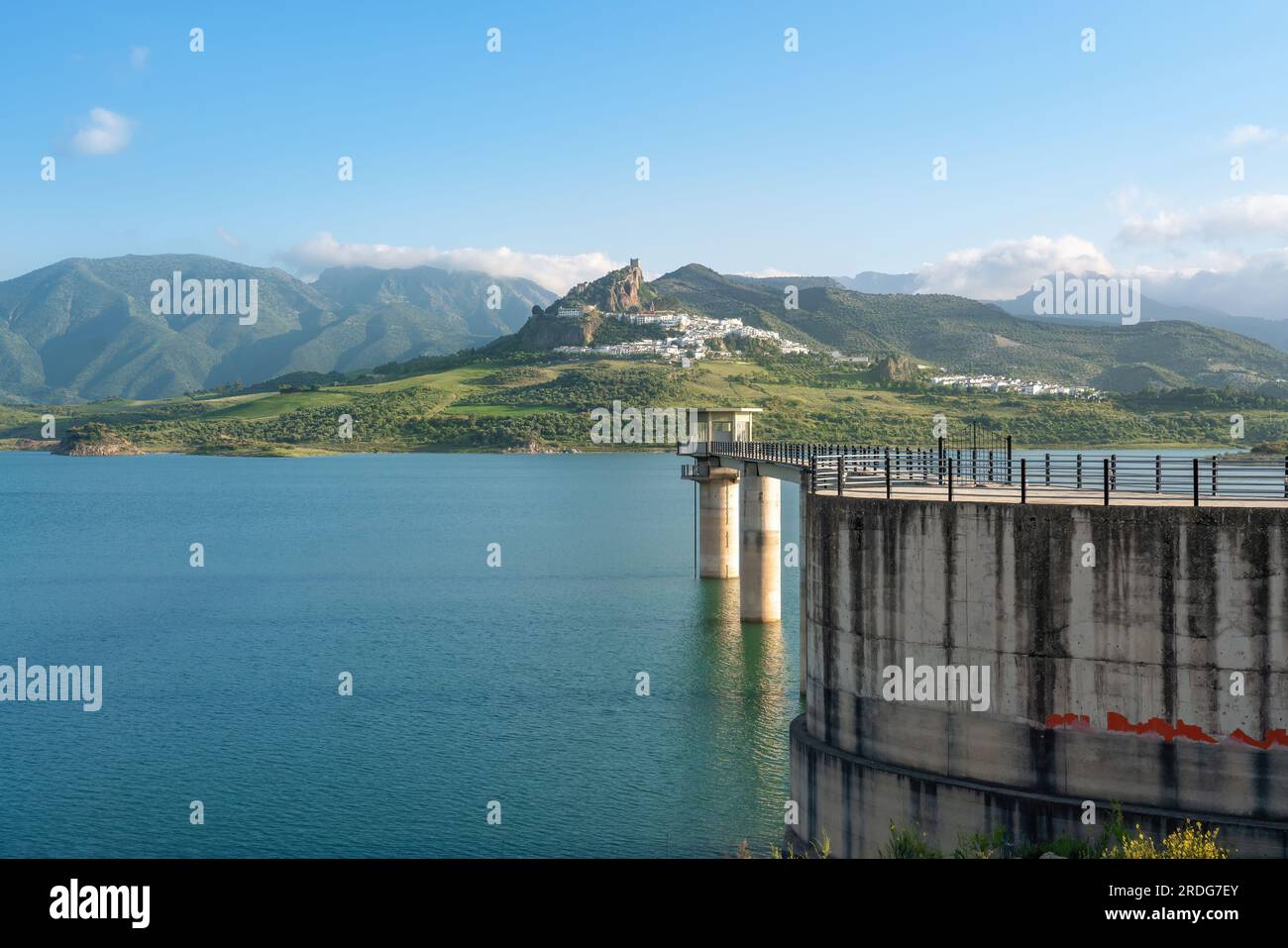
You’ve probably seen the photos. A cluster of sugar-cube houses clinging to a craggy peak, topped by a jagged stone tower that looks like it belongs in a high-fantasy novel. That’s Zahara de la Sierra. Most people heading to southern Spain make a beeline for Ronda, and honestly, I get it. The bridge is cool. But if you want the "Pueblo Blanco" experience without the massive tour groups and the feeling that you’re in a theme park, you need to head 40 minutes west into the heart of the Sierra de Grazalema Natural Park.
I’ve spent a lot of time wandering the hilly roads of Cádiz province, and Zahara just feels... different. It’s perched on a limestone ridge so steep it makes your calves ache just looking at it. But the real kicker is the view. Most white villages look out over dry olive groves or rolling hills. Zahara looks out over the Embalse de Zahara-El Gastor, a massive, impossibly turquoise reservoir that makes the whole place feel like an island in the sky.
The Castle That Refused to Fall
Let’s talk about the big tower at the top. It’s called the Torre del Homenaje, and it’s basically all that’s left of a 13th-century Nasrid fortress. Getting up there is a bit of a hike. You start at the Plaza del Rey, pass the "Villa Medieval" entrance, and pay about €3.50 at a small kiosk.
Don't skip this.
The path winds up through wild herbs and craggy rocks. Halfway up, you’ll hit the Iglesia Mayor, which used to be a mosque before the Christians took over. Now it's an interpretation center. It’s cool and dark inside, which is a blessing because the Andalusian sun is no joke. Once you reach the very top of the tower, you can see across three different provinces on a clear day. You’ll see the white dots of Olvera and Algodonales in the distance. It’s the kind of view that makes you realize why the Moors fought so hard to keep this place.
Why Zahara de la Sierra is a Local Secret
The town itself is tiny. Like, maybe 1,300 people live here now. Back in the 1970s, it was double that, but like many mountain villages, people moved to the cities. This is good news for you because it means the vibe is incredibly chilled.
One of the weirdest and coolest things about Zahara is the Jardín de los Pinsapos. It’s a tiny botanical garden right in the village dedicated to the Spanish Fir (Abies pinsapo). These trees are prehistoric relics from the last ice age. They only grow in a few spots in the world, and this is the only place you’ll find them growing inside a town.
If you're here in June, you'll witness something wild: Corpus Christi. The locals cover the entire village in rushes and flowers. It looks like a forest has literally grown over the cobblestones. It’s been declared a festival of National Tourist Interest, and honestly, the smell of the crushed herbs underfoot is something you never forget.
Where to Eat (And What to Actually Order)
Don't expect fine dining with white tablecloths on every corner. You want the authentic stuff.
- Al Lago: This is the "fancy" spot, run by an American chef and his wife. It’s right by the water at the bottom of the hill. Their terrace overlooks the reservoir. Get the local goat cheese.
- Bar Josefi: Down-to-earth, local, and perfect for tapas.
- Mesón Los Estribos: Great for a menú del día with a view that usually costs way more than what they charge.
You have to try Quemones. It’s a local soup made with garlic, onion, parsley, and poached eggs. It sounds simple, but it’s the ultimate mountain comfort food. Also, look out for Gañotes. They’re these fried sweet rolls with cinnamon and sesame that locals go crazy for during Holy Week.
The "Hidden" Beach in the Mountains
Most people don't associate the mountains of Cádiz with swimming, but Zahara has a secret weapon: La Playita. It’s located in the Arroyomolinos recreation area, just a short drive from the village center. They basically dammed a river to create a natural-looking swimming pool surrounded by grass and trees.
It’s open from mid-June to mid-September.
The water is freezing. Seriously. Even when it's 40°C in the shade, that water will wake you up. It’s where all the local families go to escape the heat. There’s a little bar, some picnic tables, and plenty of shade. If you have kids, there’s even a zip-line area.
A Quick Word on the "Pinsapar" and Hiking
Zahara is the gateway to some of the best hiking in Spain. The Garganta Verde is a 400-meter deep canyon nearby that is famous for its massive colony of griffon vultures.
Pro tip: You need a permit for most of these hikes. Don't just show up with your boots on. You have to go to the visitor center in El Bosque or email the park authorities in advance. If you don't have a permit, the forest rangers will turn you back, and trust me, they aren't moved by "but I'm only here for one day" excuses.
Getting There Without Losing Your Mind
Driving to Zahara is an experience. The roads are narrow and they twist like a snake. If you’re coming from Seville, it’s about an hour and twenty minutes. From Ronda, it’s a quick 35-40 minute hop.
Parking is the real boss battle.
Do yourself a favor and don't try to drive into the very center of the village. The streets weren't built for SUVs; they were built for donkeys. Park at the Mirador de Zahara de la Sierra (near the entrance) or the designated lot by the cemetery. From there, it’s a short, albeit steep, walk to the main square.
What Most People Get Wrong
People think Zahara is just a "stopover" on the way to Ronda. Big mistake. If you stay overnight, you get the village to yourself after the day-trippers leave at 5:00 PM. Watching the sunset over the reservoir from the Mirador de la Alameda de Lepanto is worth the price of a hotel room alone.
Zahara de la Sierra isn't a museum; it's a living, breathing village where people still bake their own bread and argue over coffee in the Plaza del Rey. It’s rugged, it’s beautiful, and it’s way more authentic than the more famous spots nearby.
Your Zahara Checklist
- Book your hiking permits at least two weeks in advance if you plan to do the Pinsapar or Garganta Verde trails.
- Pack real shoes. Flip-flops are a recipe for a twisted ankle on the path up to the castle.
- Check the opening hours for the Villa Medieval. The ticket office often closes for a long siesta between 2:00 PM and 4:00 PM (sometimes 6:00 PM in summer).
- Buy a wedge of Payoyo cheese. It’s made from the local goats in the Sierra de Grazalema and it’s consistently voted some of the best cheese in the world.
- Visit the olive oil mill. There’s an old mill in the village where you can see how they’ve been pressing liquid gold for generations.
Go to the official tourist office right next to the cemetery parking for a paper map. Sometimes GPS gets confused by the verticality of the streets, and a physical map is much easier to read when you're trying to find the Puerta Arabe, the hidden Arab gate tucked away on Calle Rueda.