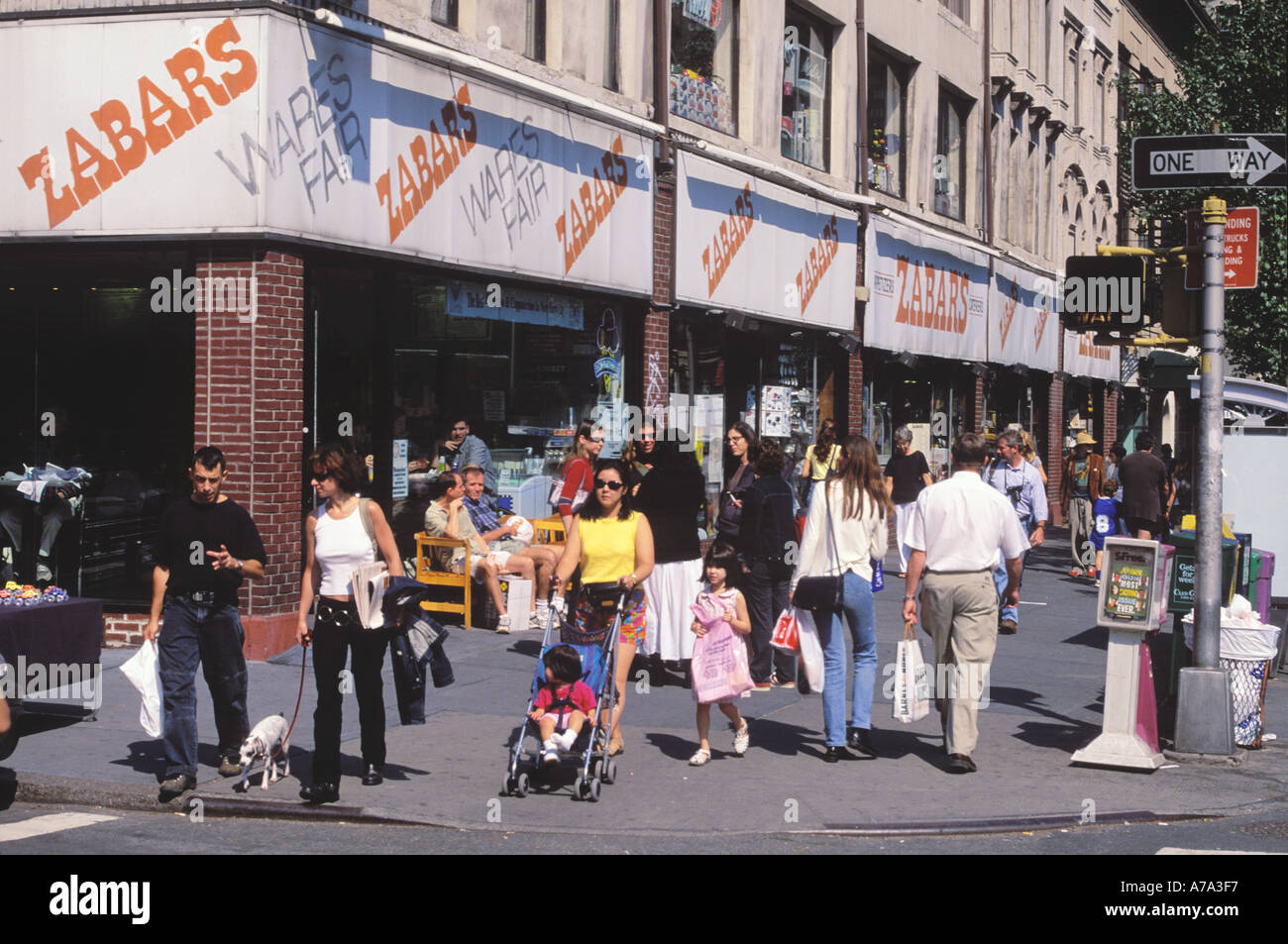
You’ve seen the orange-and-blue bags. Maybe you saw them in a Nora Ephron movie, or clutched by a harried New Yorker on the 1 train, or perhaps you’ve just smelled that unmistakable, intoxicating cloud of fresh-roasted coffee and smoked fish wafting across 80th Street.
Zabar’s Broadway New York is a chaotic, cramped, and utterly glorious survivor. You might also find this related article insightful: The Endless Day and the Hidden Cost of Life in Utqiagvik.
It shouldn't work. The aisles are too narrow. The crowds are aggressive. The staff doesn't have time for your indecision. Yet, here we are in 2026, and the place is as packed as ever. While other Manhattan institutions have been replaced by sterile bank branches or "concept" boutiques, Zabar’s remains a family-run ecosystem that defies the laws of modern retail.
It Started with a Rented Counter
History isn't usually something you can taste, but at Zabar's, you can. Louis and Lillian Zabar were Ukrainian immigrants who started with a single 22-foot-wide stall in a dairy market back in 1934. They weren't trying to build an empire; they were trying to survive. As extensively documented in recent reports by The Points Guy, the results are worth noting.
Louis was a fanatic about quality. He’d visit smokehouses personally, rejecting more fish than he ever bought. That obsession stuck. For decades, the store was steered by the legendary Saul Zabar, who famously stayed involved in the business until he passed away in late 2025 at the age of 97. Honestly, the neighborhood felt a collective shudder when he died—it was the end of an era, but his children, Aaron and Ann, and his brother Stanley are still there, keeping the gears turning.
The "Appetizing" Art of the Smoked Fish Counter
If you walk into Zabar’s and head straight for the back, you’re entering the "appetizing" section. In New York parlance, "appetizing" refers to things you eat with bagels (mostly fish and dairy), as opposed to a "delicatessen" which is all about the meat.
The lox counter is the heart of the operation. It’s a performance. You take a number. You wait. You watch men who have been slicing fish for thirty years produce translucent slivers of Nova Scotia salmon with the precision of a surgeon.
- Nova Salmon: Mild, buttery, and the gold standard for a morning bagel.
- Sable: Smoked black cod, rich and fatty, usually dusted with paprika.
- Sturgeon: Firm, meaty, and increasingly rare (and expensive).
Pro tip: don't ask for "lox" if you want the mild stuff. Traditional lox is belly-cured in salt brine and is salty enough to make your eyes water. Ask for the Nova.
Why the Mezzanine is a Secret Weapon
Most tourists get stuck on the ground floor, blinded by the stacks of chocolate babka and the 800 varieties of cheese (no, that's not a typo). But if you head up the narrow stairs, you find the Mezzanine.
This is basically the temple of cookware.
It’s where you go when you need a specific Swedish vegetable peeler or a high-end espresso machine. Back in the '70s and '80s, Zabar’s was actually the first place in America to sell many European kitchen gadgets. They even started "Caviar Wars" by slashing prices so low that competitors went into a frenzy. It’s that competitive spirit—selling luxury at a "fair" price—that makes them feel like a neighborhood store rather than a pretentious boutique.
The Babka Debate
You can't talk about Zabar’s Broadway New York without the babka. It’s a dense, yeasty bread swirled with either cinnamon or chocolate.
Some people swear by the chocolate—it’s rich, messy, and heavy. Others (the purists) go for cinnamon. In 2026, even with fancy bakeries popping up on every corner of the Upper West Side, Zabar’s still sells thousands of these loaves. It’s based on "Bubbe’s" original recipe, and honestly, it’s the ultimate New York comfort food. If you're visiting, grab a loaf and a container of their rugelach. Your future self will thank you.
Survival in a Changing City
The Upper West Side has changed. A lot. The "Mom and Pop" shops that used to line Broadway are mostly gone, victims of astronomical commercial rents. Zabar’s has one massive advantage: they own their building.
Because they aren't beholden to a landlord, they can afford to keep prices somewhat reasonable and keep 39 kitchen staff members busy making 300 different types of prepared foods. They are the anchor of the neighborhood. Without Zabar’s, 80th and Broadway is just another intersection. With it, it’s a destination.
How to Shop Like a Local
If you want to survive your first trip, follow the unwritten rules.
- Know what you want before you hit the counter. The slicers are fast, and the people behind you are in a hurry.
- Take a number immediately. Don't browse and then realize there are 15 people ahead of you at the deli.
- The Cafe is for speed. If you just want a bagel and lox sandwich to eat in the park, hit the Zabar's Cafe next door. It’s cheaper and faster than buying the components in the main store.
- Check the coffee. They roast their own, and the "Zabar’s Blend" is surprisingly affordable for the quality.
Actionable Takeaways for Your Visit:
- Best time to go: Tuesday or Wednesday morning. Avoid Sunday morning unless you enjoy being elbowed by people in Patagonia vests.
- The "Must-Buy" Kit: A pound of Nova, a bag of "everything" bagels, a container of scallion cream cheese, and a chocolate babka.
- Don't Forget the Cheese: Walk to the middle of the store and ask for a sample of whatever the cheesemonger is excited about today. They know their stuff.
Zabar’s isn't just a grocery store. It’s a sensory overload of salt, yeast, and caffeine. It’s a testament to the idea that if you do one thing—quality food—better than anyone else for ninety years, the world will keep beating a path to your door on Broadway.