The heavy oak doors of Cambridge do not open easily. They creak on hinges older than nations, resisting the push of outsiders. When they do swing wide, the moment is supposed to feel like a reckoning. It is supposed to look like progress.
Instead, sometimes, it looks like a fracture.
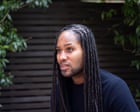
Consider what happens when a milestone is announced. In early 2023, the academic world caught its breath. Jason Arday, a man who did not learn to read or write until he was eighteen, who spent years communicating through British Sign Language, was appointed as a professor of sociology at the University of Cambridge. At thirty-seven, he became one of the youngest Black professors in the history of the institution. Headlines bloomed. Cameras flashed. The university, often criticized for its ivory-tower isolation and historical homogeneity, held up the appointment as a beacon.
Smoke cleared. Questions lingered.
Now, Cambridge has agreed to hold an independent inquiry into the circumstances surrounding that very appointment.
Why? Because transparency is a fragile thing. When institutions rush to correct centuries of exclusion, the seams of their processes sometimes stretch too thin. To understand why this inquiry matters, we have to look past the press releases and step inside the bureaucratic machinery of elite higher education. We have to look at the invisible weights carried by scholars who arrive at these gates, and the whispered doubts that shadow their achievements.
The Architecture of Doubt
Imagine walking into a room where every portrait on the wall belongs to someone who looks nothing like you. Not just different in face, but different in origin, in struggle, in the very texture of lived experience.
When Jason Arday took his seat at Cambridge, he wasn't just stepping into a job. He was stepping onto a stage built by generations of elite expectation. Academia loves a redemption story, provided it fits neatly into an institutional narrative. Arday’s personal journey—from a diagnosis of global developmental delay and autism to the highest echelons of British academia—is extraordinary by any standard. He worked tirelessly, publishing prolifically, writing about race, inequality, and education with the urgency of someone who had lived on the margins.
Yet, speed breeds suspicion in the halls of traditional academia.
Appointments at institutions like Cambridge usually follow a labyrinthine path of peer review, international searches, panels, and academic vetting that can take up to a year. When high-profile appointments bypass certain conventional tracks or move with unusual velocity, whispers start. Was it merit? Was it optics?
These are ugly questions. They are questions that unfairly burden the scholar caught in the middle. Arday did not write the hiring policies of Cambridge. He simply answered the call when a door finally opened. But the friction between institutional desire for rapid diversity and the traditional, opaque methods of academic recruitment created a vacuum.
And vacuums always fill with doubt.
The Anatomy of an Inquiry
An independent inquiry is not inherently an accusation. It is a mirror.
When Cambridge agreed to review the appointment process, it wasn't necessarily admitting corruption or wrongdoing. Rather, it bowed to the pressure of institutional accountability. In an era where universities face intense scrutiny over governance, donations, admissions scandals, and faculty appointments, the old ways of doing things behind closed doors no longer survive daylight.
Let us be clear about what an independent review actually investigates. It looks at the paper trail. It checks whether the box-checking met the legal thresholds. It asks if internal protocols were bent, stretched, or broken to achieve a desired outcome.
This is where the story gets uncomfortable.
On one side are those who argue that traditional academic recruitment is inherently biased, favoring networks of privilege that systematically lock out Black and minority ethnic scholars. From this perspective, if standard processes yield a sea of homogeneity, bending those processes isn't corruption; it's a necessary correction. It is breaking a broken lock.
On the other side are those who argue that procedural integrity must remain absolute. If exceptions are made for diversity, critics claim, it creates a double standard that ultimately devalues the achievements of the very people the exceptions were meant to help. It hands ammunition to cynics who want to claim that affirmative action is a form of patronage rather than a recognition of excellence.
Both arguments miss the deeper human truth.
Jason Arday’s scholarship is real. His books, his lectures, his dedication to teaching sociology to those who have been left behind—these are matters of public record. But by subjecting the administrative machinery of his appointment to an independent inquiry, Cambridge has inadvertently exposed the deep, structural anxiety of an institution trying to modernize while shackled to its own mythology.
The Cost of Being a Symbol
We have a habit of turning human beings into symbols. It is easier to worship a milestone than it is to fix a system.
When a university hires a groundbreaking scholar from an underrepresented background, the institution often wraps itself in the glow of that achievement. Look at us, the branding says. Look how far we have come.
The pressure on the individual is crushing. They are no longer just a researcher, a teacher, a colleague. They are living proof of an institution's moral evolution. Every lecture is scrutinized. Every promotion is politicized. If they succeed, the institution takes the credit. If controversy strikes—even administrative controversy entirely outside their control—they are left standing alone in the crossfire.
This inquiry is about governance, yes. It is about recruitment panels, HR protocols, and university statutes. But at its core, it is about the heavy price of tokenism in spaces that were never designed for everyone.
Think about what it takes to survive in a place like Cambridge when you do not belong to the historical club. You work twice as hard to be seen as half as serious. You write, you publish, you mentor, you fight. And then, when you finally reach the summit, the ground beneath your feet is shaken not by your own failings, but by a bureaucratic audit over how your chair was bolted to the floor.
The Unfinished Chapter
The inquiry will conclude. Reports will be written. Recommendations will be filed away in digital drawers or implemented with quiet corporate memos.
Cambridge will survive, as it has for over eight centuries, wrapped in its stone and its stubborn traditions.
But the question raised by this moment will not go away. How do elite institutions correct historical exclusion without turning modern inclusion into a bureaucratic battlefield? How do we build a world where a brilliant scholar can simply arrive, teach, and write, without having their presence scrutinized as a political event?
The heavy oak doors remain open, letting in a cold draft from the outside world. Inside, the debate continues, echoing off ceilings that have heard it all before, waiting to see who will walk through next, and what they will have to prove just to sit down.