Ink is heavier than people think.
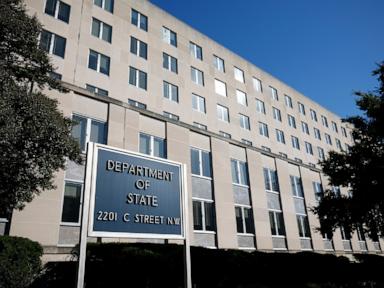
When a bureaucrat signs a document in a climate-controlled room three miles from the Potomac, the weight does not stay on the desk. It travels across time zones. It slides under apartment doors in Chicago, settles on kitchen tables in Houston, and waits in the mailbox of a quiet street in Denver.
Right now, that ink is falling.
The State Department is quietly preparing to cancel tens of thousands of visas held by asylum seekers. Not because these individuals broke a law. Not because they missed a court date, or committed a crime, or lied on an application. They are losing their legal footing because of a bureaucratic pivot—a shifting wind in the complex architecture of American immigration policy that treats human safety as a spreadsheet error waiting to be corrected.
Let us look at what that actually means.
Imagine, for a moment, a hypothetical person named Elena. (And understand, when I say hypothetical, I mean a composite sketch drawn from a thousand real souls sitting in legal limbo right now). Elena left a country where asking the wrong question got her brother killed. She crossed borders with a single backpack, clutching a folder of documents wrapped in plastic to keep out the sweat and the rain. She arrived, she knocked on the door, and she followed the rules. She applied for asylum. She waited.
While she waited, the system offered her a fragile lifeline: a visa category designed to keep people legally afloat while their claims wind through immigration courts that are currently backlogged by millions of cases. It allowed her to rent an apartment under her own name. It allowed her to walk into a local clinic when her cough turned into a fever without terrified glances at the door. It allowed her to become a neighbor.
Now, a stroke of a pen is about to rip that paper away.
To understand the scale of this, you have to step back from the talking points. We are talking about tens of thousands of people. If you gathered every single one of them into a stadium, it would look like a sea of anxious faces, children holding juice boxes, grandparents staring quietly at their shoes. They are nurses, dishwashers, coders, students, and mechanics. They are people who integrated into the nervous system of daily American life while the gears of bureaucracy ground forward at a glacial pace.
And then came the policy shift.
Why? Because the administrative machinery is buckling under its own weight. Instead of fixing the courts, instead of hiring more judges, instead of untangling the knots of an immigration code that hasn't made logical sense since the twentieth century, the easiest lever to pull is the cancellation lever. It is administrative housekeeping. It is sweeping dust under a rug and calling the floor clean.
But human beings are not dust.
When a visa is cancelled under these specific administrative parameters, the dominoes fall with terrifying speed. Legal status vanishes. Work authorization evaporates. Suddenly, the employer who relied on Elena to run the night shift has to let her go, not because she did a bad job, but because her social security number just turned into a ghost. The landlord who liked her quiet demeanor suddenly finds himself legally barred from renewing her lease.
Fear returns.
That is the invisible cost. Fear is corrosive. It eats away at communities from the inside out. When people are pushed back into the shadows, they stop reporting crimes. They stop taking their kids to the doctor when they are sick. They pull their children from school out of a sudden, paralyzing terror that the parking lot might become a staging ground for a sweep.
We have seen this movie before. History is littered with the wreckage of administrative efficiency that forgot humanity. Whenever a state decides that paperwork is more important than people, cruelty becomes a matter of policy. It happens quietly. There are no dramatic explosions, no barricades in the streets. Just a quiet notification letter arriving in the mail, or worse, a status update on a government website that changes from active to revoked.
The defenders of the policy will call it a return to order. They will argue that the rules must be enforced, that a visa is a privilege and not a right. They will use words like integrity and sovereignty.
They are right, technically. A visa is legally provisional.
And that is precisely where the tragedy lies. The law allows for this cruelty, which means the law needs to change, or the people wielding it need to remember that laws were made for society, not society for the laws. When you invite people into a waiting room, give them permission to build a life while they wait, and then pull the chair out from under them because the wait is taking too long, you haven't upheld the law. You have played a cruel joke with human lives.
Consider what happens next Tuesday morning in thousands of ordinary American homes.
Elena wakes up. She pours a cup of coffee. She looks at her phone. The notification is there. Her legal anchor, the tiny sliver of paper that kept her tethered to safety, is gone. Outside her window, the garbage truck rumbles down the street. The mail carrier drops off junk mail. The world outside goes on spinning, completely unaware that her entire universe just tilted on its axis.
That is the reality behind the headline. Not numbers on a ledger. Not partisan talking points on a cable news broadcast.
Just a quiet room, a signature, and the sound of a life being put on hold all over again.
The coffee gets cold. The notification stays on the screen. And somewhere in the capital, the pen is capped, tucked neatly into a pocket, ready for the next file.