Geography is a brutal master that no amount of diplomatic ink can overwrite.
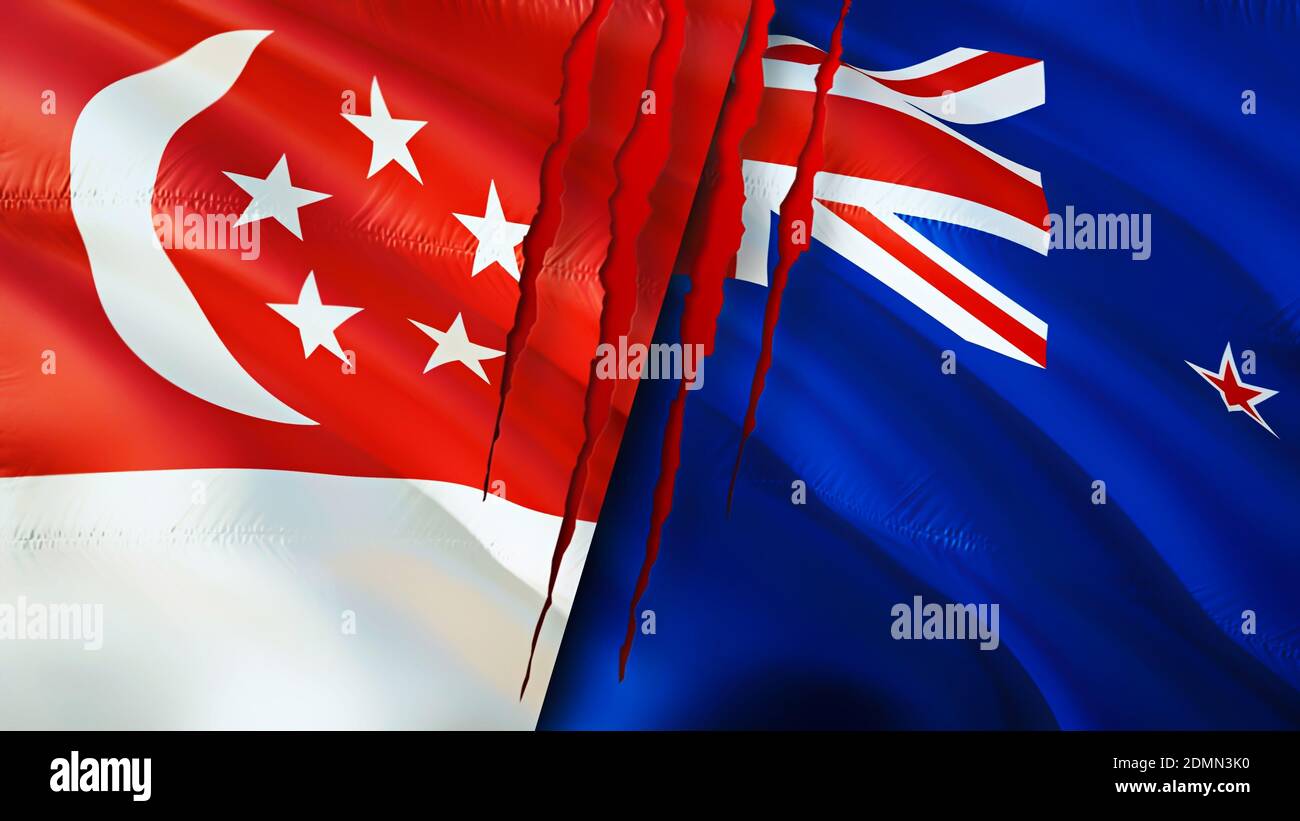
When Singapore and New Zealand signed their pact to "ensure the free flow of essential goods," the business world let out a collective sigh of relief. It felt like a win for common sense. It looked like a roadmap for a post-pandemic world. It was, in reality, a performative exercise in optimism that ignores the physics of global logistics.
I have watched logistics directors burn through eight-figure budgets trying to "diversify" supply chains based on these kinds of political handshakes. The result is almost always the same: higher overheads, slower lead times, and a false sense of security that evaporates the moment a real crisis hits the water.
The consensus says these bilateral agreements are the "building blocks" of a resilient global economy. The consensus is wrong. They are brittle, narrow-minded, and fundamentally incapable of protecting businesses from the tectonic shifts of 21st-century trade.
The Myth of the Essential Goods Corridor
The agreement focuses heavily on keeping trade channels open for food and medical supplies. On paper, this is noble. In practice, it is a misunderstanding of how a ship actually moves from Point A to Point B.
Modern supply chains are not "chains" at all; they are hyper-complex, interdependent webs. You cannot simply "keep the food moving" if the packaging plant in a third country is shuttered, or if the bunkering fuel for the vessel is stuck behind a blockade that doesn't care about a bilateral treaty between Wellington and Singapore.
If Singapore and New Zealand agree to prioritize each other's shipments, what happens when those shipments are on a vessel carrying cargo for ten other nations? A container ship does not have a "diplomatic lane." It sits in the same congestion at the Port of Singapore as everyone else. Unless these two nations plan on launching a dedicated, state-run fleet that bypasses commercial reality, the pact is little more than a "pretty please" aimed at global shipping giants who answer to shareholders, not ministers.
Why Redundancy is Not Resilience
The loudest cheerleaders for this deal claim it creates "redundancy." This is the most expensive lie in business.
True resilience comes from agility, not just having a backup friend. By formalizing these corridors, governments nudge private sectors to lean into specific geographic routes. This creates a new kind of centralization. If you shift your procurement strategy to rely on a "guaranteed" NZ-Singapore pipeline, you are just trading one point of failure for another.
In my experience, the companies that survived the 2020-2022 chaos weren't the ones with the best government contracts. They were the ones with the most liquid balance sheets and the shortest decision-making loops. They didn't wait for a trade minister to clear a path; they outbid the competition for air freight or re-engineered their products to use different components entirely.
The Hidden Cost of "Open Interest"
The pact mentions it is "open to interest from other countries." This is the diplomatic equivalent of a "Reply All" thread that never ends.
The more countries you add to a supply chain agreement, the more diluted and useless it becomes. Trade agreements are effective when they are exclusive and enforceable. When they become "open-ended," they transform into talk shops. Each new member brings their own list of "essential" protections, their own port inefficiencies, and their own geopolitical baggage.
Imagine a scenario where five more nations join. Now, a disruption in the South China Sea involves seven different legal frameworks and seven different sets of national priorities. You haven't built a corridor; you've built a committee. Committees do not move cargo during a black swan event.
The Geography Problem No One Mentions
Let’s look at the map.
New Zealand is an island nation at the edge of the world. Singapore is a city-state at the throat of the world’s busiest shipping lane. They are 8,000 kilometers apart. Every gram of "essential" trade between them relies on the stability of the Indo-Pacific.
If that region destabilizes, a piece of paper signed in a climate-controlled room in Singapore is worthless. The agreement assumes that the "openness" of the sea is a constant. It isn't. It is a variable maintained by naval power and regional stability. This pact treats the symptoms of trade fragility while ignoring the underlying disease: the fact that global trade routes are increasingly contested.
Stop Relying on Ministerial Handshakes
If you are a CEO or a Head of Supply Chain, relying on these pacts as a risk-mitigation strategy is a dereliction of duty.
- Calculate the "Treaty Discount": Assume any bilateral trade guarantee will fail exactly when you need it most. If your business model doesn't work without it, you don't have a business; you have a subsidy.
- Prioritize Proximity over Pacts: A "guaranteed" supply chain from 8,000km away is inferior to a messy, uncontracted supply chain from 500km away. Regionalization beats globalization every time the stakes are high.
- Inventory is the Only Real Security: The "Just-in-Time" era is dead, but people are trying to revive its corpse with these trade deals. No agreement can teleport milk or masks. The only way to ensure you have essential goods is to physically own them, in your own warehouse, on your own soil.
The Brutal Reality of "Essential" Goods
The term "essential goods" is dangerously subjective. During a crisis, everything is essential to someone. By creating a tiered system of trade—where certain items get a "fast track"—governments are picking winners and losers in the private sector.
This distortion creates massive inefficiencies. If a ship's capacity is taken up by "essential" NZ timber or milk, the high-tech components sitting on the dock are delayed. This slows down the very industries that provide the tax base to fund the government's "resilience" programs. It is a self-defeating cycle.
We are told that this pact is a "template for the world." If that’s true, the world is heading toward a fragmented system of "VIP trade clubs" that will increase costs for everyone while providing no actual protection against a systemic collapse of the shipping lanes.
The Singapore-NZ deal isn't a solution. It's a security blanket. It feels soft. It keeps you warm. But it won't stop a bullet.
Stop looking at the podium. Start looking at your inventory.