Grief does not arrive with a loud crash. It settles slowly, like gray ash drifting down in a burned-out room, coating everything in a fine, suffocating layer of quiet.
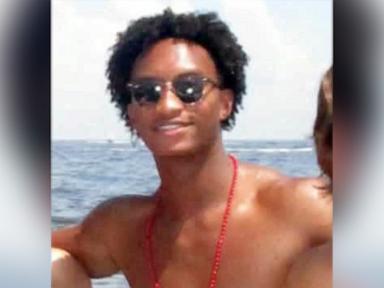
For the parents of Nolan Wells, that ash has become the permanent texture of their days. If you liked this piece, you might want to read: this related article.
Imagine waking up to a house where the air still holds the specific frequency of a lost child’s laughter, only to turn on the morning news and watch a prosecutor explain why no one will be held accountable. The silence that follows is not peaceful. It is deafening. It is a vacuum that pulls at the edges of reason, demanding an answer to a question that law enforcement seems unwilling, or unable, to finish asking.
When a life ends under shadows, the initial shock gives way to a long, grueling marathon known as the pursuit of justice. But what happens when the marathon track simply ends at a brick wall? No charges filed. Four words. A bureaucratic punctuation mark that feels less like a decision and more like an erasure. For another angle on this event, check out the recent update from Al Jazeera.
To understand the weight carried by Nolan Wells’ parents, you have to look past the cold press releases and the sanitized summaries of police reports. You have to look at the kitchen table. You have to look at the coffee cup left half-full, the shoes by the front door that will never be worn again, and the agonizing ache of a mother and father who realize that society’s protection mechanism has sputtered out and died right when they needed it most.
Justice is supposed to be a living, breathing contract between the individual and the state. We surrender a portion of our autonomy, agreeing to abide by the rules, under the fundamental promise that if someone harms us or those we love, the machinery of the law will step in to restore balance. Scales must tip. Truth must be spoken under oath. Accountability must land where it belongs.
When that contract is broken, the psychological toll is catastrophic.
Legal experts often talk about thresholds of proof, reasonable doubt, and jurisdictional limitations as if these are clean, mathematical equations. They use sterile language to describe complex tragedies. But beneath the terminology lies a terrifying reality: the law is entirely dependent on human interpreters. And humans can grow tired. Files can be closed. Evidence can be deemed insufficient not because the truth is absent, but because the puzzle pieces were mishandled from the very first hour.
Consider how an investigation actually unfolds on the ground.
In the immediate aftermath of a tragedy, chaos rules. Sirens cut through the dark. Yellow tape flutters in the wind. First responders move with practiced urgency, but fatigue and oversight can quietly creep into the margins. A witness is missed. A digital timestamp is misread. A preliminary assumption hardens into institutional dogma before the autopsy report even hits the desk.
By the time the case reaches the prosecutor’s office, the momentum has often stalled. Prosecutors live in a world of conviction rates and win-loss records. If a case looks difficult, if the burden of proof feels like an uphill climb against entrenched resistance or muddy timelines, hesitation sets in.
And so, the decision is made. No charges.
To the outside world, it is a closed file. A statistic folded neatly into an annual report. But for a mother and father, it is an open wound that refuses to scab over.
Public pleas for justice are rarely born out of a desire for vengeance. They are born out of absolute desperation. When official channels go dark, shouting from the rooftops becomes the only remaining option. Standing before microphones with tear-streaked faces and trembling hands is an act of profound vulnerability. It requires stripping away one's privacy and laying bare the most agonizing moments of personal history for public consumption, judgment, and critique.
Why do they do it? Because to stay silent is to accept the disappearance of their child twice. First by the tragedy itself, and second by the indifference of the system.
In small towns and large cities alike, the rhythm of accountability is uneven. Cases that capture immediate media attention often see swift, aggressive movement, while others slip quietly through the cracks of overburdened dockets. This discrepancy breeds a corrosive cynicism. People begin to wonder if the law protects the vulnerable or simply manages the optics of power.
When Nolan’s parents stepped forward to make their emotional plea, they were not just fighting for their son’s name. They were holding up a mirror to a justice system that frequently forgets its primary moral obligation: to seek the whole truth, no matter how uncomfortable or inconvenient that truth might be.
The legal battle may have hit an institutional roadblock, but the human story is far from over. History shows that persistent families, armed with public awareness and unyielding moral clarity, can sometimes force a second look where the first one was rushed or flawed. Momentum shifts when ordinary people refuse to accept the official narrative of closure.
We must confront the uncomfortable truth that closure is not something handed down by a judge or a district attorney. Closure is earned through transparency, thoroughness, and the quiet assurance that no life is ever deemed too complicated to fight for.
The kitchen table remains quiet. The coffee cup is washed and put away. But the demand for answers lingers in the air, refusing to dissipate, waiting for the day when the scales finally balance out.