The convergence of supply chain optimization and social infrastructure deficits in Southeast Asia and the Greater Bay Area has created a dual-track economic reality: a deflationary windfall for Chinese consumers and an escalating crisis of space for Hong Kong’s migrant workforce. The traditional media narrative treats these as disconnected weekend "reads," but a rigorous analysis reveals they are symptoms of the same structural shifts in regional trade and urban density management. The reduction in durian prices is a direct result of the Regional Comprehensive Economic Partnership (RCEP) and logistical hardening, while the camping of domestic workers in Hong Kong represents a failure of "Total Factor Productivity" in the city's housing and social services.
The Durian Arbitrage: RCEP and the Industrialization of Perishables
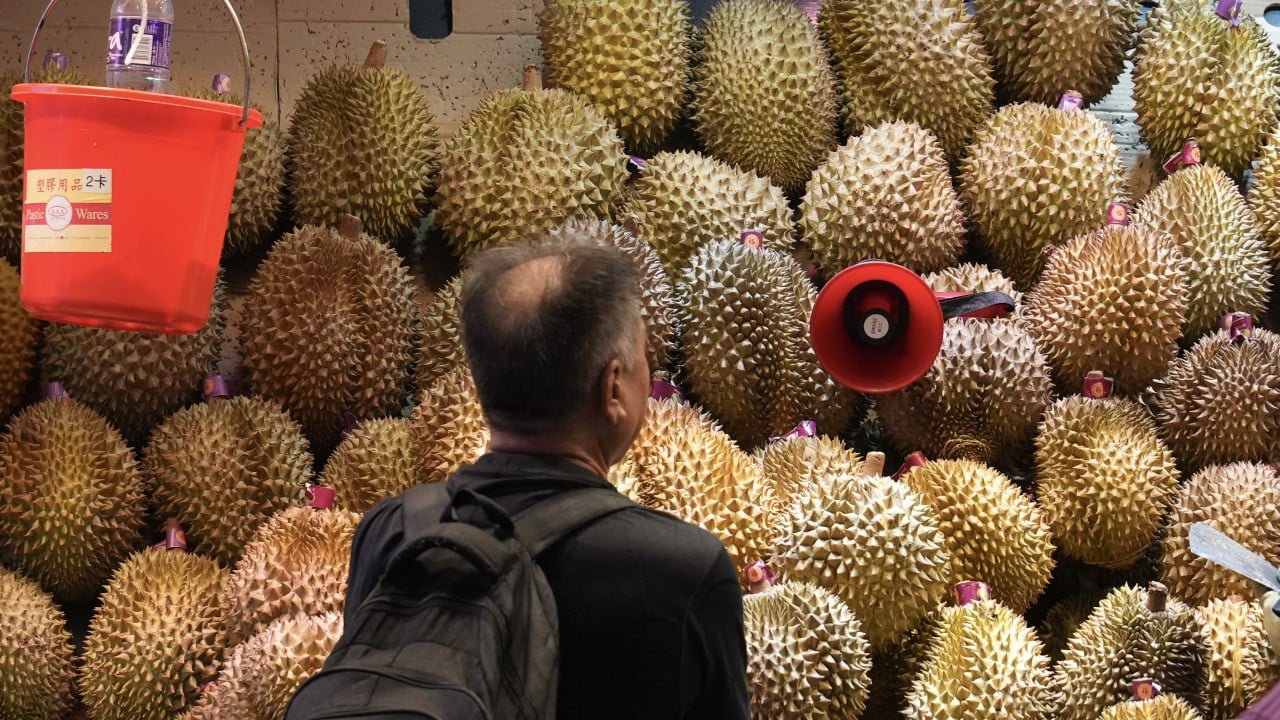
The precipitous drop in durian prices for the Chinese market is not a result of a sudden spike in agricultural luck; it is a function of Trade Liberalization Efficiency and Cold-Chain Infrastructure Maturation. Previously, the "Musang King" and other high-value cultivars faced significant barriers to entry, including stringent phytosanitary protocols and fragmented logistics that led to high spoilage rates—a cost ultimately passed to the consumer.
The Three Drivers of Price Compression
- Tariff Elimination via RCEP: The Regional Comprehensive Economic Partnership has systematically removed import duties on Southeast Asian fruit. This has transitioned the durian from a "luxury niche" commodity to a "volume-based" retail staple. The elimination of these tariffs removed a fixed cost-floor that previously protected high domestic pricing in China.
- The China-Laos Railway Effect: Logistics have shifted from sea-and-road hybrid models to high-capacity rail. This reduces the "Transit Time-to-Spoilage Ratio." Every 24 hours shaved off a transit route translates directly into a percentage increase in sellable inventory. The railway has effectively increased the supply of "Grade A" fruit reaching Tier 1 and Tier 2 Chinese cities by bypassing the bottlenecks of traditional maritime shipping.
- Vietnam’s Market Entry: Thailand’s long-standing monopoly on fresh durian exports to China ended with the certification of Vietnamese orchards. This introduced classic competitive pressure into the supply chain. Vietnam’s geographical proximity to the Chinese border provides a lower Logistics Cost per Unit (LCPU) compared to Malaysian or Southern Thai producers.
The cause-and-effect relationship here is clear: increased connectivity and regulatory alignment have industrialized a previously artisanal trade route. This has shifted the market from a "Seller’s Scarcity" to a "Buyer’s Volume" model, forcing a downward recalibration of retail price points across the mainland.
Social Infrastructure Deficits: The Hong Kong Domestic Worker Paradox
While trade corridors become more efficient, the physical corridors of Hong Kong’s urban environment are experiencing a Density Failure. The sight of migrant domestic workers camping in tents during their mandatory rest days is a physical manifestation of the city's inability to provide "Public Social Space" for its essential non-resident labor force.
The Spatial Bottleneck Framework
Hong Kong’s economy relies on approximately 340,000 foreign domestic helpers. These workers are legally required to live with their employers, a policy that effectively offloads the cost of labor housing onto the private sector. However, the "Live-in Requirement" creates a psychological and physical "Pressure Cooker" effect. On rest days, this labor force is "extradited" from their places of residence but has no designated social infrastructure to occupy.
The emergence of tent encampments signals three critical systemic failures:
- The Privatization of Leisure Space: As traditional public squares are increasingly regulated or commercialized, workers seek "Unmonitored Zones." Tents serve as a portable, private infrastructure in a city that offers zero square footage of privacy to this demographic.
- Thermal and Environmental Stress: The record-breaking temperatures in the region make staying outdoors for 12 to 16 hours without shelter medically hazardous. The tent is not a "lifestyle choice" but a rudimentary climate-control strategy.
- The Policy-Infrastructure Gap: The Hong Kong government’s reliance on this labor force to support its aging population and high female labor participation rate is not matched by an investment in the social overhead capital required to sustain that force.
The "Rest Day" is a legal right, but without "Physical Rights"—the right to occupy space without consumption—the legal right is functionally hollow. This creates a reputational risk for Hong Kong as a "Global Talent Hub," as the visibility of these encampments highlights the stark inequality inherent in its labor laws.
The Divergence of Commodity and Human Capital Logistics
There is a grim irony in the comparison. The region has perfected the movement of a thorny, pungent fruit—ensuring it is transported in climate-controlled, efficient, and cost-effective environments to maximize its value. Simultaneously, it has failed to solve the "Human Logistics" of the people who power its service economy.
The durian's price drop is a victory of Structural Integration. The helper's tent is a symptom of Social Disintegration.
The Mechanism of Modern Urban Displacement
The displacement of domestic workers into tents is an unintended consequence of "Urban Aesthetic Policing." As shopping malls and high-end districts implement "Hostile Architecture" (benches with dividers, lack of shaded seating, noise-cancelling zones) to discourage loitering, the marginalized population is pushed into the fringes—parks, footbridges, and public squares.
This creates a secondary conflict: The Competition for Public Commons. Local residents, also squeezed by high-density living, view the encampments as an encroachment on their limited recreational space. This tension is not caused by the workers or the residents, but by the systemic under-provision of "Third Places"—spaces that are neither work nor home.
Strategic Implications for Regional Governance
The data suggests that the Greater Bay Area is moving toward a model of "High-Efficiency Consumption and Low-Efficiency Social Cohesion." To stabilize this, a shift in policy is required, moving away from reactive policing of tents and toward proactive urban planning.
- Repurposing Underutilized Urban Assets: The "Tent Crisis" could be mitigated by the weekend conversion of government-run schools or community centers into "Worker Hubs." This utilizes existing climate-controlled square footage that sits dormant during the exact window when the demand for social space peaks.
- The Professionalization of Domestic Labor Housing: Long-term stability may require a reassessment of the "Live-in Requirement." Allowing "Live-out" options for a percentage of the workforce would stimulate a regulated rental market for low-cost dormitories, moving the "Social Cost" of housing from the employer's spare bedroom to a more scalable urban housing model.
- Diversifying the "Cold-Chain" Logic to Human Services: Just as the China-Laos Railway solved the durian bottleneck by focusing on the "Last Mile" of delivery, urban planners must focus on the "Last Meter" of worker rest. This involves the installation of basic amenities (shading, charging stations, sanitation) in the areas where workers naturally congregate, rather than attempting to disperse them through regulation.
The regional economy is currently optimized for the transit of goods but remains dangerously brittle regarding the transit and treatment of people. The "Cheap Durian" is a marker of success in the realm of hard infrastructure; the "Tent City" is a failing grade in the realm of soft infrastructure. Sustained growth in the Greater Bay Area depends on the latter catching up to the former.
The final strategic move for stakeholders is the recognition that social stability is a prerequisite for consumption. If the "Human Infrastructure" of Hong Kong continues to fray, the efficiency gains from RCEP and trade integration will be offset by rising social management costs and a declining "City Brand" value. Governance must transition from managing "Goods Flow" to managing "Living Flow."