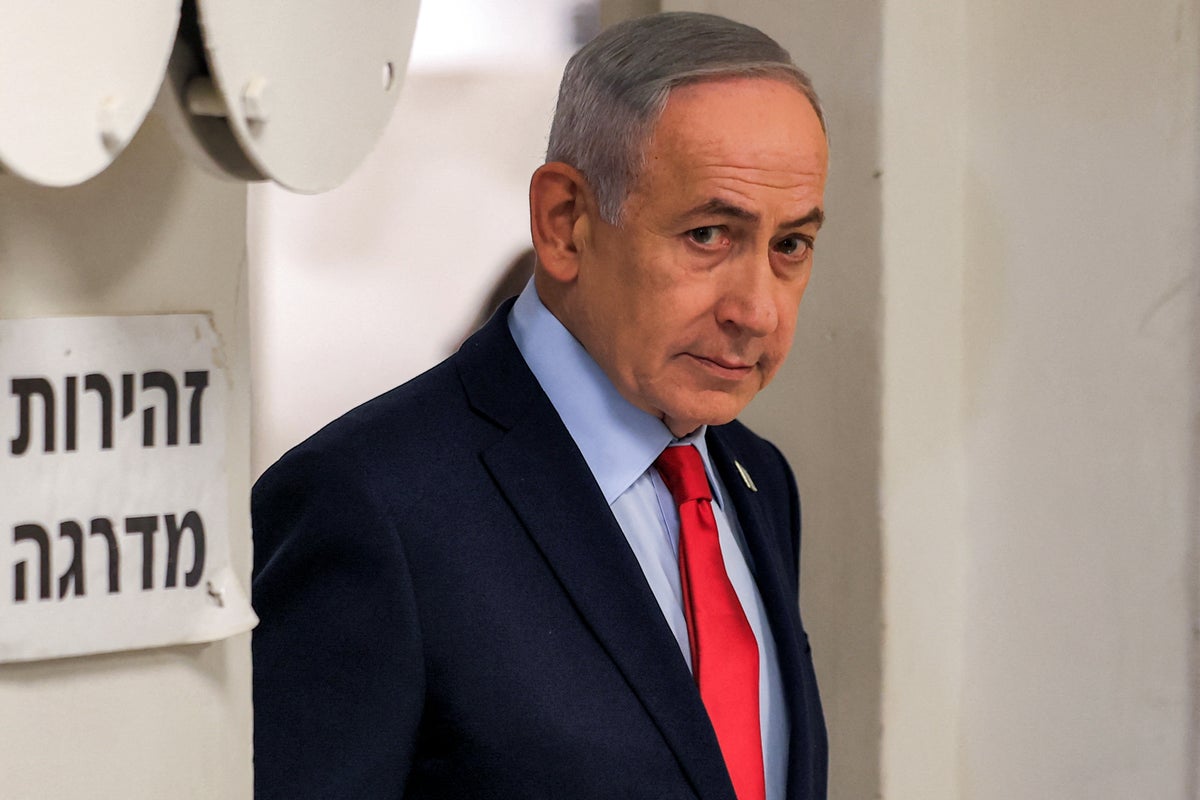
Israel is currently hurtling toward a snap election that few in the halls of power actually want, but everyone is preparing for with a clinical, almost desperate intensity. While the surface-level narrative suggests a simple democratic fatigue with Prime Minister Benjamin Netanyahu, the reality is far more combustible. The current move to dissolve the Knesset is not a sign of a functioning democracy resetting itself; it is the byproduct of a governing coalition that has finally begun to cannibalize its own foundations over the twin pressures of military conscription and a "forever war" model that lacks a credible exit ramp.
The primary query of whether this is "the end" for Netanyahu cannot be answered with a simple poll. In Israel, the leader of the opposition doesn't just need more votes—they need a path to 61 seats in a 120-seat Knesset where the "anti-Bibi" camp is a fractured mosaic of secular centrists, right-wing defectors, and Arab parties who are rarely invited to the table. As of May 2026, Netanyahu remains the ultimate survivor, but his usual escape hatches are being welded shut by a public that has moved beyond the trauma of October 7 and into a state of active resentment toward a social contract that feels increasingly broken. For an alternative view, see: this related article.
The Conscription Trap
The most immediate threat to the government isn’t the street protests, which have become a rhythmic fixture of Tel Aviv Saturday nights. It is the Haredi draft bill. For decades, Netanyahu’s political longevity was bought with the currency of "status quo" exemptions for ultra-Orthodox men. That currency is now worthless.
In a country where reserve duty has stretched into a multi-front reality for nearly three years, the exemption of roughly 80,000 Haredi men of military age is no longer a political bargaining chip—it is a national security liability. Netanyahu’s coalition partners on the far right, like Itamar Ben-Gvir and Bezalel Smotrich, are trapped between their religious voter base and a secular-nationalist wing that demands "equality of the burden." If the Haredi parties, Shas and United Torah Judaism, don't get their way on the budget or the draft, they have shown they are willing to pull the plug on the government, even if it risks a secular-centrist takeover. Related insight on this trend has been provided by TIME.
The Rise of the Super-Coalition
The opposition has finally realized that fragmentation is their greatest weakness. The recent merger of Naftali Bennett and Yair Lapid into a joint list—bluntly titled "Together"—represents a tactical shift toward a "managerial" alternative to Netanyahu’s ideological warfare.
Unlike previous iterations of the opposition, this alliance is explicitly courting the "soft right"—those voters who identify with Likud’s security-first ethos but are repulsed by the chaos of the current cabinet. By placing Bennett, a former settler leader and high-tech millionaire, at the top of the ticket, the alliance is attempting to neutralize Netanyahu’s favorite attack: that any alternative to him is a "weak leftist."
However, this alliance faces a brutal math problem.
- The Bennett-Lapid Bloc: Polling suggests they could become the largest party, but they still fall short of 61.
- The Gantz Collapse: Benny Gantz, once the crown prince of the opposition, is seeing his party "drop like flies" as senior members defect to the Bennett-Lapid camp, viewing Gantz as too willing to compromise with Netanyahu in the past.
- The Arab Kingmakers: To reach a majority, any opposition government would likely need the support—even from the outside—of Mansour Abbas’s Ra’am party. This remains a "third rail" that Netanyahu will use to scare right-wing voters back into his fold.
The Security Dilemma as a Campaign Tool
There is a pervasive, cynical fear in Jerusalem that if Netanyahu finds himself trailing in the polls by August, the "security situation" will conveniently escalate. While former Prime Minister Ehud Barak and other critics have warned about the potential for a "manufactured" escalation to postpone elections, the truth is more nuanced. Netanyahu doesn't need to manufacture a war; he just needs to ensure that no war ends.
The "Super-Sparta" model—a state of perpetual mobilization—serves a specific political function. It allows the government to frame any call for elections as an act of national sabotage. Yet, this strategy is hitting diminishing returns. Recent polling from the Institute for National Security Studies (INSS) indicates that while a majority of Israelis support the military's objectives, only about 30% believe the current government is actually delivering results. The gap between military action and political victory has become a chasm.
The Survivalist’s Last Stand
Netanyahu’s strategy for 2026 is not about winning hearts and minds; it is about controlling the mechanics of the vote. His coalition’s renewed push for judicial oversight—specifically the bill to dismantle the independence of the Government's Legal Advisor—is a clear play to ensure that if the election results are contested, the ruling power has the final say.
This isn't just about a prime minister staying in office to avoid his ongoing legal battles. It is about a fundamental rewrite of the Israeli social contract. On one side is a vision of a "Greater Israel" governed by religious law and permanent security control. On the other is a desperate, messy attempt by the center to return to a version of liberal democracy that many feel is already a relic of the past.
The election, likely to land between September and October, will not be a typical policy debate. It will be a high-stakes referendum on whether the "Netanyahu Era" was a necessary transformation of the state or a long, slow decay of its institutions. The veteran leader has survived "final" defeats before, but this time, the very floor he stands on—the military, the economy, and his own coalition partners—is starting to give way.
The question isn't whether Netanyahu can win another election. It's whether there is enough of the old Israel left for him to govern if he does.