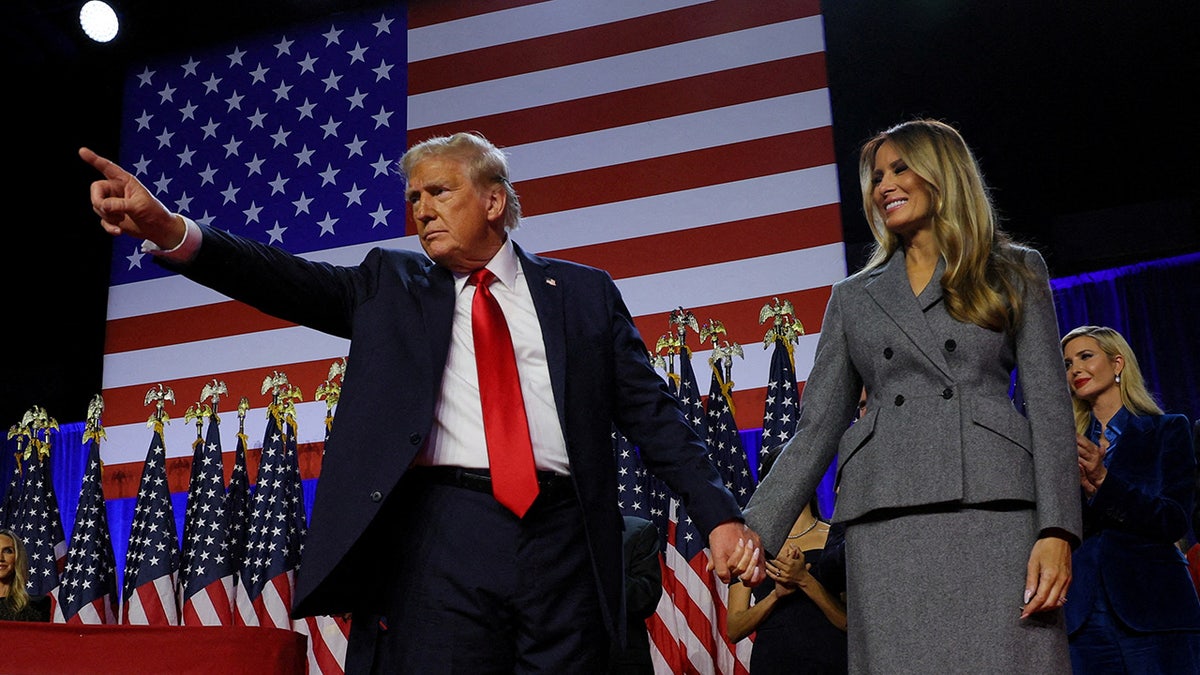
The air in the room didn't just turn cold; it turned sharp. When Donald Trump stood before the cameras following a stinging setback from the highest court in the land, the air didn't carry the measured tone of a legal scholar or the weary sigh of a seasoned diplomat. It carried the electricity of a man who feels the walls closing in and decides, quite simply, to tear the room down. He didn't just disagree with the Supreme Court justices. He called them "fools."
But the insult was merely the spark. The real fire followed: a sweeping, unilateral promise to impose a 10% global tariff on every single item crossing the American border.
Think about your morning routine. The coffee beans from Ethiopia. The ceramic mug fired in a kiln in Vietnam. The smartphone vibrating on your nightstand, a marvel of global engineering with parts sourced from four continents. Now, imagine a silent, invisible 10% tax sitting on top of every one of them. It isn't just a number on a ledger in Washington D.C. It is a slow-motion earthquake in the American pantry.
The Anatomy of an Outburst
To understand the tariff, you have to understand the wound. The Supreme Court—a body Trump largely built through three high-stakes appointments—had just handed him a defeat. In the world of high-level politics, when the "referees" blow the whistle against you, there are two paths. You can adjust your strategy, or you can try to change the rules of the game entirely.
Trump chose the latter.
By calling the justices "fools," he signaled a total break from the institutional reverence that usually governs the three branches of government. But a rhetorical attack on judges doesn't change the price of milk. A 10% global tariff does. This wasn't a targeted strike against a specific trade rival like China. This was a blanket wall of costs.
Consider a hypothetical small business owner named Sarah. She runs a boutique bicycle shop in Ohio. She doesn't build the frames; she imports them. She doesn't manufacture the rubber for the tires; she buys them from a distributor who gets them from Southeast Asia. When a 10% tariff hits the port in Long Beach, Sarah doesn't see a "bold trade policy." She sees her profit margin evaporate. To stay alive, she has to look her neighbors in the eye and tell them that the $500 commuter bike now costs $550.
Sarah is the invisible stakeholder in this narrative. She isn't in the courtroom, and she isn't on the campaign trail, but she is the one who ultimately pays the fine for the "fools" in Washington.
The Ghost of 1930
History has a cruel way of repeating its most painful chapters when we stop reading the footnotes. Economists look at a 10% across-the-board tariff and see the flickering shadow of the Smoot-Hawley Tariff Act of 1930.
Back then, the logic was identical: protect American jobs by making foreign goods expensive. The result, however, was a global trade war that deepened the Great Depression. When you tell the world they can't sell to you, the world quickly decides they won't buy from you either.
Imagine the American farmer. He grows soybeans in Iowa, expecting to sell them to markets in Europe and Asia. When the U.S. imposes a 10% tax on French wine or Japanese electronics, those countries don't just take the hit. They retaliate. Suddenly, the Iowa farmer finds his soybeans sitting in a silo, rotting, because the global market has slammed its doors in his face.
It is a cycle of isolation.
The complexity of the modern world makes this even more precarious. We no longer live in an era where a car is "Made in America" or "Made in Japan." A modern vehicle is a jigsaw puzzle. The engine might be cast in Mexico, the sensors designed in Germany, and the assembly finished in Tennessee. A global tariff creates a "tax on a tax" at every stage of the journey. By the time that car hits the dealership lot, the cumulative cost hasn't just risen by 10%; it has bloated under the weight of a disrupted supply chain.
The Human Cost of the High Ground
Policy is often discussed in the abstract, using terms like "trade deficits" and "macroeconomic shifts." These words act as a veil, hiding the reality of the kitchen table.
For a family living paycheck to paycheck, a 10% increase in the cost of imported goods—which includes clothes, electronics, and even the fertilizer used to grow domestic produce—is not a political statement. It is a crisis. It is the difference between replacing a broken washing machine and washing clothes in the sink.
The tragedy of the "fools" comment is that it frames the national interest as a personal vendetta. When the leader of a movement suggests that the highest court in the land is incompetent because they ruled against his personal interests, the foundation of the law begins to look like sand. And when that same leader suggests a massive economic upheaval as a follow-up, the message is clear: the economy is a weapon to be wielded, regardless of who gets caught in the crossfire.
A World Under Pressure
We often think of the economy as a machine that we can tune and tweak. In reality, it is more like an ecosystem. It is fragile. It relies on the predictable flow of goods and the stable interpretation of laws.
When you inject a 10% global tariff into that ecosystem, you aren't just "taxing foreigners." That is the great misconception. Foreign companies don't pay tariffs; the American companies importing the goods pay them to the U.S. government. It is, for all intents and purposes, a massive sales tax on the American consumer.
The Supreme Court setback was a moment of legal finality. The response—the "fools" and the "tariffs"—was a moment of economic volatility.
The stakes are far higher than a single election or a single court case. We are talking about the basic mechanics of how we live, what we can afford, and whether or not our institutions can withstand the heat of a personal grievance.
The "fools" aren't just the people in the black robes. The risk is that we all become the fools if we believe that global trade can be dismantled without breaking the very things we hold dear.
Sarah in Ohio watches the news. She looks at her inventory of bicycles. She calculates the 10%. She wonders if her customers will understand. She wonders if anyone in Washington understands her.
The gavel falls in Washington, but the echoes are felt at the checkout counter of every grocery store in the nation. It is a quiet, heavy sound. It is the sound of a world getting smaller, more expensive, and much more divided.
The most dangerous thing in politics isn't a bad policy; it's a policy born out of spite. Spite doesn't build factories. It doesn't lower prices. It only burns bridges. And in a global economy, a bridge on fire is a luxury no one can afford.