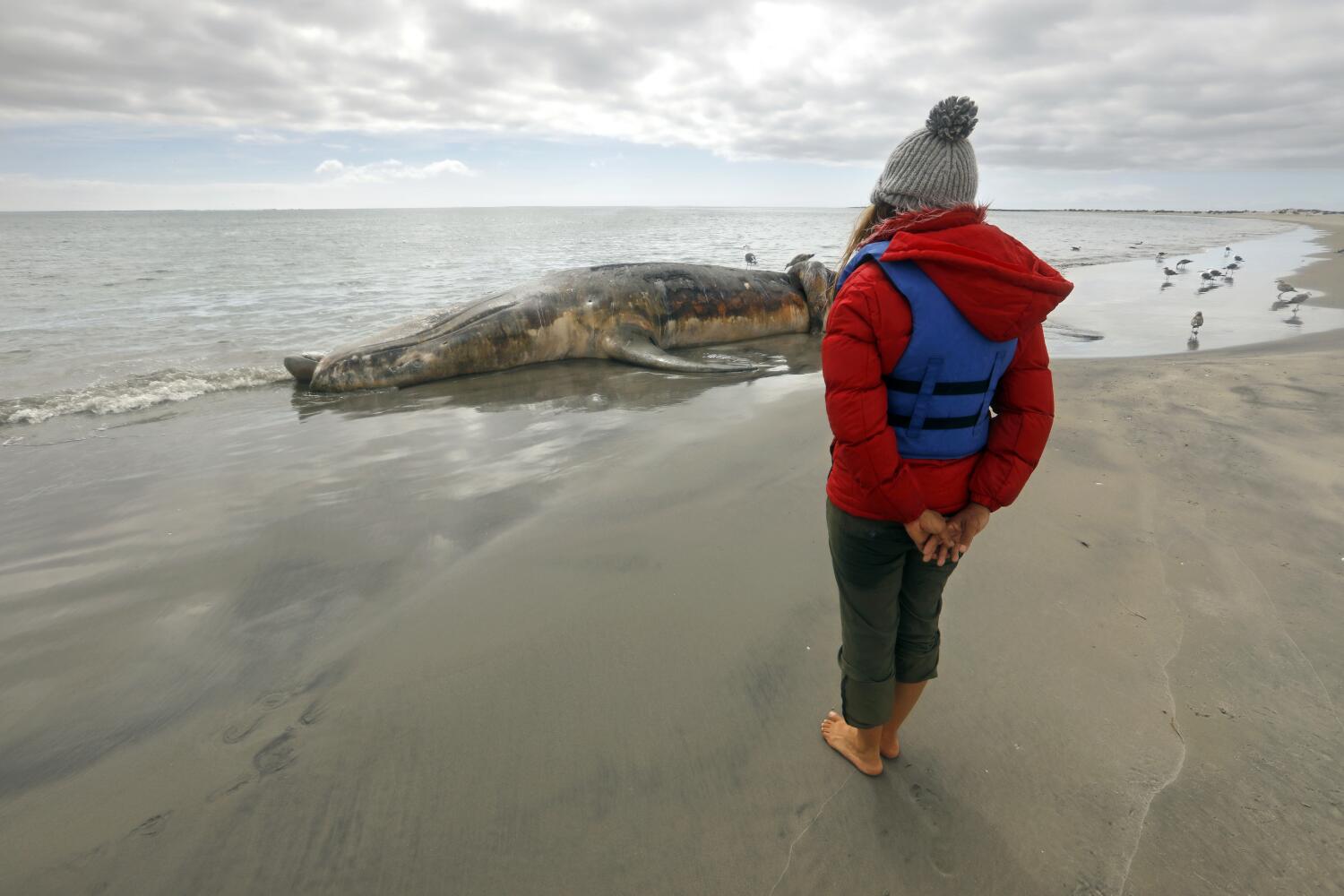
The gray whale was once the ultimate poster child for environmental success. After being hunted to the brink of extinction by the mid-twentieth century, the Eastern North Pacific population staged a recovery so vigorous it was removed from the endangered species list in 1994. It was the "Save the Whales" movement’s greatest trophy. But today, that trophy is fracturing. Since 2019, hundreds of gray whales have washed up dead along the West Coast from Mexico to Alaska, many of them little more than skin and bone. This isn't just a fluke of nature or a temporary dip in numbers. It is a loud, biological signal that the old ways of thinking about conservation—protecting a species from harpoons and then walking away—are no longer enough to keep them alive.
The Pacific Graveyard
The current Unusual Mortality Event (UME) has seen thousands of whales vanish from the population. While the carcasses on the beach grab the headlines, they represent only a fraction of the actual death toll. Most whales that die at sea simply sink. Researchers estimate the population has plummeted from roughly 27,000 individuals in 2016 to fewer than 15,000 today.
When you look at the necropsy reports, the word "emaciated" appears with haunting frequency. These animals are starving in an ocean that we assume is full of life. The gray whale is a sentinel. Because they migrate 12,000 miles every year and rely on specific feeding grounds in the Arctic, they are the first to feel the tremors when the foundation of the marine food web begins to crack. They are not dying because we are hunting them. They are dying because the banquet table has been cleared.
The Arctic Kitchen is Closing
Gray whales are bottom-feeders. They dive to the floor of the Bering and Chukchi seas, scoop up mouthfuls of sediment, and filter out tiny, shrimp-like crustaceans called amphipods. It is a high-calorie diet designed to build the thick layer of blubber necessary to survive a round-trip journey to Baja California without eating.
The problem is the ice.
Amphipods rely on "ice algae" that grows on the underside of sea ice. As the ice melts earlier and forms later, that algae drops to the seafloor prematurely or doesn't grow at all. Without the algae, the amphipod populations collapse. Without the amphipods, the whales cannot bulk up. We are witnessing a massive energetic deficit. A female whale cannot successfully carry a calf or produce milk if she is burning her own muscle tissue just to stay afloat. This explains the plummeting birth rates observed in the lagoons of San Ignacio and Magdalena Bay.
The Trap of Historical Success
We are currently stuck in a conservation mindset born in the 1970s. Back then, the enemy was clear: the harpoon. If we stopped killing the whales, they would thrive. That logic worked for a while, but it created a sense of complacency. We treated the "carrying capacity" of the ocean as a static number, a fixed ceiling that the whales would eventually reach and maintain.
The reality is that carrying capacity is a moving target. The ocean of 2026 is not the ocean of 1994. By focusing strictly on population counts rather than ecosystem health, we missed the early warning signs. We celebrated the recovery of the gray whale while the very water they swim in was undergoing a radical thermal shift.
The Benthic Shift
As the Arctic warms, the "benthic" (bottom-dwelling) ecosystem is being replaced by a "pelagic" (open water) one. Fish species from the south are moving into northern waters, eating the nutrients that used to feed the bottom-dwelling amphipods. The gray whale is essentially being outcompeted by smaller, faster fish that can adapt to warmer water more quickly. The whales are specialists in a world that is suddenly demanding generalists.
Shipping Lanes and Modern Hazards
Starvation is the primary killer, but it isn't the only one. A hungry whale is a desperate whale. In their search for food, gray whales are venturing into busier shipping lanes and closer to shore where they are more likely to be struck by vessels or entangled in fishing gear.
- Vessel Strikes: Large container ships often don't even feel the impact when they hit a 30-ton whale.
- Entanglement: Ghost nets and active crab gear act as underwater snares. A healthy whale might have the strength to break free; a starving one does not.
- Noise Pollution: The constant drone of sonar and engines interferes with the whales' ability to communicate and navigate, adding another layer of stress to an already exhausted animal.
Why Political Borders Fail the Whales
The gray whale migration crosses three national borders. While the United States, Mexico, and Canada have various protections in place, they are not synchronized. A whale protected in a Mexican lagoon faces a gauntlet of industrial activity once it hits international waters or enters the busy ports of California and Washington.
Traditional conservation focuses on "Sanctuaries," which are essentially lines drawn on a map. But you cannot fence in a changing climate. You cannot put a wall around a warming current. Our policy needs to shift from protecting places to protecting processes. This means dynamic shipping lane management that changes based on real-time whale sightings and aggressive, multi-national carbon policies that address the root cause of the Arctic melt.
The Myth of the Quick Fix
There is a temptation to look for a silver bullet. Some suggest supplemental feeding or more localized interventions. These are fantasies. You cannot feed 15,000 whales by hand. The only way to save the gray whale is to acknowledge that the "Save the Whales" era is over and the "Save the Ocean" era has begun.
We have to stop viewing the gray whale's decline as a sad, isolated event. It is a data point. It is an indictment of a management style that prioritizes "status quo" over radical adaptation. If the gray whale—the most resilient and adaptable of the great whales—is struggling this much, the species that are less flexible are already in deep trouble.
The Hard Truth About Recovery
It is possible that the gray whale population will stabilize at a much lower number. We may have to accept that an ocean this warm simply cannot support 27,000 of these creatures anymore. This isn't "success," but it is the new reality.
The struggle of the gray whale is a mirror. It reflects our own inability to manage long-term ecological health over short-term economic or political optics. We were so proud of bringing them back from the edge of the grave that we didn't notice we were leading them into a desert.
The next time you see a headline about a whale washed up on a beach, don't just feel pity. Feel the weight of a system that is failing to keep its most iconic residents alive. The whales are doing their part; they are swimming the miles and trying to find the food. The question is whether we are willing to change the way we manage the seas before the Arctic kitchen closes for good.
Every year the migration becomes a more desperate gamble. The whales head north on a wing and a prayer, hoping the ice held long enough to feed the life below. If we want to see them return to the lagoons of the south, we have to look beyond the whale and start looking at the water.
Demand that your local representatives support the expansion of Marine Protected Areas that include dynamic "no-go" zones for shipping during peak migration months. If we don't move the ships, the whales will keep paying the price for our convenience.