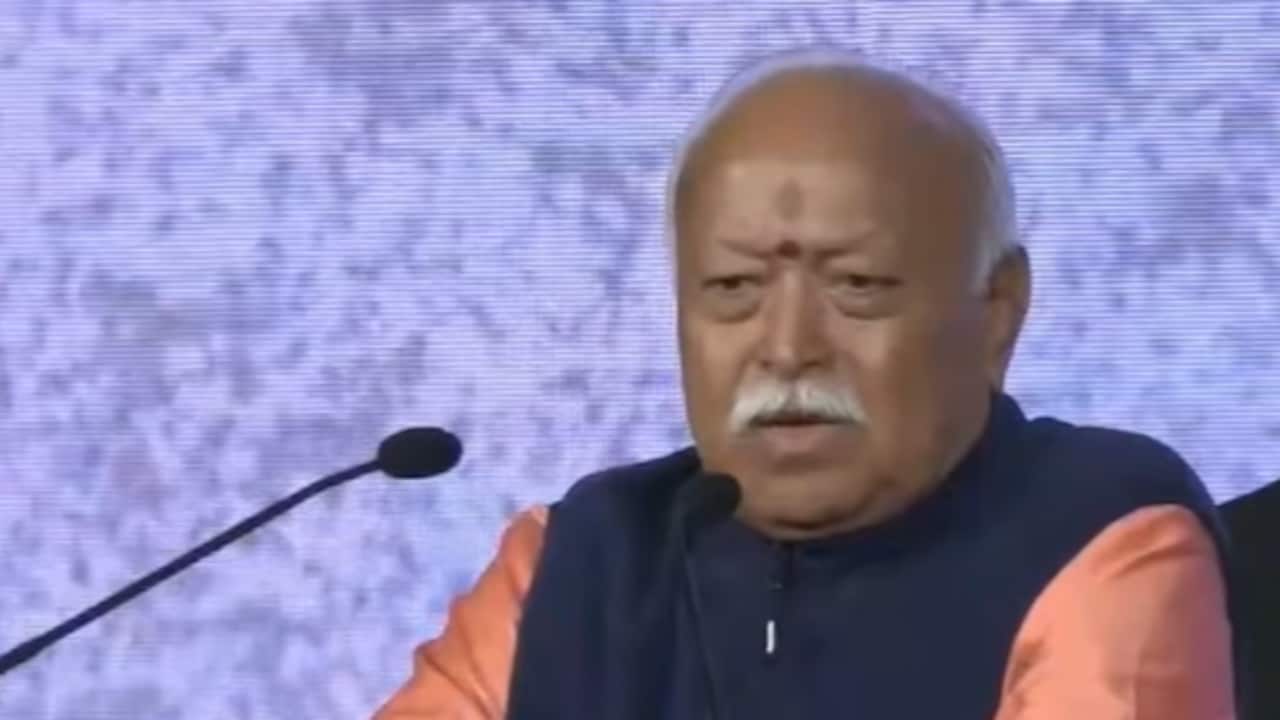
Every time a prominent figure stands on a foreign stage and repeats the soothing mantra of unity in diversity, the crowd nods, the press applauds, and nobody actually asks what the phrase means. Mohan Bhagwat delivering this line in New York is standard operating procedure. It plays well to the diaspora. It sounds enlightened. It checks every diplomatic box.
It is also an intellectual cop-out.
When you reduce a civilization of 1.4 billion people down to a bumper sticker about pluralism, you stop looking at the friction that actually holds the machine together. The lazy consensus says that India survives because everyone holds hands and sings hymns to secularism. That is a fairytale designed for cocktail parties in Manhattan and think-tank panels in Washington.
The reality is far colder, far more cynical, and infinitely more durable. India does not function because of romantic ideals about unity. It functions because of institutionalized friction, hyper-local negotiation, and an unyielding tolerance for administrative chaos.
The Myth Of The Harmonious Mosaic
We love metaphors about mosaics and melting pots. They are clean. They let us pretend that cultural integration is an art project.
Step onto the ground in any tier-two Indian city, and the mosaic shatters. You do not find a sweet blending of traditions; you find an armed truce of commercial interdependency. The neighborhood grocer belongs to one community, the landlord to another, the union boss to a third, and the logistics network to a fourth. They do not necessarily love each other. They do not share worldview values. They do not read the same texts or celebrate the same holidays with mutual theological respect.
They trade.
That is the engine room nobody wants to talk about. The genius of the subcontinent's social architecture was never high-minded spiritual synthesis. It was the invention of a transactional grid so vast and inescapable that outright civil war became economically prohibitive. When political leaders stand abroad and talk about a shared civilizational DNA, they are masking the messy, cutthroat mechanics of coexistence behind a veil of metaphysical poetry.
I have watched foreign investors lose billions because they bought into the harmony narrative. They flew into Mumbai or Bangalore expecting a frictionless consumer market united by shared optimism. They ran headfirst into the reality of regional protectionism, caste-based voting blocs, linguistic chauvinism, and municipal sabotage. They learned the hard way that when the cultural veneer wears off, the underlying tribal machinery takes over.
The Danger Of Sanitized Nationalism
When the RSS chief or any other major ideological leader preaches unity from abroad, the rhetoric serves a domestic pacification agenda. It smooths over the jagged edges of domestic policy debates by lifting the conversation into the stratosphere of ancient philosophy.
Ancient philosophy does not pay utility bills, and it certainly does not resolve land acquisition disputes.
By framing social cohesion as an intrinsic genetic trait, you commit a fundamental error of attribution. You attribute to spiritual DNA what is actually the product of brutal, continuous political accommodation. India is not unified because of some mystical code encoded in Vedic texts or constitutional preambles. It is unified because the cost of breaking it apart has always been catastrophic for every faction involved.
Consider the linguistic divide. The push for a single national language surfaces every few years, driven by the same compulsion to manufacture uniformity. Every single time, it hits a brick wall in the south, the east, and the northeast. Why? Because language is power, and regional elites refuse to hand their leverage over to Delhi. The state survives not by crushing these linguistic fiefdoms, but by constantly renegotiating the terms of engagement with them. That is not unity. That is managed instability.
And managed instability works. It keeps power decentralized enough that no single tyrant can capture the entire apparatus overnight.
Redefining Coexistence For The Real World
If we are going to talk about diversity honestly, we have to strip away the sentimental garbage.
Diversity is not a strength in and of itself. Diversity is a stress test. Left unchecked, diversity destroys nations through tribal Balkanization and sectarian violence. Yugoslavia was diverse. The Soviet Union was diverse. Syria was diverse. Diversity without structural constraints is a civil war waiting for a match.
What saved India wasn't the diversity itself; it was the heavy-handed, bureaucratic, often maddeningly slow machinery of the Indian state that forced disparate groups to live inside the same administrative cage. The Constitution of India is not a love letter to pluralism. It is a referee's playbook for a permanent bar fight.
When we pretend that everyone is holding hands under a banyan tree, we blind ourselves to the actual engineering required to keep the lights on. We ignore the institutional checks, the backroom deals, the judicial overreaches, and the constant, grinding friction of federalism.
Stop looking for spiritual explanations for political survival.
Real strength doesn't come from pretending everyone agrees on the fundamentals. It comes from building a system robust enough to function while everyone violently disagrees on almost everything. The next time someone tells you about the deep, unifying DNA of a nation, ask them how many municipal water contracts that DNA just cleared.
Watch how fast the poetry stops.