History rarely repeats itself with a clean script. Instead, it borrows ancient costumes to make sense of modern heartbreak.
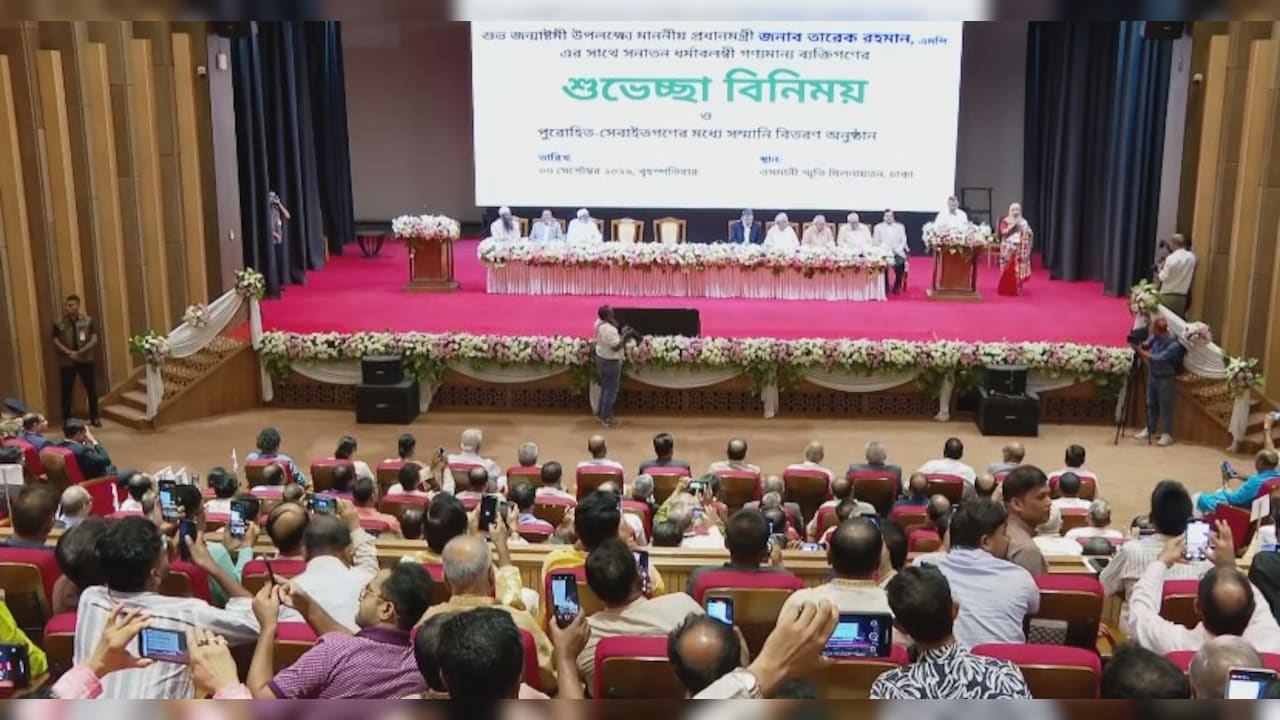
Picture a humid evening in Dhaka. The air hangs heavy with the scent of jasmine and wet earth, standard for the monsoon season. Inside a crowded auditorium, thousands gather to celebrate Janmashtami, the birth of a deity who broke chains and humbled tyrants. The festival is ancient, but the political air in the room crackles with the raw, unfiltered tension of a nation still picking up the pieces of its own recent upheaval. If you liked this post, you might want to check out: this related article.
At the center of the dais stands Prime Minister Tarique Rahman. The microphone hums. When he speaks, he does not just deliver a standard holiday greeting. He reaches deep into ancient mythology to pull out a name that instantly silences the murmur of the crowd: Kansa.
In the grand epics, Kansa was the cruel ruler of Mathura, a king consumed by paranoia, who imprisoned his own family and terrorized his subjects because an old prophecy foretold his downfall. He is the archetypal tyrant who mistook absolute control for eternal survival. For another angle on this story, refer to the recent coverage from BBC News.
And right there, under the festive lights, that ancient crown was placed firmly on the head of former Prime Minister Sheikh Hasina.
It was a striking historical parallel, delivered during a religious festival meant for divine joy rather than political settling of scores. But politics in South Asia has always breathed through its mythology. Leaders do not merely govern policy; they cast themselves as characters in an ongoing cosmic drama between order and oppression, righteousness and ruin.
Consider what happens when a modern political fallout is framed through the lens of sacred scripture. To the millions of citizens who lived through decades of iron-fisted governance, the metaphor of Kansa is not abstract poetry. It is a mirror. It translates the cold statistics of political crackdowns, silenced opposition, and institutional decay into a language everyone understands: the story of an over-mighty ruler who believed the state belonged to her alone.
During the Janmashtami address, the invocation of the tyrant king served a dual purpose. It demonized the past regime while simultaneously offering a theatrical reassurance to the country's religious minorities, particularly the Hindu community, who have often found themselves caught in the crossfire of political scapegoating. By invoking the defeat of Kansa, the message to the audience was clear: empires built on fear inevitably crumble from within, no matter how heavily fortified their palaces appear.
Metaphors like this are powerful, yet they carry a heavy burden. They reduce complex socio-economic grievances, corruption scandals, and structural failures into a simplistic morality play of good versus evil. They satisfy the public hunger for poetic justice, but they also risk turning governance into an endless cycle of theatrical retribution.
Yet, standing in that hall in Dhaka, listening to the applause rise against the backdrop of drums and temple bells, the analytical weight of political science faded away. What remained was the raw sound of a nation trying to exorcise its ghosts.
The tyrant of Mathura eventually met his end at the hands of the very youth he tried to suppress. History suggests that modern autocrats rarely escape a similar reckoning. As the lights dimmed and the crowd stepped back out into the humid night, the ghost of the old regime lingered not just as a political memory, but as a cautionary tale carved into the collective conscience of a changing land.
The tyrant falls. The stories remain. And the wheel keeps turning.