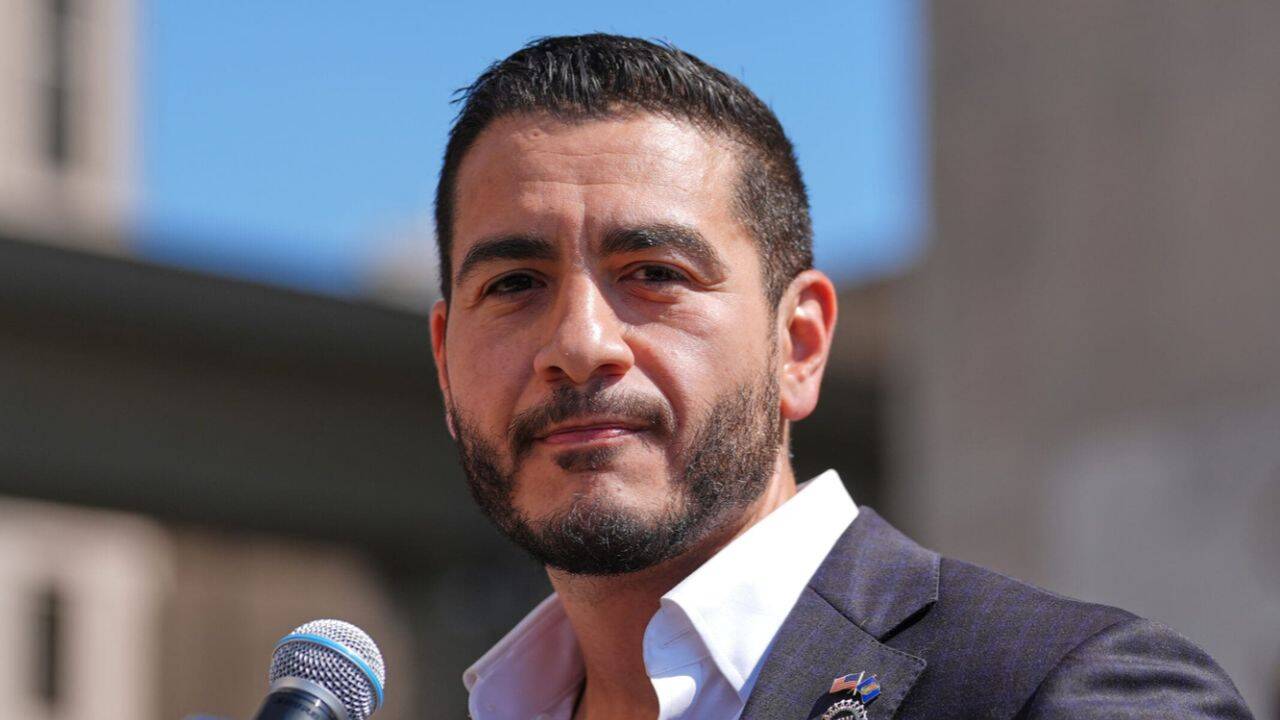
The election of Indian-American State Senator Priya Sundareshan to the presidency of the Arizona Senate marks the operational consolidation of a multi-cycle Democratic trifecta strategy in a historically conservative border state. Rather than functioning merely as a symbolic milestone in demographic representation, this leadership transition alters the procedural bottlenecks, committee gatekeeping mechanisms, and executive-legislative bargaining dynamics in Phoenix. Understanding this shift requires examining the structural incentives of the Arizona Legislature, the specific institutional powers vested in the Senate President, and the policy friction generated when a slim majority attempts to govern a purple electorate.
Standard political coverage frames the elevation of a South Asian lawmaker to the top chamber post through the lens of identity milestones and partisan horse-race narratives. That framing obscures the actual mechanics of statehouse power. In Arizona, where the governor holds robust veto authority and ballot propositions frequently bypass the legislature entirely, control of the Senate presidency determines which bills survive committee scheduling, how budget negotiations are sequenced, and how institutional resources are allocated ahead of subsequent election cycles.
The Institutional Architecture of the Arizona Senate Presidency
To evaluate the operational impact of Sundareshan’s ascent, one must first isolate the formal and informal powers of the Senate President under Arizona’s constitutional and procedural rules. Unlike ceremonial presiding officers in certain parliamentary systems, the President of the Arizona Senate acts as the primary gatekeeper of the legislative pipeline.
The office controls three decisive levers:
- Committee Assignment and Chair Appointments: The President determines the ideological composition of standing committees and selects their chairs. By stacking key panels—such as Appropriations, Judiciary, and Natural Resources, Energy and Water—the presiding officer dictates the survival rate of legislation before it ever reaches the Committee of the Whole.
- Bill Referral Discretion: Every introduced bill must be assigned to one or more committees. A President can accelerate a priority measure by granting it a single committee referral, or effectively kill a contentious proposal by assigning it to multiple hostile committees—a procedural tactic known as multi-referral burial.
- Floor Calendar Control: Even after a bill clears committee and rules review, it cannot receive a floor vote without being placed on the active calendar. The President controls the tempo of floor action, creating artificial scarcity of time at the end of a session to extract concessions from reluctant caucus members or the executive branch.
When Democrats secured control of the chamber alongside the governorship and the House of Representatives, these procedural levers shifted from defensive blockers to offensive instruments. Under the prior regime of divided government, Democratic policy initiatives died quietly in committee without floor votes, insulating moderate members from taking difficult public stances. Under unified control led by Sundareshan, the operational challenge reverses: leadership must now manage internal caucus discipline to pass legislation that satisfies progressive base expectations without alienating swing-district voters in Maricopa and Pima counties.
Demographic Shifts and Coalition Mechanics in the Southwest
Sundareshan’s background—an environmental and natural resources attorney representing a Tucson-based district, and the daughter of Indian immigrants—reflects two converging structural trends in Arizona politics: the suburbanization of the Democratic coalition and the rising electoral salience of Asian American and Pacific Islander (AAPI) voters.
In electoral systems governed by single-member districts, demographic growth only translates into legislative power when geographic concentration aligns with redistricting boundaries. Arizona’s Independent Redistricting Commission (IRC) draws legislative maps based on constitutional criteria, including compactness, contiguity, and respect for communities of interest. Over the past decade, rapid population expansion in the Phoenix and Tucson metropolitan areas, driven heavily by high-tech manufacturing, semiconductor fabrication, and university-linked research sectors, altered the demographic baseline of several previously competitive districts.
The Sub-Caucus Equation
A slim legislative majority operates under severe fragility. In a 30-member Senate, a one- or two-seat margin means every individual senator possesses effective veto power over floor passage. Leadership must therefore balance three distinct internal factions:
- Urban Progressive Core: Lawmakers from safe seats in central Phoenix and Tucson who prioritize aggressive climate mandates, public education funding increases, and reproductive rights codification.
- Suburban Swing-District Moderates: Senators representing competitive districts in areas like North Phoenix, Scottsdale, and Chandler, whose electoral survival depends on fiscal restraint, business-friendly regulatory posture, and targeted infrastructure investment.
- Rural and Border Representatives: Members whose constituents face acute water scarcity, agricultural transition pressures, and direct economic exposure to federal border enforcement policies.
Sundareshan’s selection as President represents an institutional compromise designed to bridge these factions. Her legal expertise in water law and environmental regulation provides technical credibility with both rural stakeholders concerned about groundwater depletion and urban environmentalists demanding conservation mandates. Simultaneously, her ascent signals to diverse, college-educated suburban constituencies that the party’s leadership structure mirrors the modern demographic composition of Arizona’s economic engines.
Policy Throughput: From Divided Gridlock to Trifecta Execution
When a political party transitions from minority opposition to unified state control, the primary bottleneck shifts from external opposition to internal throughput capacity. The Arizona Legislature operates under strict statutory and constitutional constraints that limit how rapidly a new majority can overhaul state policy.
The Budgetary Constraint and Structural Revenue Limits
Arizona’s fiscal architecture imposes rigid guardrails on legislative spending. Following years of flat-tax implementation and universal school voucher expansion (Empowerment Scholarship Accounts) enacted under prior Republican majorities, state revenue baselines operate with reduced elasticity.
Under Proposition 108, enacted by Arizona voters in 1992, any legislative measure that increases state revenues—whether by raising tax rates or eliminating existing exemptions—requires a two-thirds supermajority vote in both chambers. Because Democrats hold a narrow majority rather than a two-thirds supermajority, Sundareshan and her leadership team cannot raise taxes through standard legislative channels to fund new programmatic spending.
This creates a zero-sum budgetary environment:
- Expenditure Reallocation: Any expansion in K-12 public school funding, healthcare access, or affordable housing subsidies must be financed either through organic revenue growth or by clawing back existing appropriations and tax credits.
- Voucher Program Restructuring: Limiting or capping the universal Empowerment Scholarship Account program becomes a primary fiscal mechanism for freeing general fund dollars, yet doing so triggers intense political mobilization from school-choice advocacy groups.
- Executive-Legislative Friction: Even within a unified party government, the Senate President and the Governor possess distinct institutional incentives. The Governor must manage statewide executive agencies and maintain broad approval across the entire electorate, whereas the Senate President must protect vulnerable incumbents in narrow legislative districts. Disagreements over budget vetoes or agency appointments frequently emerge behind closed doors before public consensus is announced.
Water Governance and Resource Allocation
Beyond fiscal policy, Sundareshan’s core policy domain—water and natural resources—represents the single highest-stakes operational challenge facing Arizona. The state’s reliance on over-allocated Colorado River water, combined with rapid depletion of rural groundwater aquifers, directly threatens long-term economic expansion and housing development in the Phoenix Active Management Area.
Previous legislative sessions saw repeated deadlocks over rural groundwater management proposals, as agricultural interests resisted state-imposed pumping limits while municipal developers demanded assured water supply certificates to sustain suburban growth. With a water-law specialist holding the Senate presidency, the institutional priority shifts toward breaking this stalemate through targeted statutory reform:
- Closing Agricultural Loopholes: Reforming the regulatory exemptions that allow large-scale corporate farming operations to pump unregulated groundwater in rural basins outside designated Active Management Areas.
- Municipal Supply Certification: Adjusting the statutory criteria used by the Arizona Department of Water Resources (ADWR) to model 100-year assured water supplies, balancing housing affordability against hydrological reality.
- Industrial Water Recycling Mandates: Establishing stricter conservation and reclamation standards for water-intensive industrial facilities, including semiconductor plants and data centers.
The political risk in this domain is asymmetric. Failing to enact comprehensive water reform threatens Arizona’s bond ratings and corporate relocation pipeline; however, imposing aggressive pumping restrictions risks alienating rural voters and triggering protracted litigation from agricultural water rights holders.
The Structural Vulnerability of Narrow Majorities
Historical analysis of state-level political realignments demonstrates that newly minted trifectas frequently overinterpret their electoral mandate. In swing states like Arizona, legislative majorities are rarely built on a permanent ideological conversion of the electorate; rather, they result from candidate quality differentials, turnout disparities in specific metropolitan precincts, and independent voter dissatisfaction with the prior ruling party.
Independent voters constitute roughly one-third of Arizona’s registered electorate, matching or exceeding the registration totals of both major parties in several key counties. These voters exhibit low partisan loyalty and high sensitivity to perceived legislative overreach.
Three Failure Modes for New Legislative Leadership
As Sundareshan operationalizes the Senate majority’s agenda, three structural failure modes threaten the durability of Democratic control:
- Agenda Overload: Attempting to pass sweeping reforms across election law, labor regulations, environmental mandates, and social policy within a single 100-day session overwhelms committee staff, degrades statutory drafting quality, and provides opposition campaigns with concentrated attack material.
- Loss of Floor Discipline: In a chamber with a razor-thin margin, a single absent member due to illness or travel halts floor action. Furthermore, allowing vulnerable swing-district senators to cast risky votes on low-probability messaging bills erodes incumbent survivability without producing tangible policy gains.
- Ballot Referral Backlash: When a narrow majority bypasses the Governor or attempts to insulate policies from future repeal by referring statutory changes directly to the ballot, it risks nationalizing local races and energizing opposition turnout in off-year or presidential cycles.
Strategic Framework for Sustaining Institutional Control
To convert a historic election victory into durable governing authority, the Senate leadership under Sundareshan must prioritize institutional execution over ideological signaling. The mathematical constraints of the Arizona Constitution—specifically the Proposition 108 supermajority requirement for revenue increases and the Voter Protection Act (Proposition 105), which bars the legislature from amending voter-approved initiatives without a three-fourths vote—dictate a disciplined, surgical approach to lawmaking.
First, leadership must enforce strict legislative triage. Committee chairs should restrict floor calendars to bills that either solve acute, quantifiable administrative problems—such as rural groundwater regulation and infrastructure permitting—or fulfill core budgetary obligations. Non-binding resolutions and partisan messaging bills that fail to advance material governance should be halted in committee to protect swing-district incumbents.
Second, the Senate must institutionalize pre-session executive alignment. Rather than allowing public clashes between the Senate caucus and the Governor’s office over budget priorities, leadership should establish joint working groups during the interim period to resolve fiscal trade-offs before bills are formally introduced. Given the inability to raise tax rates without a two-thirds vote, budget negotiations must focus on audit-driven efficiency savings, targeted sunsetting of underperforming corporate tax credits, and structural guardrails on entitlement growth.
Third, Democratic leadership must recognize that demographic representation—exemplified by Sundareshan’s historic election—creates an initial reservoir of political goodwill among emerging voter blocs, but that goodwill depreciates rapidly if not reinforced by measurable economic and infrastructural outcomes. In a state defined by rapid population growth, constrained water resources, and a volatile independent electorate, legislative power is retained not by celebrating the composition of the chamber, but by proving that the new majority can manage the state’s physical and fiscal infrastructure more reliably than its predecessors.