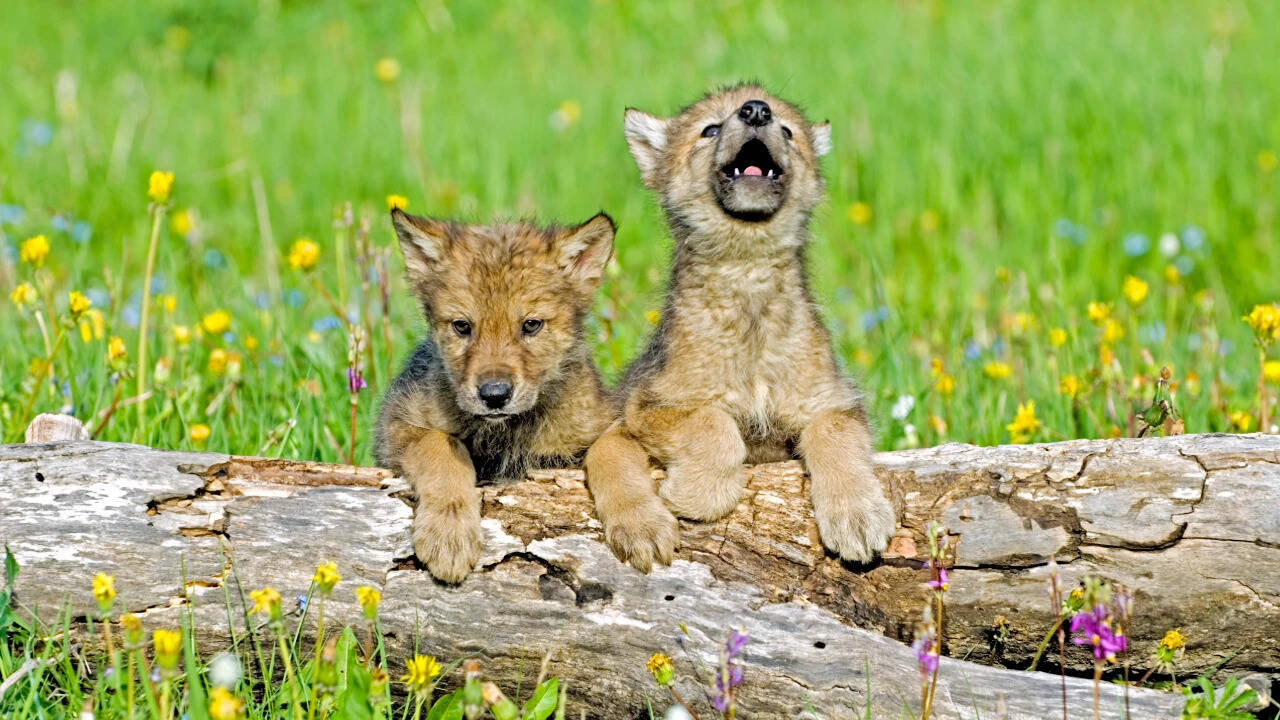
Twelve newborn wolf pups killed in a single day sounds like a rogue poaching incident. It wasn't. Under Idaho state law, pulling wolf pups straight from their dens and killing them isn't just tolerated—it's explicitly legal, encouraged by state-backed reimbursement programs, and driven by years of bitter political gridlock over livestock and elk herds.
When reports surfaced about hunters killing a dozen newborn wolf pups in one day in Idaho, outrage exploded across social media within hours. Most headlines framed it as an isolated act of cruelty by rogue actors. That framing misses the bigger, much more uncomfortable reality. To understand how something like this happens in broad daylight without a single wildlife violation being issued, you have to look at Idaho's aggressive wolf management laws, the money behind predator control, and a decades-long fight between ranchers, conservationists, and state lawmakers.
How Killing Newborn Wolf Pups Became Legal in Idaho
You might assume wildlife laws protect helpless newborns across the board. In most states, and for most game species, fair-chase ethics and seasonal closures protect animals while they're nursing or raising young. Wolves in Idaho operate under an entirely different set of rules.
In 2021, the Idaho Legislature passed Senate Bill 1211, dramatically expanding how, when, and how many gray wolves hunters and trappers can kill. Governor Brad Little signed it into law despite fierce pushback from national conservation groups and former wildlife officials. The legislation stripped away almost every traditional limit that previously kept wolf hunting aligned with standard big-game regulations.
Here is what Idaho law actually permits right now:
- Unlimited bag limits: A single hunter or trapper with a valid tag can legally kill an unlimited number of wolves.
- Year-round open seasons: On private land, wolf hunting and trapping never close. On public land, seasons span nearly the entire calendar year, overlapping directly with spring denning months when pups are born.
- No age restrictions: State regulations make zero distinction between an adult alpha wolf and a blind, two-week-old pup found inside a den.
- Expanded methods: Lawmakers authorized the use of night-vision equipment, thermal optics, snowmobiles, ATVs, and hound hunting to pursue wolves.
When hunters locate an active wolf den in April or May, removing and killing the entire litter is completely lawful under Idaho Department of Fish and Game (IDFG) rules. The incident involving 12 pups in a single day wasn't an aberration. It was the predictable outcome of a legal framework designed to shrink Idaho's wolf population as fast as possible.
The Money Trail Behind Wolf Removal
Outrageous headlines rarely mention the financial incentives baked into Idaho's predator control system. While Idaho stops short of calling its payouts a "bounty"—a word state officials actively avoid—the reimbursement structure functions almost identically in practice.
Through the Idaho Wolf Depredation Control Board, state tax dollars, livestock industry fees, and sportsmen's license funds flow into contracts with USDA Wildlife Services and private predator control organizations. One of the most prominent private groups operating in the region is the Foundation for Wildlife Management (F4WM).
F4WM reimburses members for documented expenses incurred while hunting or trapping wolves. Depending on the specific management zone and whether the wolf was taken in an area with high livestock depredation or struggling elk populations, reimbursements can reach up to $2,000 per wolf.
Think about the math for a second.
If a trapper or hunter locates a den with six to twelve pups, each pup counts toward reimbursement eligibility just like a full-grown adult. Covering fuel, gear, trapping supplies, and time spent in rough backcountry terrain becomes financially viable when a single den yields thousands of dollars in expense payouts. Defenders of the program argue that reimbursements merely offset the high cost of hunting an elusive, intelligent apex predator. Critics point out that paying per animal creates a direct financial motive to target dens, where multiple wolves can be eliminated at once with minimal effort.
Why Idaho Lawmakers Pushed for Aggressive Population Cuts
If you talk to ranchers in Lemhi County or elk outfitters in the Clearwater Basin, you'll hear a very different perspective than the one dominating national news feeds. Their frustration didn't appear out of thin air.
Gray wolves were reintroduced to central Idaho and Yellowstone National Park in 1995 and 1996 after being eradicated decades earlier. At the time, federal recovery goals set a minimum threshold of 150 wolves and 15 breeding pairs in Idaho to delist the species from the Endangered Species Act. Conservationists and state officials viewed those numbers as a baseline floor, not a population ceiling.
Wolves thrived in Idaho's vast wilderness far faster than biologists predicted. By 2020, IDFG estimated the state's wolf population had climbed to roughly 1,500 animals—ten times the original federal recovery floor.
As pack numbers expanded, conflicts followed:
- Livestock losses: Cattle and sheep ranchers grazing herds on rugged public allotments reported recurring wolf attacks. While state and federal programs reimburse ranchers for confirmed wolf kills, cattlemen argue that missing calves, stress-induced weight loss, and lower pregnancy rates in harassed herds cost far more than direct compensation covers.
- Elk herd declines in specific zones: Statewide, Idaho's elk numbers remain strong, hovering around 120,000 animals. However, in steep, heavily forested backcountry zones like the Lolo and Selway units, elk populations dropped sharply after wolf reintroduction, hurting local guiding businesses and resident hunters.
- Political distrust: Many rural Idahoans felt federal courts repeatedly moved the goalposts on wolf delisting, leaving local communities bearing the economic brunt of a predator they never wanted reintroduced in the first place.
Senate Bill 1211 was written explicitly to slash Idaho's wolf population by up to 90 percent—down toward the 150-wolf federal minimum—without waiting for slow, incremental hunting harvests to take effect.
What Wildlife Biologists Say Actually Happens When You Kill Pups
Here is where politics collides hard with wildlife biology. Killing newborn pups inside a den feels like an efficient way to stop pack growth before those animals ever eat an elk or kill a calf. In practice, decades of predator ecology research across North America show that heavy, indiscriminate wolf removal often backfires.
When hunters kill pups or break up established breeding pairs, pack social structures collapse. A stable, territorial wolf pack defends a massive home range and keeps neighboring wolves out. When you wipe out pups or kill one of the breeding adults, surviving yearlings scatter. Those dispersed young wolves frequently form smaller, unstable splinter groups.
Research published by wildlife biologists studying Northern Rockies wolf populations—including long-term data from Washington State University's Large Carnivore Conservation Lab—shows a counterintuitive pattern. Removing wolves from an area can actually increase livestock depredation the following year. Younger, inexperienced wolves lacking an established pack structure struggle to hunt large, healthy wild prey like adult elk. Instead, they turn to easier targets like domestic calves and sheep.
On top of that, wolves compensate biologically for heavy mortality. When pack numbers drop suddenly, food availability per remaining wolf shoots up. Surviving females enter estrus earlier, breed at younger ages, and produce larger litters. Instead of permanently solving the conflict, den killing often locks wildlife managers and ranchers into a continuous, expensive cycle of lethal removal year after year.
The Clash Over Fair Chase Ethics in the Hunting Community
You don't have to be an anti-hunting activist to feel uneasy about killing newborn pups in a den. In fact, some of the sharpest criticism of Idaho's current wolf policies comes from lifelong hunters and former state wildlife commissioners.
Traditional North American wildlife conservation rests on the North American Model of Wildlife Conservation, which emphasizes fair chase, scientific management, and ethical restraint. Hunters routinely abide by strict rules designed to give game animals a sporting chance and protect vulnerable mothers and young. Nobody in Idaho is legally allowed to shoot a spotted fawn or dig bear cubs out of a winter den.
Allowing the killing of newborn wolf pups breaks that unspoken ethical contract.
Groups like the International Wildlife Coexistence Network and former IDFG officials have warned that extreme predator eradication tactics alienate the non-hunting public. Roughly 95 percent of Americans don't hunt. When headlines about 12 newborn pups being killed in one day go viral, non-hunters rarely distinguish between regulated big-game conservation and year-round predator extermination. Every viral photo or report from an Idaho denning raid gives anti-hunting organizations fresh ammunition to push ballot initiatives banning trapping, hound hunting, and predator management across neighboring Western states.
Federal Oversight and Whether the Endangered Species Act Could Return
Every time a story like the 12-pup killing makes national news, pressure mounts on the U.S. Fish and Wildlife Service (USFWS) to step in and strip Idaho of its management authority.
In 2021, following the passage of SB 1211 in Idaho and similar aggressive wolf laws in Montana, conservation coalitions petitioned the federal government to relist Northern Rockies gray wolves under the Endangered Species Act. The USFWS conducted a comprehensive status review and, in early 2024, denied the petition, concluding that gray wolves in the Western U.S. were not at risk of extinction despite state-level harvest increases.
That decision left management squarely in Idaho's hands, though federal biologists continue monitoring annual mortality data closely. IDFG estimates the state's wolf population dipped modestly from its peak of roughly 1,500 down to around 1,300 animals—nowhere near the 150-wolf floor lawmakers envisioned, largely because wolves reproduce rapidly and thrive in remote, inaccessible wilderness areas where trappers rarely reach.
Even so, the political risk hasn't vanished. Conservation groups continue challenging federal decisions in court, and every high-profile denning incident fuels renewed legal and regulatory scrutiny.
How to Verify Facts and Engage Effectively on Western Wolf Policy
When viral wildlife stories hit your feed, outrage spreads faster than accurate policy details. If you care about how wolves, elk, and ranching coexist in the American West, emotional social media arguments won't change a single regulation.
Start by separating viral rumors from documented state data. Check the official annual wolf management reports published directly by the Idaho Department of Fish and Game, which track confirmed livestock depredations, annual mortality numbers by method, and population estimates using camera-trap networks rather than rough guesswork.
If you want to influence how Idaho or neighboring states manage predators, direct your energy where policy decisions actually happen:
- Submit public comments to state wildlife commissions: State fish and game commissions set seasonal rules and trapping regulations through open public comment periods that carry far more weight than online petitions.
- Support non-lethal deterrence programs: Organizations like the Wood River Wolf Project in central Idaho have demonstrated for over a decade that range riders, fladry fencing, guard dogs, and carcass removal drastically cut sheep and cattle losses without wiping out entire wolf packs.
- Follow credible regional reporting: Rely on outlets with dedicated Western wildlife reporters—such as High Country News, WyoFile, or Idaho Capital Sun—rather than sensationalized aggregator sites that strip away legal and ecological context.
The killing of 12 newborn wolf pups in a single day wasn't a glitch in Idaho's system. It was the direct result of laws written specifically to make it happen, and until state lawmakers, ranchers, and conservationists agree on where ethical boundaries belong, stories like it will keep resurfacing every spring.