The issuance of an urgent evacuation notice by a superpower to its citizens residing in a primary strategic partner’s territory serves as a definitive signal of imminent kinetic escalation. When the Chinese Ministry of Foreign Affairs (MFA) and the Chinese Embassy in Tehran transition from "heightened awareness" to "immediate departure," the shift reflects a fundamental recalibration of the risk-to-reward ratio for regional presence. This is not merely a safety precaution; it is a calculated liquidation of human capital assets to prevent them from becoming tactical liabilities or diplomatic leverage in a broadening conflict.
The Triad of Escalation Indicators
The decision-making process behind a state-mandated evacuation rests on three primary variables that determine the viability of remaining in-country.
1. The Erosion of Deterrence
The core of the current instability lies in the transition from shadow warfare to direct state-on-state engagement. Historically, the regional "gray zone" allowed for proxy-led friction that avoided triggering the mutual defense or total war thresholds of major powers. The collapse of this buffer means that civilian infrastructure, previously considered off-limits due to its non-combatant status, is now integrated into the targeting logic of precision-guided munitions. China's move suggests their intelligence confirms that the "red lines" of both regional and extra-regional actors have become fluid and unpredictable.
2. The Logistics of Entrapment
Evacuations are governed by the physics of transport. Iran’s geography—characterized by rugged mountain ranges and limited high-capacity exit points—creates a bottleneck during a crisis. If the Strait of Hormuz or major international airports like Imam Khomeini International (IKA) are compromised by no-fly zones or naval blockades, the cost of extraction scales exponentially. By urging evacuation now, Beijing is preempting a scenario where they would have to negotiate "safe passage" with combatant forces, which would require significant political concessions.
3. The Liability of Presence
For China, a large citizen population in Iran during a hot war represents a strategic vulnerability. Should Chinese nationals be killed or taken captive during Israeli or Western strikes, Beijing would be forced into a reactive stance. They would have to choose between a humiliating lack of response or a costly intervention that could jeopardize their broader economic interests with GCC (Gulf Cooperation Council) states and the West. Withdrawing the population removes this "hostage to fortune" and restores China’s freedom of maneuver.
Mapping the Strategic Vacuum
The departure of Chinese technical and commercial personnel signals a pause in the "Belt and Road" operationalization within the Iranian plateau. This withdrawal creates a specific type of economic and structural vacuum that functions through three distinct mechanisms.
- The Technical Knowledge Gap: Most Chinese nationals in Iran are not tourists; they are engineers, telecommunications specialists, and energy consultants. Their absence halts the maintenance of critical infrastructure.
- Capital Flight Displacement: As personnel leave, the informal and formal credit lines that support Sino-Iranian trade contract. This exerts immediate downward pressure on the Iranian Rial, as the market interprets the exit of the "primary buyer" as a lack of confidence in the state's short-term stability.
- The Signal to the Global South: When a non-Western power, typically more tolerant of high-risk environments, exits a theater, it serves as a leading indicator for other neutral nations (e.g., India, Brazil, South Africa). This creates a cascading effect of diplomatic isolation that is driven by risk management rather than political alignment.
The Operational Reality of "As Soon As Possible"
In diplomatic parlance, "as soon as possible" (ASAP) is a technical instruction for the immediate execution of exit protocols. It differs from "voluntary departure" or "reconsidering travel" in its urgency and the implied withdrawal of state-backed protection for those who remain.
Infrastructure Degradation and Communication Blackouts
A primary concern in the current Iranian context is the resilience of the digital and physical grid. The strategy of "Integrated Deterrence" employed by modern militaries often begins with the neutralization of Command and Control (C2) and dual-use infrastructure.
- Cyber-Kinetic Intersection: Initial strikes often target power grids and telecommunications. For a foreign national, the loss of internet and cellular connectivity translates to an immediate loss of contact with their embassy, rendering coordinated extraction impossible.
- The Fuel Paradox: In a high-tension environment, fuel is diverted to military use. Even if a citizen has a vehicle, the ability to reach a border or airport is contingent on a supply chain that likely will not exist 48 hours into a major kinetic event.
The Geopolitical Cost Function
The withdrawal is not a cost-free exercise for Beijing. It involves a calculated sacrifice of several strategic objectives to mitigate the greater risk of entanglement.
The Energy Security Trade-off
Iran remains a significant, albeit sanctioned, source of hydrocarbon flows to China. By removing the personnel who manage the logistical end of this trade, China accepts a short-term disruption in its energy supply chain. This suggests that the cost of a potential oil supply shock is currently viewed as lower than the cost of a diplomatic or military crisis involving Chinese casualties.
The Perception of Reliability
China has long positioned itself as the "stable alternative" to Western interventionism, a partner that does not flee when the political climate shifts. A mass evacuation challenges this narrative. However, the rigor of Chinese foreign policy prioritizes internal stability and the safety of the Han core over the optics of peripheral reliability. The move indicates that the "Strategic Partnership" has reached a hard ceiling defined by the physical safety of the citizenry.
Assessing the Probability of Regional Contagion
The scope of the evacuation notice provides a window into the expected geography of the conflict. Because the notice is specific to Iran but comes amid broader regional tensions, it implies a belief that Iran proper will be the primary target of upcoming operations, rather than just its proxies in Lebanon or Yemen.
The mechanism of escalation follows a predictable path:
- Phase I: Targeted assassinations and precision strikes on high-value assets (completed).
- Phase II: Large-scale retaliatory volleys involving ballistic missiles and UAVs (active/imminent).
- Phase III: Degradation of national infrastructure and air defense suppression (the "Evacuation Trigger").
China’s move confirms we are transitioning from Phase II to Phase III. In Phase III, the distinction between a "military target" and "civilian surroundings" becomes functionally irrelevant due to the blast radius of heavy munitions and the potential for "unintended" collateral damage.
Tactical Recommendations for Personnel in the Theater
For any entities—commercial or diplomatic—still maintaining a footprint within the Iranian theater, the operational window is closing. The following steps constitute the bare minimum for risk mitigation.
- Hard-Currency Liquidity: Ensure immediate access to physical USD or Gold. In the event of a banking freeze or a Rial collapse, digital assets and local currency will lose all utility for bribing passage or securing transport.
- Satellite Redundancy: Relying on local GSM or fiber-optic networks is a failure point. Independent satellite communication (non-localized) is the only reliable method for receiving real-time situational updates.
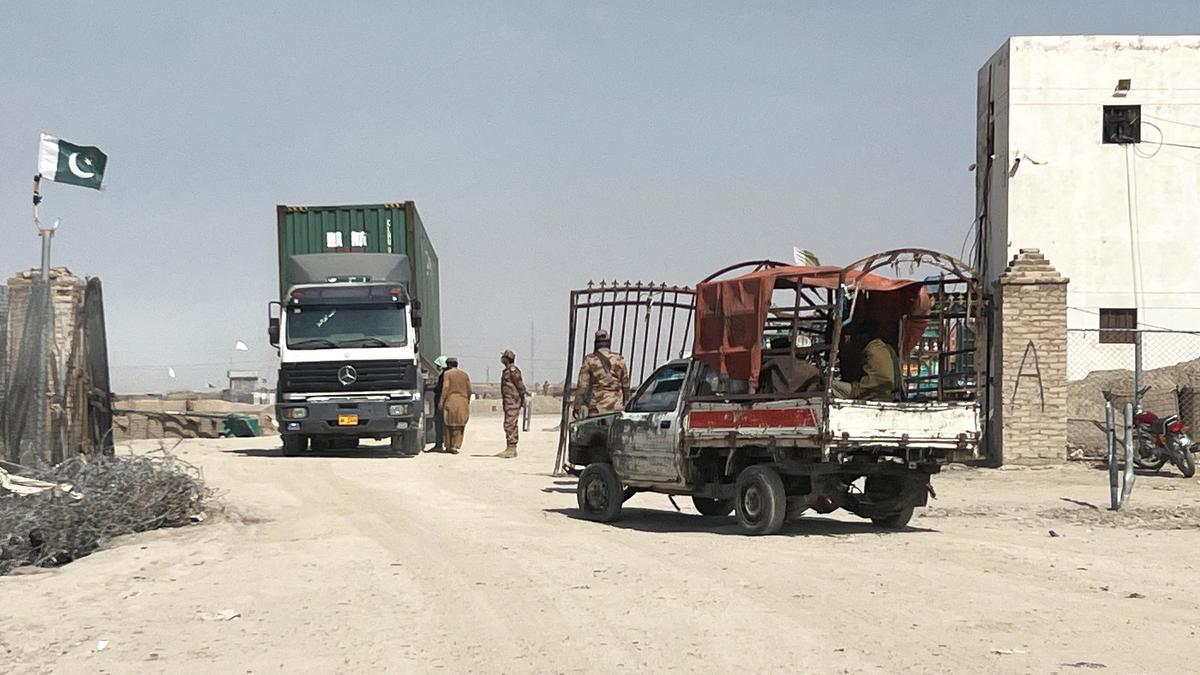
- Land-Border Contingency: If air travel is suspended, the primary exit routes shift to the eastern borders (Pakistan and Afghanistan) or the northern corridor (Armenia and Azerbaijan). Each of these requires pre-established local security details, as these regions are prone to opportunistic lawlessness during a central government’s distraction.
The strategic play here is not to wait for a "final" sign of war. The evacuation notice is the final sign. The moment a global power decides that the maintenance of its presence is more expensive than the logistical nightmare of a mass exit, the probability of conflict has surpassed the 90% threshold. Stakeholders must now operate under the assumption that the Iranian theater is functionally closed for standard commercial and diplomatic operations for the foreseeable future.