The security architecture of South Asia is currently undergoing its most violent reorganization since 2001. After decades of nurturing the Taliban as a strategic asset to secure "strategic depth" against India, Pakistan now finds itself in a state of kinetic confrontation with the very movement it helped return to power. This is not a mere diplomatic spat. It is a full-scale security crisis defined by cross-border airstrikes, the revival of the Tehrik-i-Taliban Pakistan (TTP), and a fundamental breakdown in the chain of command that once linked Rawalpindi to Kabul.
The central failure of Pakistani intelligence was the belief that the Taliban’s ideological identity could be separated from its nationalistic and tribal interests once it took the reins of a state. It cannot.
The TTP Shield and the Myth of Influence
When Kabul fell in August 2021, sweets were distributed in the streets of Peshawar. The prevailing narrative in Pakistan’s military headquarters was that a friendly government in Afghanistan would finally allow Islamabad to eliminate the TTP—the "Pakistani Taliban" responsible for thousands of domestic deaths. Instead, the Afghan Taliban opened the prison doors.
They didn't just release their own fighters; they released TTP commanders.
The Afghan Taliban views the TTP not as a foreign proxy to be traded away, but as the "madrassa brothers" who fought alongside them against NATO forces for twenty years. To the leadership in Kabul, the TTP is an extension of their own ideological victory. Expecting the Taliban to dismantle the TTP was a massive miscalculation of the insurgent psyche. By providing sanctuary to these militants, the Taliban has effectively turned the border into a one-way valve: Pakistani military operations push the TTP into Afghan safe havens, where they refit, rearm, and plan the next suicide bombing in Khyber Pakhtunkhwa or Balochistan.
The Durand Line is the Real Frontline
Geography remains the ultimate arbiter of this conflict. Pakistan’s attempt to formalize the 2,640-kilometer Durand Line through a massive fencing project has become a primary flashpoint. No Afghan government, including the previous Western-backed Republic, has ever recognized this British-drawn border. The Taliban are no different.
Videos frequently emerge of Taliban fighters uprooting sections of the multi-billion dollar fence. These aren't rogue units acting on their own. This is a deliberate assertion of sovereignty. For the Taliban, the fence represents a colonial imposition that cuts through the Pashtun heartland. For Pakistan, the fence is the only way to stop the bleed.
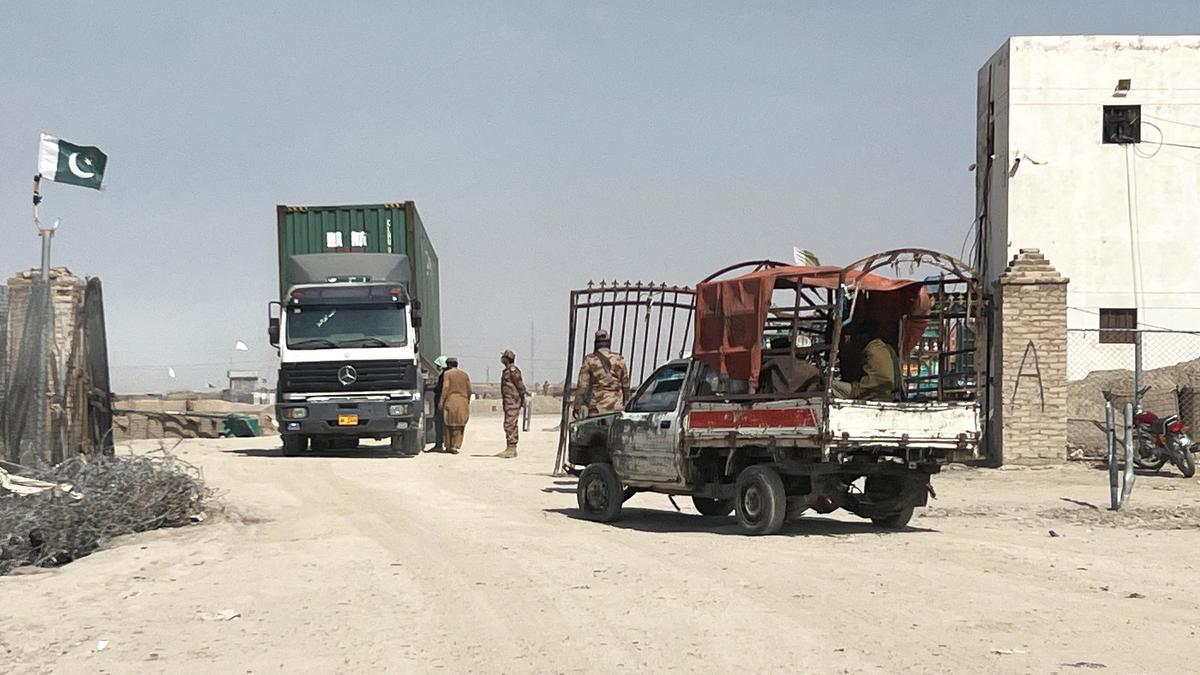
This territorial dispute has escalated from verbal barbs to heavy artillery exchanges at the Chaman and Torkham crossings. These border gates, once the lifeblood of regional trade, are now hostage to the prevailing mood of local commanders. When the gates close, thousands of trucks rot in the sun, and the economic toll on Pakistan’s already fragile economy deepens.
The Economic Leverage that Failed
Islamabad initially thought it could control the Taliban through the wallet. Afghanistan is landlocked and relies on Pakistan for transit trade and access to the sea. The logic was simple: behave on security, or we shut down your supply lines.
That leverage evaporated faster than anticipated. The Taliban have proven remarkably adept at diversifying their economic dependencies. They have aggressively courted investment from Beijing and engaged in quiet diplomacy with Central Asian neighbors. More importantly, they have mastered the art of "beggar-thy-neighbor" economics, siphoning off customs revenue and allowing the smuggling of dollars and wheat from Pakistan into Afghanistan.
The black market has effectively reversed the power dynamic. Pakistan is currently battling record inflation and a currency crisis, partly exacerbated by the massive outflow of hard currency into the Afghan economy. The Taliban aren't just resisting Pakistani influence; they are actively profiting from Pakistan's instability.
The Role of the Islamic State Khorasan
Adding a layer of lethal complexity is the presence of IS-K. The Afghan Taliban are locked in a brutal sectarian war with this group. Pakistan’s intelligence services have been accused by Kabul of turning a blind eye to IS-K cells as a way to pressure the Taliban. Conversely, Islamabad accuses Kabul of using the TTP as a counter-pressure tool.
This is a classic "spy vs spy" deadlock where the currency is human lives. The result is a security vacuum where militant groups of all stripes can find space to breathe. If the Taliban moves too harshly against the TTP to appease Pakistan, they risk TTP fighters defecting to IS-K, which would further destabilize the Taliban’s grip on power.
A Military Model in Crisis
The Pakistani military's "Azm-e-Istehkam" (Resolve for Stability) operation is the latest attempt to clear the northwestern borderlands. But unlike previous operations, the military is facing unprecedented domestic pushback. The local population in the tribal districts is tired of being caught between the army and the militants. Displacements, "missing persons," and the economic shutdown of the region have fueled the Pashtun Tahafuz Movement (PTM), which blames the military’s decades-old policies for the current chaos.
The military can no longer count on a unified home front. Every strike against a TTP hideout in Afghanistan risks a retaliatory strike in a major Pakistani city, and every civilian casualty in the border regions fuels a domestic insurgency that is increasingly political, not just religious.
The shift from "strategic depth" to "strategic catastrophe" is now complete. Pakistan’s policy of distinguishing between "good Taliban" (those who fight elsewhere) and "bad Taliban" (those who fight the Pakistani state) has collapsed under the weight of its own contradictions. The two groups are ideologically and logistically inseparable.
Until Islamabad accepts that the Afghan Taliban is an independent, nationalist actor—and not a subordinate proxy—the border will remain a theater of war. The era of the "double game" is over; the players have simply run out of cards.
Audit your current security partnerships and border trade protocols immediately. If the current trajectory holds, the volatility of the northwestern frontier will become a permanent feature of the Pakistani state, necessitating a total shift from an expeditionary military posture to a permanent, defensive siege mentality.