The escalating tension between Iran and Israel has shifted from a shadow war of proxies to a direct exchange of high-end ballistics, revealing a critical vulnerability that neither side seems prepared to address: the math of exhaustion. While headlines focus on the geopolitical theater, the real crisis lies in the industrial inability to sustain a prolonged, high-intensity missile campaign. The world is witnessing a rapid depletion of sophisticated interceptors and long-range strike capabilities, a trend that threatens to leave both regional powers and their international backers defenseless if a full-scale war breaks out.
The Mirage of Infinite Defense
Modern air defense systems, such as Israel’s Arrow-3 and the American SM-3, are engineering marvels designed to hit a bullet with a bullet in the vacuum of space. They are also incredibly difficult to build. When Iran launched its massive barrage in early 2024, the world saw a successful defense, but analysts saw a supply chain disaster. For every low-cost drone or older-generation ballistic missile Iran fires, the defending coalition must expend interceptors that cost millions of dollars and take months, if not years, to manufacture.
This asymmetry is not a flaw in the system; it is the fundamental strategy of Iranian military doctrine. Tehran understands that it cannot win a traditional air superiority battle against the F-35s of the Israeli Air Force or the carrier strike groups of the United States. Instead, they have opted for a "quantity has a quality of its own" approach. By flooding the skies with a mix of decoys, cruise missiles, and theater ballistics, they force the defender to make a choice between losing a high-value target or emptying their magazine.
The Bottleneck in the Factory Floor
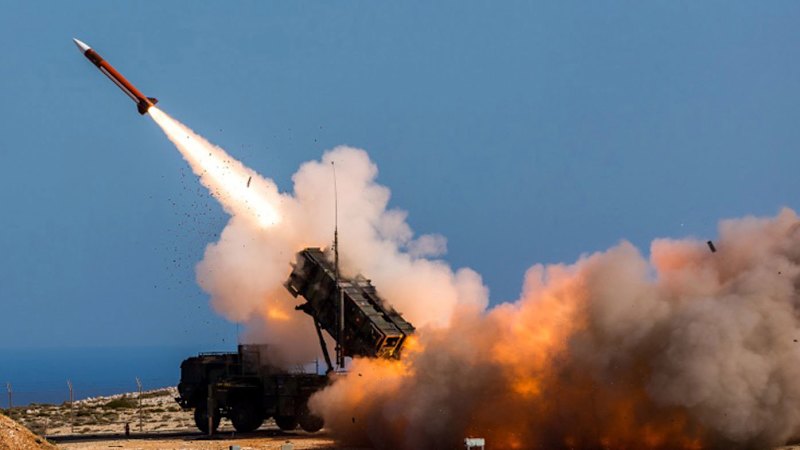
The crisis of the missile shortage is not a matter of money. It is a matter of machine tools, specialized chemicals, and skilled labor. The production lines for the Patriot (MIM-104) and the Aegis-equipped interceptors are already running at maximum capacity to support both the defense of the Middle East and the ongoing conflict in Ukraine.
Consider the complexity of a single interceptor. We are talking about solid rocket motors that require precise chemical casting, infrared seekers that rely on rare-earth minerals, and guidance processors that must survive extreme G-forces. You cannot simply flip a switch to double production. To increase the output of these systems requires new specialized facilities that take three to five years to come online. In a war that moves at the speed of Mach 7, five years is an eternity.
Iran’s Strategic Miscalculation
While the West worries about its interceptors, Iran faces a different but equally lethal shortage. Tehran’s domestic industry has been heralded for its self-sufficiency under sanctions, but that narrative hides a brittle reality. Iran’s long-range arsenal is finite. Once the initial "shock and awe" salvos are fired, their ability to replenish their stocks of precision-guided munitions is severely limited by their access to high-end microelectronics and carbon fiber.
If Iran empties its silos in a bid to overwhelm Israel’s Iron Dome and Arrow systems, it leaves itself open to a counter-strike with no remaining deterrent. This is the "Empty Silo Trap." A nation that fires its last missile is no longer a regional power; it is a target. The Iranian Revolutionary Guard Corps (IRGC) is currently balancing the need to project power with the terrifying reality that their magazines are shallower than they admit in their propaganda videos.
The Hidden Role of Counter-Battery Technology
The shortage is also changing the way these wars are fought on the ground. Because interceptors are so scarce, military commanders are moving toward "left-of-launch" tactics. This means finding and destroying the missiles while they are still on the rails or in storage. This shifts the conflict from a defensive struggle to an aggressively preemptive one.
- Satellite Intelligence: Real-time tracking of mobile TEL (Transporter Erector Launcher) units.
- Special Operations: Sabotage of fuel storage facilities and manufacturing hubs.
- Cyber Warfare: Disruption of the digital handshakes required for coordinated launches.
The Economic Impact of a Dry Magazine
When the missiles run out, the economic consequences ripple far beyond the immediate blast zones. The global shipping industry relies on the assumption of a protected Red Sea and Persian Gulf. If the US Navy cannot guarantee the safety of these lanes because its destroyers have expended their load of SM-2 and SM-6 interceptors, the cost of insurance for tankers will skyrocket.
We have already seen a preview of this with the Houthi attacks on commercial shipping. It took only a handful of relatively cheap anti-ship missiles to force global logistics giants to reroute around the Cape of Good Hope. If a larger state-on-state conflict drains the global supply of interceptors, the maritime "security umbrella" that has underpinned global trade since 1945 effectively vanishes.
The New Arms Race is a Race for Speed of Build
The winner of the next decade’s conflicts won't be the side with the most advanced technology, but the side that can manufacture "good enough" technology the fastest. This is why we see a sudden, frantic interest in directed energy weapons—lasers. A laser doesn't require a multimillion-dollar missile; it requires electricity. However, despite the hype, ship-borne lasers are still years away from being able to knock down a heavy ballistic missile traveling at hypersonic speeds.
The Geopolitical Realignment of Defense
Because of the shortage, we are seeing a shift in alliances. Nations that were once hesitant to share military technology are now forming "defense hubs." Israel, the UAE, and potentially Saudi Arabia are looking at integrated radar nets to share the burden of detection. If you can track a missile earlier, you can use a cheaper interceptor to kill it.
The US is also being forced to prioritize. Every interceptor sent to the Middle East is one fewer available for the Pacific theater. This creates a zero-sum game of global security. If Tehran can force Washington to empty its magazines in the Levant, it does a massive favor for other global rivals who are watching the inventory levels with predatory interest.
The hard truth is that the era of the "unlimited" shield is over. Commanders are now operating under strict "shot discipline," often allowing less critical targets to be hit to save their few remaining interceptors for the big ones. This is the new calculus of war: deciding exactly how much destruction you are willing to accept because you simply cannot afford to stop it all.
Military planners are currently staring at spreadsheets that look more like death warrants. The "missile gap" isn't a distance between silos anymore; it’s the gap between the number of incoming threats and the number of rounds left in the warehouse. When that number hits zero, the diplomacy of the region will be written by whoever has the last working battery.