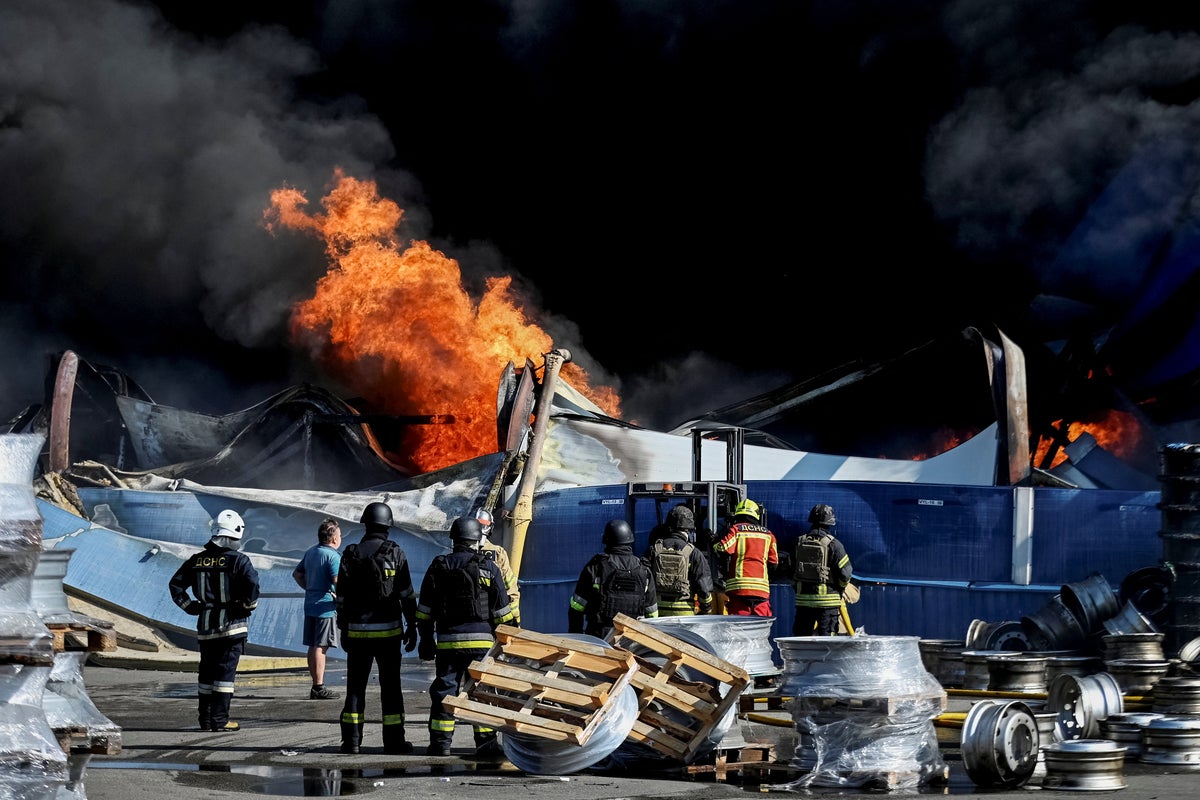
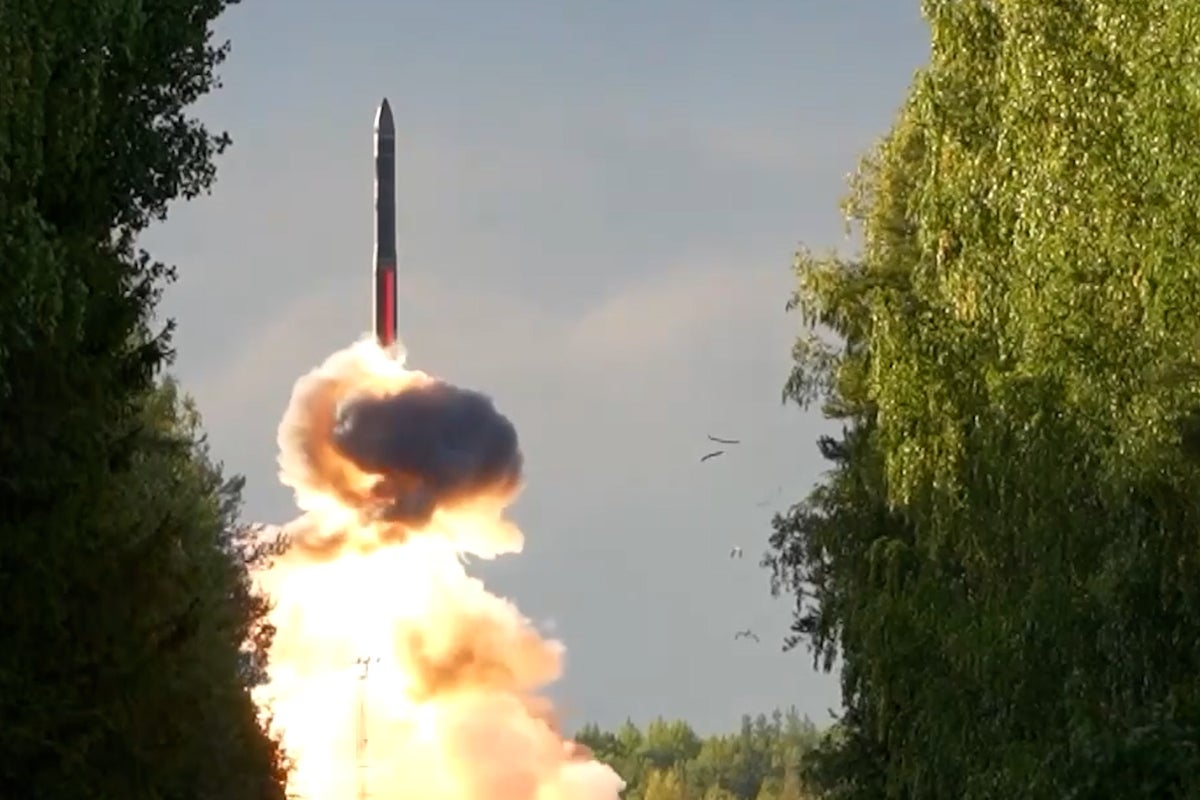
Targeted strikes against industrial supply nodes near capital infrastructure operate on a distinct set of mathematical and logistical vectors that standard news reporting routinely obscures. When a depot facility experiences a high-yield kinetic impact resulting in mass civilian casualties and systemic structural evacuation, the event is frequently framed through the lens of humanitarian tragedy alone. While the human cost remains the primary metric of devastation, treating such an event purely as a localized emergency misses the underlying operational mechanics. Modern supply nodes are complex hubs governed by inventory velocity, structural vulnerability coefficients, and regional displacement thresholds. Deconstructing the strike on the logistical facility near Kyiv requires examining the mechanics of asset concentration, the physics of secondary detonations in civilian-adjacent zones, and the cascading failure patterns that trigger mass population displacements.
The Vulnerability Calculus of Regional Supply Nodes
A supply depot functions as an institutional amplifier. It concentrates high volumes of non-perishable goods, fuel, or municipal materials into a centralized footprint to minimize distribution overhead. This operational efficiency creates a counter-vailing vulnerability. By aggregating mass, the facility transforms into a high-value kinetic target.
The density of inventory within a standard industrial warehouse dictates its blast response profile. Facilities optimized for high turnover maintain tight spatial configurations, often utilizing vertical racking systems that maximize storage capacity per square meter. When a precision-guided munition or ballistic projectile breaches the perimeter, the internal kinetic energy does not dissipate uniformly. Instead, it interacts with the stored material matrix.
If the depot houses combustible elements, mixed-use municipal supplies, or localized fuel reserves, the initial blast initiates a secondary thermobaric or chemical reaction sequence. This secondary energy release multiplies the destructive radius far beyond the initial payload footprint. The structural failure of the roof and load-bearing columns triggers a progressive collapse mechanism. In engineering terms, progressive collapse occurs when the failure of a primary load-bearing element transfers uncalculated loads to adjacent members, causing a chain-reaction failure of the entire superstructure.
The human toll, measured in the dozens of fatalities and injuries, correlates directly with the density of personnel relative to shift schedules and the absence of hardened subterranean shelter infrastructure within immediate proximity. Industrial zones developed primarily for economic output rarely incorporate civil defense standards capable of withstanding direct kinetic strikes. Consequently, the operational efficiency of the supply chain directly opposes the physical safety parameters of the workforce operating the facility.
Cascading Failures in Municipal Displacement Economics
Mass evacuation events triggered by industrial strikes do not occur in a vacuum; they follow a predictable displacement vector governed by immediate safety friction and regional housing capacity. When hundreds of individuals are forced to evacuate a zone surrounding a compromised industrial asset, the local municipal infrastructure absorbs an immediate load shock.
The mechanics of this displacement can be modeled through spatial friction coefficients. Evacuating populations move along the path of least resistance, which typically maps to primary arterial roadways leading away from the impact zone. However, if the strike damages nearby transport corridors, rail links, or utility grids, the evacuation bottleneck intensifies.
- Immediate Radius Clearance: The initial phase requires the immediate evacuation of a one-kilometer perimeter to mitigate the hazard of unexploded ordnance, toxic smoke plumes from burning industrial polymers, and secondary structural collapses.
- Resource Reallocation: Local emergency services must divert assets from active firefighting and search-and-rescue operations to manage traffic flow and temporary shelter intake, degrading response efficiency.
- Regional Supply Chain Severance: Because the targeted depot served as a regional distribution node, its destruction introduces a supply shock. Downstream retail and municipal consumers experience immediate inventory starvation, forcing procurement shifts to secondary and tertiary nodes that may lack adequate capacity.
The economic fallout scales non-linearly. The capital expenditure required to clear rubble, remediate environmental contamination from burning industrial chemicals, and reconstruct lost inventory creates a severe financial drain on municipal budgets already strained by prolonged conflict conditions. Furthermore, the psychological impact on the civilian workforce introduces structural absenteeism across adjacent industrial sectors, compounding the initial physical destruction with acute labor friction.
Strategic Realignment and Hardening Protocols
Mitigating the systemic risk inherent in centralized supply infrastructure requires a fundamental shift in operational design. Relying on monolithic, high-capacity depots creates an unacceptable concentration risk. Modern asset protection frameworks dictate a transition toward distributed micro-logistics networks.
By decentralizing storage into smaller, geographically dispersed units, organizations reduce the blast-radius impact of any single kinetic strike. While unit operational costs may rise due to the loss of economies of scale, the resilience factor increases exponentially. A decentralized network ensures that the loss of a single node results in marginal capacity degradation rather than systemic collapse.
Simultaneously, structural hardening standards must evolve. Industrial architecture within active conflict zones or contested corridors requires the retrofitting of reinforced concrete blast walls, compartmentalized storage bays to contain internal detonations, and dedicated, blast-resistant subterranean shelters integrated directly into the facility footprint.
Supply chain operators must abandon the assumption of operational immunity in industrial zones. Every high-density storage facility must be evaluated not merely by its throughput efficiency, but by its operational survivability index. Future deployment of capital will favor networks engineered for redundancy, rapid re-routing, and localized containment over sheer volumetric capacity.