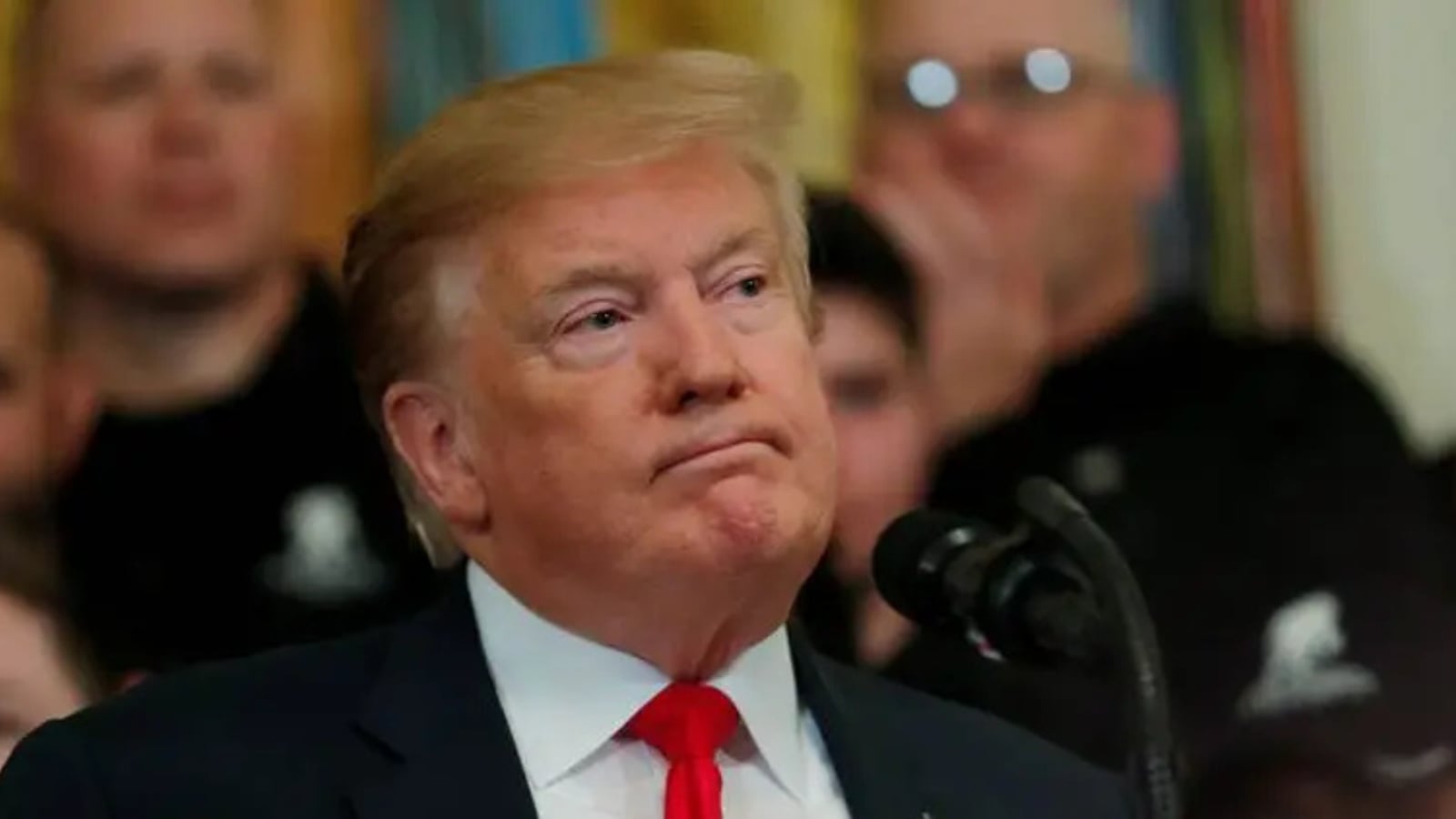
The return to the negotiating table over Iran’s nuclear program isn't just about centrifuges or enrichment percentages. It is a high-stakes poker game where the loudest player at the table—Donald Trump—claims he isn’t even in the room. By signaling an "indirect role" in the resumed talks, Trump is attempting to exert gravity on a process he spent four years trying to dismantle. His recent comments that he hopes Tehran will be "reasonable" serve as a double-edged sword. On one hand, it suggests a willingness to permit a deal under his eventual watch; on the other, it functions as a warning to current negotiators that any agreement made now must satisfy his specific brand of "America First" brinkmanship or face immediate shredding in 2025.
The core of the issue is leverage. Iran knows that a deal signed with the current administration is only as strong as the next election cycle. Trump’s shadow presence provides him with a unique form of veto power before he even sets foot back in the Oval Office. If he signals that a deal is "weak," he effectively freezes the global banking sector. No major European or Asian firm will risk billions in investment if they believe sanctions will snap back the moment a Republican takes the oath of office.
The Shadow Veto and Market Paralysis
Negotiations of this magnitude require more than just diplomatic consensus. They require the confidence of the global market. When a former and potentially future president weighs in on active international treaties, it creates a "pre-emptive sanctions" effect.
For Iran, the goal has always been the permanent lifting of economic restrictions. However, the United States' political volatility has turned "permanent" into a four-year lease. Trump’s recent rhetoric is designed to remind the Supreme Leader in Tehran that the path to real money—the kind that flows from unrestricted oil sales and access to the SWIFT banking system—runs through him. By calling for "reasonableness," he is setting a baseline that likely exceeds the terms of the original 2015 Joint Comprehensive Plan of Action (JCPOA).
The strategy is simple. He wants to ensure that the Biden administration cannot claim a definitive victory, while simultaneously keeping the door open for himself to swoop in and "fix" the problem later. It is a masterclass in staying relevant from the sidelines, but it leaves the actual diplomats in a state of perpetual limbo.
The Enrichment Trap
While the politicians talk, the machines keep spinning. Iran has significantly increased its stockpile of highly enriched uranium. This isn't just a technical achievement; it is a ticking clock. The "breakout time"—the duration required to produce enough weapons-grade material for a nuclear device—has shrunk to a matter of weeks, according to most intelligence assessments.
The Technical Reality of 60 Percent
To understand why the "indirect role" of any U.S. leader matters, one must understand the math of enrichment. The jump from natural uranium to $5%$ enrichment is the hardest part. Moving from $20%$ to $60%$ is significantly easier, and the final sprint to $90%$ (weapons grade) is a short technical hop.
Iran’s current enrichment levels are not for a civilian power program. No nuclear power plant on earth requires $60%$ enriched fuel. This is a political statement written in isotopes. By reaching these levels, Tehran is telling the world that the old JCPOA is dead. They are bargaining for a "JCPOA Plus"—one that compensates them for the years of "maximum pressure" sanctions.
The Regional Arms Race Nobody Admits
The nuclear talks are often framed as a bilateral dispute between Washington and Tehran, but that ignores the frantic activity in Riyadh, Jerusalem, and Abu Dhabi. Trump’s "indirect role" is heavily influenced by his alignment with these regional powers. During his term, the Abraham Accords shifted the Middle Eastern alignment, pitting a bloc of Arab states and Israel against Iranian expansionism.
If a new deal is struck that doesn't address Iran’s ballistic missile program or its support for regional proxies, the Abraham Accords partners will likely view it as a betrayal. Trump knows this. His "hope" for reasonableness is a dog whistle to his allies in the Gulf and Israel, assuring them that he will not support a deal that leaves their security off the table.
- The Saudi Factor: Riyadh is no longer content to sit on the sidelines. They have hinted at pursuing their own nuclear capabilities if Iran is not permanently restrained.
- The Israeli Position: Deep-state actors in Israel remain divided. Some prefer a flawed deal to no deal, while others argue that only the threat of military force can stop the centrifuges.
- The UAE’s Economic Balancing Act: Dubai remains a primary hub for Iranian trade, legal and otherwise. They want stability above all else, as a hot war would devastate their tourism and real estate sectors.
The Business of Sanctions Evasion
One of the most overlooked factors in these talks is how well Iran has learned to live under the thumb of the U.S. Treasury. Through a "resistance economy," Tehran has built a sophisticated network of front companies, ship-to-ship oil transfers, and cryptocurrency channels to keep its economy on life support.
China has been the primary beneficiary of this. By purchasing discounted Iranian crude, Beijing gets cheap energy while simultaneously building a strategic partnership that undermines U.S. influence in the Middle East. When Trump signals an "indirect role," he is also signaling to Beijing. He is reminding them that the "maximum pressure" campaign could return with even greater intensity, potentially targeting Chinese banks that facilitate Iranian trade.
The Credibility Gap
The fundamental problem with any resumed talk is the lack of a "guarantee clause." In the private sector, if one party backs out of a contract, there are penalties. In international law, there is only the "sovereign right" to change one’s mind.
The Iranian negotiators are demanding a guarantee that the U.S. won't exit the deal again. This is a legal impossibility under the U.S. Constitution, as one president cannot bind the hands of a successor without a two-thirds Senate majority for a formal treaty. Since such a majority is non-existent in the current polarized climate, any deal is essentially an executive handshake.
Trump’s commentary highlights this fragility. By speaking up now, he reminds the Iranians that the man who walked away once is still very much in the game. It makes the Biden administration’s job nearly impossible. They are trying to sell a product that the customer knows might be repossessed in two years.
The Mechanics of a New Deal
If a deal actually happens, it won't look like the 2015 version. It will have to be more transactional and less aspirational. We are likely looking at a "freeze for freeze" scenario.
- Iran stops 60% enrichment and allows more intrusive IAEA inspections.
- The U.S. releases frozen assets (billions of dollars held in South Korean and Qatari banks) and grants waivers for limited oil sales.
- The "Sunset Clauses" are extended, pushing the expiration of restrictions further into the future.
This kind of "less for less" deal is easier to sell domestically in both countries, but it doesn't solve the underlying problem. It merely kicks the can down the road. Trump’s "indirect role" is to ensure that the can is kicked exactly where he can pick it up later.
The Oil Market’s Hidden Prayer
Wall Street is watching these talks with more intensity than the State Department. A full return of Iranian oil to the global market—roughly 1.5 to 2 million barrels per day—would be a massive deflationary event. At a time when energy prices are a primary driver of global inflation, an Iran deal is the quickest way to lower prices at the pump.
However, the "Trump factor" keeps the risk premium high. Traders are hesitant to bet on a long-term supply increase from Iran if they believe the taps will be shut off again shortly. This uncertainty is a feature, not a bug, of Trump’s involvement. By maintaining a level of unpredictability, he keeps his hand on the global economic thermostat.
The reality of the resumed talks is that the ghosts of administrations past and future are sitting at the table. Diplomacy is no longer about the two parties in the room; it is about the internal politics of the world’s only superpower. As long as the U.S. remains a house divided, its foreign policy will be a series of temporary fixes and broken promises. Trump isn't just an observer; he is the structural flaw that both sides must account for in their calculations.
The next move doesn't belong to the diplomats in Vienna or Geneva. It belongs to the American voter. Until the 2024 election is settled, "reasonableness" is just a placeholder for the next era of volatility.
Determine if you want to track the specific movement of Iranian "ghost tankers" as a leading indicator of deal progress.