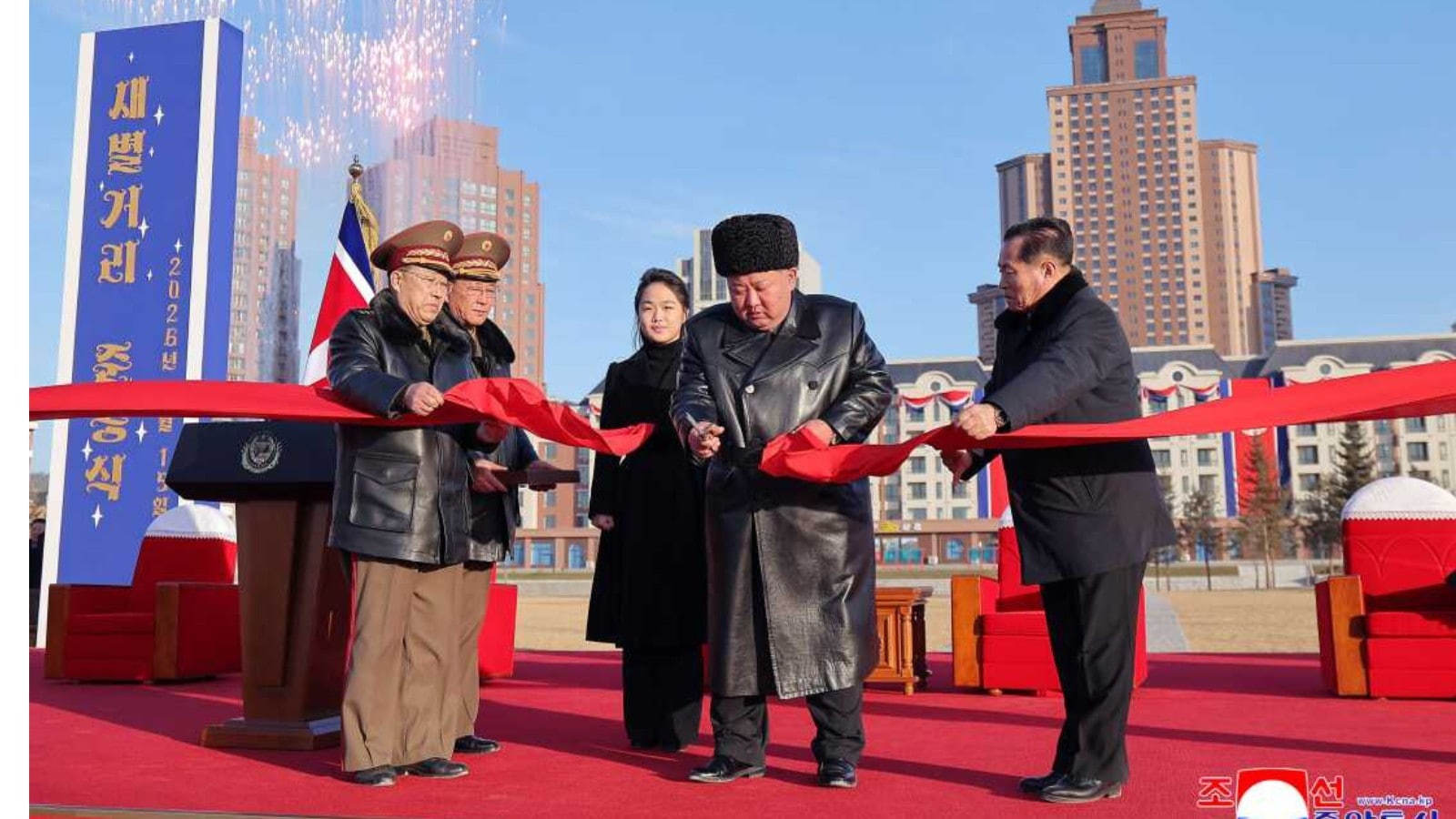
Kim Jong Un just handed over the keys to a brand-new residential district in Pyongyang, but this isn't your typical urban renewal project. While the state media cameras capture gleaming high-rises and weeping citizens, the real story lies in who gets to live there and why. These homes aren't for the party elite or the military brass this time. They're specifically branded as a "gift" for the families of "young martyrs"—the soldiers sent to die in Russia’s war against Ukraine.
It’s a calculated move. North Korea is currently facing a massive demographic and social challenge as it ships thousands of its young men to a front line thousands of miles away. By physically changing the skyline of the capital, Kim is trying to show that the ultimate sacrifice for the state comes with the ultimate reward: a modern apartment in the most prestigious city in the country.
The Sochon District and the Logistics of Heroism
The new development in the Sochon area of Pyongyang didn't just appear overnight. It’s part of a massive 50,000-apartment project Kim promised years ago. However, the pivot to dedicating this specific phase to the families of those killed in Russia marks a shift in domestic propaganda. Usually, "Martyrs’ Families" refers to those from the Korean War or internal struggles. Now, the definition of a national hero has expanded to include those fighting for Vladimir Putin’s territorial ambitions.
Walking through these districts, you see a specific kind of North Korean "modernism." We're talking about pastel-colored skyscrapers, solar panels on balconies, and integrated green spaces. To an outsider, it looks like a 1990s vision of the future. To a North Korean citizen living in a crumbling provincial town with four hours of electricity a day, it looks like another planet.
Kim attended the ribbon-cutting ceremony himself. He didn't just stand back. He walked into the kitchens, checked the water pressure, and sat on the floors. It’s a performance of "fatherly love" designed to mask a grim reality. You get a flat, but you lose a son. For the Kim regime, that’s a trade they’re willing to make every single day.
Why the Russia Connection Changes Everything
For decades, the social contract in North Korea was simple: stay loyal, work hard, and the state might provide. That contract broke during the famine of the 1990s. Since then, the regime has struggled to find ways to incentivize the youth. The war in Ukraine provided an unexpected opening.
Russia needs bodies. North Korea has plenty of them. But sending soldiers abroad is risky for Pyongyang. It exposes troops to foreign ideas and, more importantly, it creates a trail of bodies coming back in caskets—or more likely, not coming back at all.
To prevent domestic unrest, Kim has to overcompensate. These apartments serve as a massive, concrete insurance policy. They signal to other families that if their sons are sent to the Kursk region and don't return, the family won't be forgotten. It’s a morbid form of social security.
Construction at Breakneck Speed
The speed of these builds is honestly terrifying. We’ve seen satellite imagery showing entire blocks going up in months. This "Pyongyang Speed" often comes at a cost. Defectors who worked on similar projects in the past describe a lack of rebar, low-quality concrete mixed with sand, and almost no safety equipment for the "soldier-builders" doing the heavy lifting.
- Soldier-Builders: Most of the labor comes from the military, specifically units dedicated to construction.
- Materials: Significant amounts of the finishing materials—tiles, glass, and elevators—are reportedly smuggled in from China despite sanctions.
- Design: The buildings prioritize aesthetics for the cameras over actual livability, though the Sochon units are said to have improved heating systems compared to older blocks.
Life Inside the Pyongyang Bubble
Don't be fooled by the shiny facade. Living in a new Pyongyang apartment comes with its own set of stressors. In North Korea, you don't own your home. You're granted a "Right to Use" document. The state can take it back whenever it wants.
If a family member is caught watching a South Korean drama or fails to show up for a mandatory ideological study session, that "gift" from the Marshall can vanish. The families of the martyrs find themselves in a golden cage. They have the best housing in the country, but they are also under the most intense surveillance. The state needs them to be the perfect symbols of grief and gratitude.
There’s also the practical issue of the upper floors. In a city where the power grid is famously unstable, living on the 30th floor of a new skyscraper is a nightmare. Elevators rarely work consistently. Residents often have to haul water and coal up dozens of flights of stairs. It’s a weird paradox: you live in a luxury high-rise, but your daily life feels like a medieval struggle.
The Widening Gap Between Capital and Province
While Kim builds these "socialist fairylands" in Pyongyang, the rest of the country is stagnant. The resources poured into the Sochon district are resources taken away from the food distribution system or the crumbling infrastructure in the northern provinces.
This creates a massive resentment gap. Most North Koreans will never see the inside of these apartments. They only see them on the evening news. By focusing all "rewards" on a tiny sliver of the population in the capital, Kim is betting that he can maintain control by keeping the most influential people—those in Pyongyang—happy and housed.
The Strategy of Visibility
Everything about this new district is meant to be seen. The lighting is designed to look good from the air. The layouts are designed to look spacious on television. Even the furniture is often staged by the state before the families move in.
This isn't just about housing. It’s about legitimacy. At a time when North Korea is leaning harder into its alliance with Russia than it has since the Cold War, Kim needs to prove that this path leads to prosperity. He’s using these buildings to tell a story of a "New Era" where North Korea is a global player whose citizens live in modern comfort.
The reality is much darker. These buildings are monuments to a geopolitical gamble. They are built on the back of a conflict that has nothing to do with the Korean people and everything to do with Kim’s desire for Russian technology, food aid, and hard currency.
What This Means for the Future of the Regime
If the flow of Russian money stops, the construction stops. The current boom in Pyongyang is directly tied to the munitions and manpower being sent to the Donbas and Kursk. It’s a war economy.
For the families moving into the Sochon district, the joy of a new home is likely tempered by the silence of the sons who were supposed to live there with them. The regime has traded their lives for concrete and glass. As more "young martyrs" are created in the mud of Eastern Europe, expect more of these districts to pop up.
Keep an eye on satellite updates for the Hwasong and Ryongsong areas. Those are the next targets for this massive expansion. The skyline of Pyongyang is growing, but it’s growing on a foundation of international instability and domestic sacrifice.
Understand that these apartments are not a sign of a healthy economy. They are a sign of a regime that has found a new way to monetize its population. If you want to track the real state of North Korean politics, stop looking at the missile tests for a second and look at who is getting the keys to the new high-rises. That tells you exactly who Kim Jong Un is afraid of losing.
Check the latest reports from organizations like 38 North or NK News to see the time-lapse imagery of these construction sites. They provide the most objective view of how fast these "gifts" are actually being built.