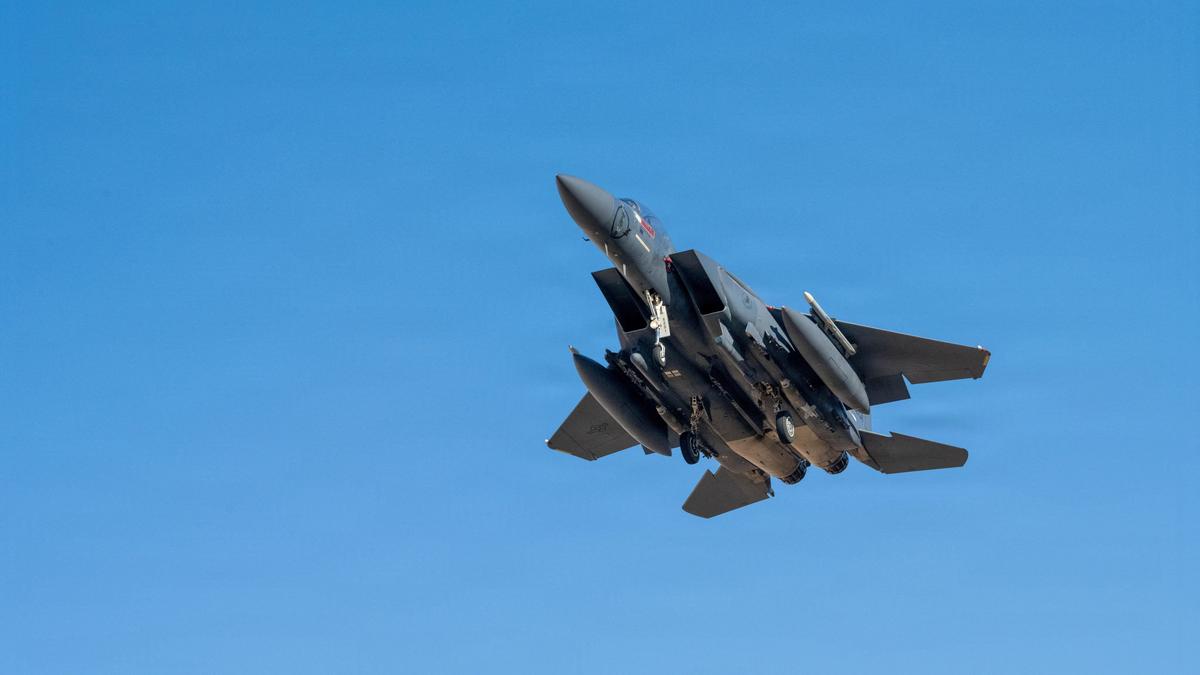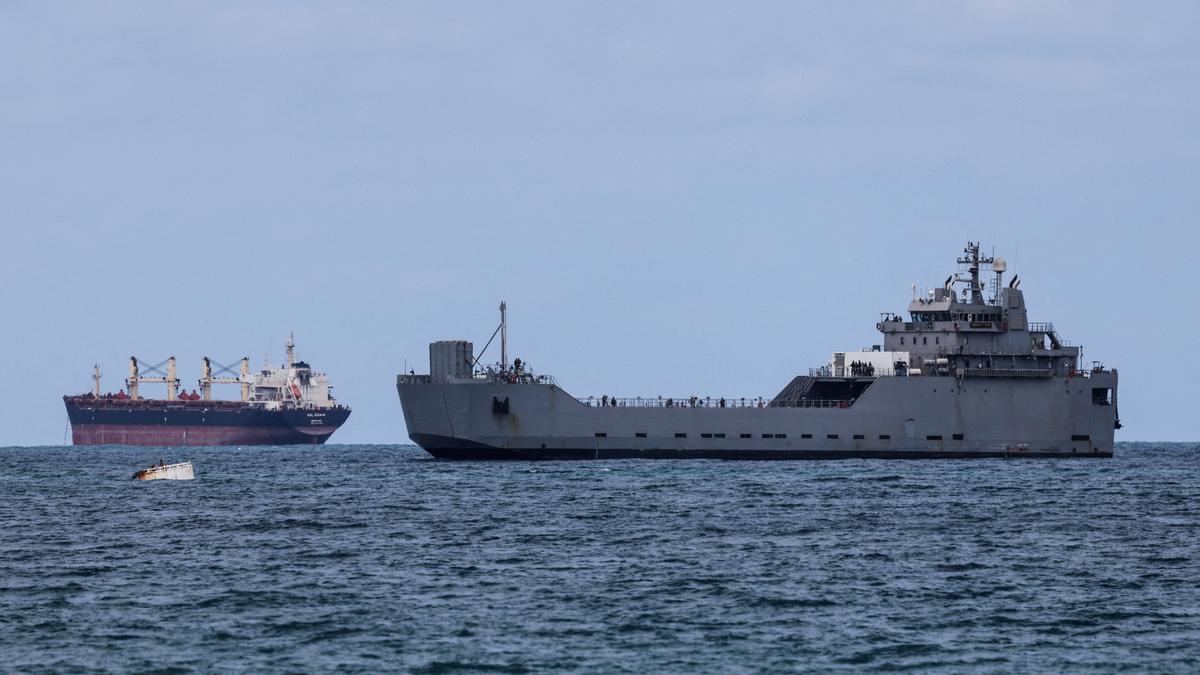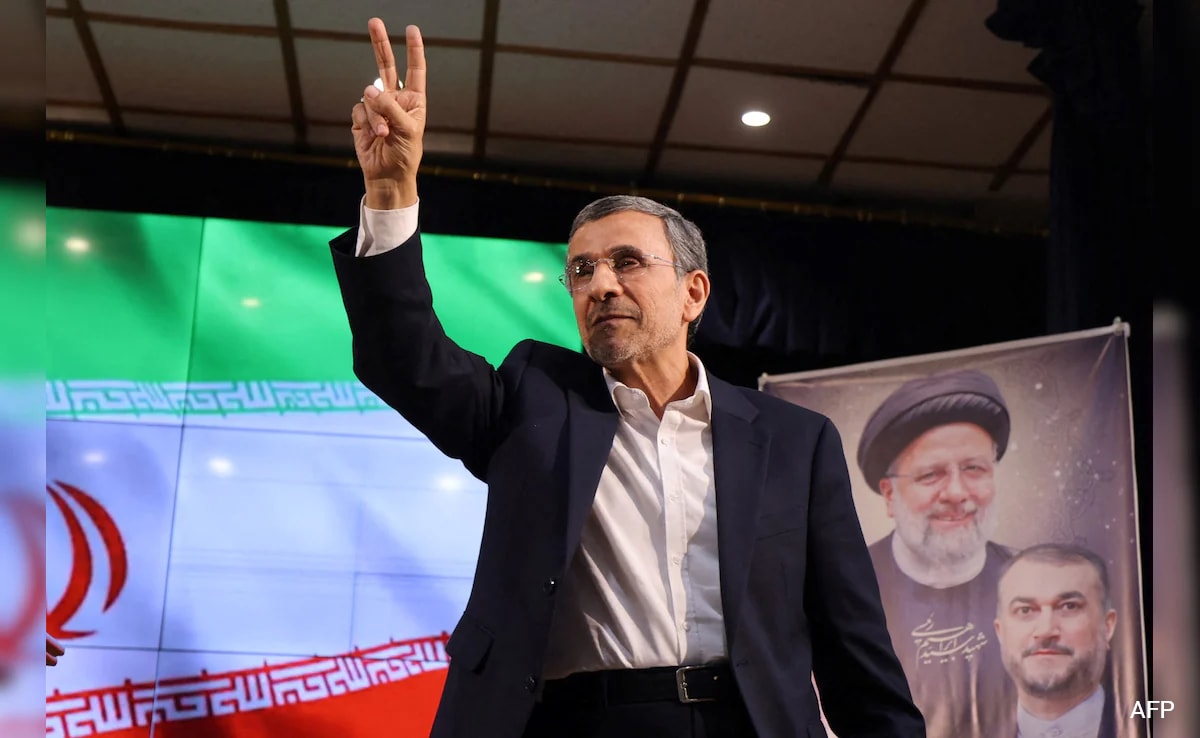
The Washington establishment and Middle East intelligence agencies are reeling from disclosures that the United States and Israel attempted to install Mahmoud Ahmadinejad as the new leader of Iran. Following the February 2026 airstrikes that killed Supreme Leader Ayatollah Ali Khamenei, President Donald Trump hinted at a preference for a successor emerging from within the Islamic Republic. Stripping away the layers of classified briefings and intelligence failures reveals that Western planners intended to use the notorious former hardliner to stabilize a fracturing nation. The scheme collapsed when the operation to extract him went wrong.
The Jailbreak in Eastern Tehran
On February 28, 2026, a precise aerial bombardment struck a residential compound in the Narmak district of eastern Tehran. Initial news flashes suggested that Mahmoud Ahmadinejad, the populist former president who governed Iran from 2005 to 2013, had been targeted for elimination.
The strike was actually a high-stakes rescue mission. Intelligence officials have now confirmed that the operation, drawn up by Israel's Mossad and supported by the White House under the codename Operation Epic Fury, was designed to neutralize the Islamic Revolutionary Guard Corps (IRGC) units guarding Ahmadinejad's home. The populist firebrand had spent years under strict house arrest after falling out with the theocratic elite.
Western intelligence viewed the strike as an armed extraction. It wiped out the security perimeter and left the main residence standing, but the kinetic reality of the attack breached the gap between strategic planning and catastrophe. Ahmadinejad survived the blast but suffered significant injuries. Shrapnel and the sheer chaos of the assault left the former leader alienated. Associates indicate that while he understood the strike was an attempt to liberate him, the bloodshed on his doorstep caused him to sour on the entire enterprise. He vanished into the administrative fog of wartime Tehran.
Why Washington Bet on an Anti-Western Populist
The choice of Ahmadinejad baffled conventional foreign policy analysts. During his presidency, he was defined by his aggressive pursuit of nuclear enrichment, Holocaust denial, and public declarations that Israel should be wiped off the map.
The Trump administration viewed him through a purely functional lens. White House planners believed his unique blend of domestic credentials made him the only figure capable of managing Iran's volatile social, political, and military apparatus after a decapitation strike.
He was not seen as a Western puppet, but as a nationalist counterweight. The strategic calculations relied on several distinct factors:
- Domestic Legitimacy: Unlike exiled monarchists or Western-backed dissident groups, Ahmadinejad retained a genuine populist following among Iran's rural poor and working-class families.
- Anti-Establishment Rebranding: Since leaving office, he had systematically attacked the clerical establishment for systemic corruption and economic mismanagement, positioning himself as an internal reformer.
- Institutional Resilience: Washington desperately wanted to avoid a total institutional collapse similar to the 2003 invasion of Iraq. They needed someone who could command the remnants of the regular military and civilian bureaucracy.
Ahmadinejad had spent years quietly signaling a transactional approach to Donald Trump. In a 2019 interview, he praised Trump as a "man of action" and a "businessman" who understood cost-benefit calculations. By 2024, he openly advocated for direct economic negotiations with Washington if Trump returned to office. His international itineraries in 2024 and 2025 included trips to Hungary and Guatemala. Both nations maintain deep intelligence ties with Israel, and these travels served as the quiet conduit for exploring a postwar transition.
The Three-Phase Fantasy of Regime Change
Operation Epic Fury was built on a rigid, multi-stage blueprint for state collapse.
First, a devastating air campaign would eliminate the supreme clerical leadership, which occurred with the assassination of Khamenei. Second, a coordinated mobilization of Kurdish forces on the periphery, combined with targeted strikes on energy infrastructure, would paralyze the remaining regime loyalists. Third, the resulting power vacuum would be filled by Ahmadinejad, who would step forward to preserve national sovereignty while quietly negotiating an end to Iran's nuclear capabilities.
The plan severely underestimated the structural integrity of the Iranian state. The anticipated internal upheaval failed to materialize. Instead of fracturing, the remaining military leadership and veteran IRGC commanders consolidated power, appointing figures like Parliament Speaker Mohammad Bagher Ghalibaf to manage the immediate military response. The expected Kurdish mobilization never occurred, leaving the political architecture of the transition entirely stranded.
The Precedent of Pliable Strongmen
The administration's strategy mirrors recent Latin American policy maneuvers. Planners explicitly compared the Ahmadinejad initiative to the geopolitical shift in Venezuela, where the removal of Nicolas Maduro paved the way for Delcy Rodriguez to take administrative control and manage a stabilized, transactional relationship with Washington.
The strategy ignores the deep ideological foundations of the Iranian state. Assuming that a former Islamist hardliner could smoothly transition into a Western-aligned technocrat because of shared economic grievances is a profound intelligence failure. Mossad Director David Barnea privately insisted to associates that the operation had an excellent chance of success had the extraction gone smoothly, but the line between a brilliant geopolitical gambit and a catastrophic miscalculation remains razor-thin.
The current whereabouts of Mahmoud Ahmadinejad remain entirely unknown. The infrastructure of Iran's defense industrial base has suffered massive damage from ongoing strikes, but the political core of the regime remains defiant, proving once again that decapitation strategies rarely deliver the clean transitions envisioned in Washington briefing rooms.
The secret US-Israeli strategy to reshape Iran relied on the ultimate political paradox: using a historical adversary to secure Western interests. This investigative report from the front lines of global diplomacy breaks down how close the world came to seeing a familiar face return to power in Tehran, and the severe miscalculations that left the region on the brink of prolonged conflict.