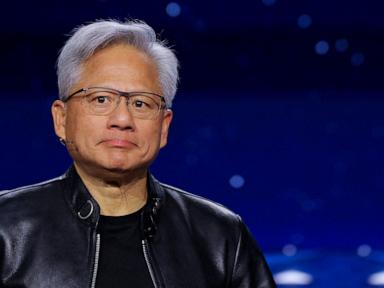
Nvidia CEO Jensen Huang resigned on November 12, 2026, following disclosures of extramarital affairs—including one with a former executive investigated as a suspected Chinese intelligence asset—before the chipmaker's board unanimously reinstated him just eleven days later. The abrupt exit triggered a historic market rout that erased over $1 trillion in shareholder value, exposed deep structural vulnerabilities in Silicon Valley's most critical hardware supplier, and sparked an extraordinary intervention from the White House. While headlines initially focused on personal misconduct, the real story centers on national security compliance, single-point-of-failure corporate governance, and geopolitical leverage.
Anatomy of a Trillion-Dollar Shock
Markets do not erase a trillion dollars over a standard corporate ethics violation. They react to existential risk. When the New York Times first reported on October 29 that Huang had been involved with a woman suspected of spying for China, institutional investors immediately recognized the threat to Nvidia's supply chain and regulatory standing. You might also find this similar coverage insightful: Stop Falling for Fake Executive Scandal Rumors Like the Jensen Huang Resignation Hoax.
The woman at the center of the national security inquiry, Alice Huang, previously served as an executive at Megaspeed. Founded in 2023 and headquartered in Singapore, Megaspeed operated as Nvidia's primary business partner in Southeast Asia. Federal investigators have been examining whether Megaspeed functioned as a pass-through entity to help Chinese companies access its $4.8 billion stockpile of advanced Nvidia processors, circumventing strict United States export controls.
For years, Washington has restricted the sale of top-tier artificial intelligence chips to Beijing to prevent the Chinese military and intelligence services from acquiring superior computational power. Huang, a vocal critic of aggressive export bans who has repeatedly lobbied to ease trade restrictions with China, maintained that he had no knowledge of any intelligence ties. Regardless of his awareness, the optics were devastating. By November 8, Huang issued an apology to his wife of more than four decades. Three days later, reports of a second affair—this time with a company subordinate—surfaced. On November 12, facing concurrent probes from the FBI, Congress, and internal legal counsel, Huang stepped down as chief executive, president, and board member. As discussed in detailed coverage by Mashable, the results are significant.
Wall Street's reaction was swift and unforgiving. Nvidia suffered its worst trading week since the 2008 financial crisis. The sell-off was not merely a vote of no confidence in the interim leadership of Chief Financial Officer Colette Kress. It was a cold calculation of how much value resided exclusively inside one man's head.
The Myth of the Indispensable Founder
Most Fortune 500 companies operate as bureaucracies designed to survive the sudden loss of an executive. Nvidia was built to prevent one.
During his tenure, Huang dismantled traditional middle management in favor of an extraordinarily flat organizational chart. More than 60 senior executives report directly to him, spanning silicon engineering, networking architecture, and proprietary software ecosystems like CUDA. This structure eliminated bureaucratic drag and allowed Nvidia to outmaneuver legacy semiconductor giants over the past decade. Yet the same mechanism that generated unmatched operational speed also created a massive single point of failure.
When Kress stepped into the interim role and longtime tech investor Harvey Jones was appointed as the company's first-ever board chair, the board announced a formal search for a permanent replacement. Almost immediately, institutional reality set in. Internal candidates lacked the cross-disciplinary command required to synchronize chip fabrication timelines with hyperscaler software demands. Huang's own children, Madison and Spencer, work at the company in their mid-thirties, making dynastic succession impossible. External candidates, meanwhile, faced the daunting prospect of inheriting a flat 60-person executive direct-report structure while navigating active federal espionage inquiries and shareholder class-action lawsuits.
Industry analysts quickly framed Huang's departure not just as a corporate crisis, but as a strategic vulnerability for the United States. Without Huang directing product roadmaps and supply chain allocations at Taiwan Semiconductor Manufacturing Company, analysts warned that domestic artificial intelligence infrastructure buildouts could stall, allowing Chinese competitors to narrow the technological gap.
Political Intervention and Boardroom Whiplash
Corporate governance rules usually dictate that an executive who resigns amid code-of-conduct violations and federal national security probes stays gone. Those rules bent under political and financial pressure.
Following the resignation, additional disclosures trickled out, including reports of at least a third and fourth affair, some involving company employees. Under normal circumstances, each revelation would have cemented Huang's permanent exile. Instead, forces outside Santa Clara began lobbying for his return.
President Donald Trump, a close political ally of Huang who held millions of dollars in Nvidia stock and had previously heard Huang's arguments for easing export rules, publicly and privately weighed in. Trump stated that Huang had assured him he knew nothing about any espionage connection, asserting that the cofounder's management posed no threat to national security. In an interview with CNBC, the President confirmed he had spoken directly with Nvidia's board regarding the matter.
Behind closed doors, the board faced an impossible choice. Upholding standard governance protocols meant watching hundreds of billions of dollars in market capitalization evaporate while competitors circled their enterprise customers. Reinstating Huang meant humiliating the board, alienating institutional governance watchdogs, and inviting intense scrutiny from credit rating agencies.
On November 22, Huang met with the board and disclosed previously unknown personal relationships. One day later, on November 23, the directors voted unanimously to reinstate him as president, chief executive, and board director. Shares surged more than 30 percent on the announcement, though the rally proved volatile as the reality of ongoing regulatory threats tempered investor euphoria.
Structural Compromises and Ongoing Liabilities
Bringing Huang back solved the immediate leadership vacuum, yet it left Nvidia exposed to severe operational and legal headwinds. To placate Washington and institutional investors, the company instituted structural guardrails that fundamentally alter how it conducts international business.
- The Trade Blacklist: Days before Huang's return, federal authorities placed Megaspeed—the Singaporean firm linked to Alice Huang—onto a strict trade blacklist, severing a major regional distribution channel and signaling that enforcement around third-party chip diversion is tightening.
- Board Oversight: On November 17, prior to the reinstatement vote, Nvidia's board established a dedicated National Security and Export Control Oversight Committee. For the first time in the company's history, international sales and partner vetting will face formal board-level compliance checks rather than resting solely with executive management.
- Credit and Legal Exposure: Standard & Poor's placed Nvidia on CreditWatch negative following the leadership whiplash, citing severe governance risks and ongoing scrutiny over export control compliance. Simultaneously, shareholder class-action lawsuits allege that the company failed to disclose material risks tied to executive conduct and third-party distribution partners.
- Congressional Testimony: Huang has agreed to testify before Congress next month. Under oath, he will face pointed questioning regarding what he knew about Megaspeed's inventory movements, whether sensitive technical or commercial roadmap details were compromised, and how the company plans to prevent illegal chip transfers to China.
The Succession Paradox
Perhaps the most revealing moment of the entire saga occurred during Huang's first all-hands meeting after reclaiming his title. Addressing thousands of employees, Huang struck a contrite tone regarding his personal conduct, noting he had entered therapy, before pivoting to a defiant defense of his management philosophy. He told staff flatly that Nvidia does not need a traditional succession plan.
His reasoning rests on the idea that his 60-person direct-report bench already distributes technical authority across the enterprise. Yet the events of November 2026 proved the exact opposite. When Huang vanished for eleven days, the company's valuation collapsed, its board panicked, and the President of the United States felt compelled to intervene to stabilize the firm. A system that requires a single individual to violate standard corporate governance protocols just to keep the stock price from cratering is not decentralized. It is fragile.
Investors and policymakers now confront an uncomfortable reality at the heart of the artificial intelligence economy. The world's most valuable computing infrastructure relies on a founder who refuses to build an institutional successor, overseen by a board that proved unwilling to enforce its own code of conduct when the market threatened to punish them for it. Until Nvidia separates its operational survival from one executive's personal judgment, every geopolitical flare-up and congressional subpoena will carry the exact same systemic risk.