Donald Trump is walking into high-stakes trade diplomacy with Beijing carrying a political hand grenade he helped prime himself. No, the White House will not suddenly sever American semiconductor ties with China, despite mounting bipartisan outrage in Washington over the Nvidia intelligence and smuggling scandals. Instead, expect a calculated, transactional tightening of indirect chip access paired with aggressive revenue-sharing arrangements designed to preserve market capitalization at home while appeasing national security hawks on Capitol Hill.
Surface-level coverage frames this moment as a simple binary choice between corporate greed and national defense. That reading misses the structural reality of global compute. Over the past three decades watching trade wars mutate from steel tariffs to silicon blockades, one rule has remained constant in Washington. Economic gravity eventually bends ideological red lines.
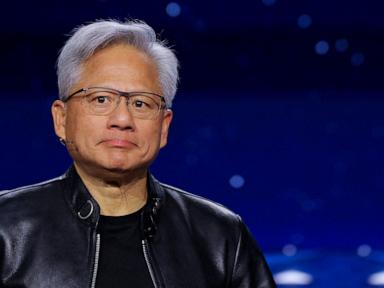
Right now, two separate crises involving Nvidia have collided at the worst possible moment for executive branch diplomacy. First came the boardroom upheaval surrounding CEO Jensen Huang, who stepped down following revelations of extramarital affairs, including a relationship with a Chinese businesswoman suspected by intelligence officials of working for Beijing. Eleven days later, following direct intervention from the White House, Nvidia’s board reinstated him. Second, federal investigators exposed massive smuggling networks—most notably involving Megaspeed and its Southeast Asian subsidiaries—that routed restricted artificial intelligence hardware into mainland data centers.
The Anatomy of a Reinstatement
Washington rarely witnesses a sitting president publicly lobby a corporate board to rehire an ousted chief executive, especially one tangled in a counterintelligence scandal. Yet Trump made the call, privately warning advisors that a sustained collapse in Nvidia’s valuation posed a systemic threat to the broader American economy.
Wall Street breathed a sigh of relief. Capitol Hill erupted.
By stepping in to rescue Huang, the administration handed incoming congressional majorities and defense hawks a potent political weapon. Lawmakers from both parties spent weeks drafting aggressive amendments to the annual defense authorization bill, aiming to strip the executive branch of its discretion over semiconductor licensing. When the White House intervenes to protect a single company’s stock price amid a suspected espionage incident, claims of unwavering toughness on Beijing become much harder to sell to voters.
Yet looking purely at the domestic optics obscures the administration’s actual negotiating posture. Trump views advanced processors not merely as strategic military assets, but as premier American export commodities that can be monetized to shrink trade deficits. Throughout 2025 and 2026, U.S. export policy swung wildly between outright bans and creative toll-collecting. After halting H20 chip sales in April 2025, the administration reversed course months later under a novel arrangement where the federal government claimed a 15 percent cut of the revenue. By December 2025, case-by-case approvals for more powerful H200 processors carried a 25 percent federal surcharge.
That is the real doctrine guiding the White House. Containment is negotiable if the price is right.
How Silicon Slips Through the Net
To understand why the Megaspeed diversion scandal forced the Commerce Department to tighten rules just ahead of leadership talks in Shenzhen, you have to look at how modern data centers actually buy compute. Nobody is smuggling liquid-cooled server racks in carry-on luggage.
They use shell corporations, sovereign cloud leases, and third-country intermediaries.
Under earlier export regimes, a Chinese tech giant barred from buying advanced American graphics processing units directly could simply incorporate a subsidiary in Malaysia, Thailand, or the Middle East. That subsidiary would purchase thousands of high-end accelerators legally, install them in a regional data center, and rent out the computing power remotely via fiber-optic cables back to engineers in Beijing or Shenzhen. On paper, the chips never crossed into mainland China. In practice, Chinese artificial intelligence models trained on American silicon without interruption.
The AI diffusion framework recently rolled out by the Commerce Department attempts to plug this exact leak. By blacklisting intermediaries like Megaspeed and restricting remote access through overseas data centers, regulators finally acknowledged that physical borders mean very little in cloud computing.
The Enforcement Blind Spot
Closing the remote-access loophole sounds decisive in a press release, yet enforcement remains a nightmare. Hardware manufacturers design chips; they do not operate global intelligence agencies. Once a server pallet leaves a loading dock in Taiwan and clears customs in Singapore or Kuala Lumpur, tracking its ultimate end-user requires physical audits that host governments frequently resist.
Proposed legislation like the Chip Security Act aims to mandate cryptographic location-verification technology directly onto the silicon die. In theory, a processor could ping a secure server to confirm its geographic coordinates before unlocking full computational performance. In reality, industry engineers point out that firmware locks invite immediate reverse-engineering, alienate legitimate allied buyers who refuse to install American kill-switches in sovereign infrastructure, and create catastrophic points of failure if authentication servers go offline.
Beijing’s Asymmetric Counterweight
While Washington debates firmware locks and boardroom ethics, Beijing holds a trump card that requires zero lines of software code to deploy.
Rare earth elements and critical processing capacity remain the Achilles' heel of Western manufacturing. Every advanced semiconductor fab, fighter jet radar array, and electric vehicle motor relies on materials like dysprosium, lutetium, and gallium—supply chains where China maintains overwhelming refining dominance.
During the temporary trade truce negotiated earlier in the cycle, Beijing suspended its harshest export licensing restrictions on critical minerals, keeping global supply lines humming through January 2027. Chinese negotiators made sure Washington understood that this suspension is a leash, not a gift. When Trump and Xi Jinping met in Shenzhen, the conversation did not center on ideological supremacy. It centered on mutual hostage-taking.
If the White House caves to congressional pressure and imposes a total, suffocating embargo on all semiconductor equipment and mid-tier AI chips, Beijing does not need to invade a neighbor or dump Treasury bonds to retaliate. The Ministry of Commerce simply slows down export licenses for refined gallium and rare earth magnets. Within ninety days, assembly lines in Arizona, Texas, and Ohio begin to stall.
The Allied Dilemma
Washington’s unilateral instincts also collide with the commercial survival of its closest allies. Consider the position of ASML, the Dutch monopoly that builds extreme ultraviolet lithography machines essential for printing microscopic circuits. China accounted for roughly 30 percent of ASML’s sales in fiscal 2025. Similarly, South Korean memory giants Samsung Electronics and SK Hynix operate massive fabrication plants inside mainland China, relying on annual U.S. waivers just to keep their existing production lines supplied with replacement parts.
Every time Washington tightens the screws without compensating allied firms for lost revenue, diplomatic cohesion frays. European and Asian officials increasingly view American export controls not as collective security measures, but as industrial policy designed to kneecap foreign competitors while carving out lucrative revenue-sharing exemptions for favored U.S. champions.
What Toughness Actually Looks Like
Expecting Trump to suddenly adopt a purist, zero-trade posture toward Beijing misunderstands both his political instincts and the economic math sitting on the Resolute Desk. A total decoupling would crater the valuation of America’s most important tech sector, trigger immediate mineral shortages across the defense industrial base, and hand Chinese domestic chipmakers like Huawei a captive, protected home market with zero foreign competition.
Instead, the administration is pursuing a messy, three-part middle path:
- Targeted Loophole Closures: Crack down aggressively on third-party shell companies and overseas cloud proxies to give congressional hawks visible enforcement wins.
- Monetized Access: Keep tightly controlled, high-margin lanes open for older-generation processors, extracting direct tariffs or revenue shares that flow straight into the U.S. Treasury.
- Supply Chain Deterrence: Use the threat of total equipment blacklists—such as the proposed MATCH Act—as a bargaining chip to force Beijing into extending rare earth export licenses past the January 2027 deadline.
This strategy satisfies almost no one in Washington’s think-tank echo chamber. National security purists view any chip sale to China as handing ammunition to an adversary. Free-market executives loathe the precedent of government officials dictating corporate leadership and taking a cut of top-line revenue.
Yet until American mining and refining capacity can match Chinese mineral dominance, and until Washington decides whether it values stock market stability more than technological containment, semiconductor policy will remain an exercise in managed contradiction. Watch the rare earth export registries in Beijing and the final markup of the defense authorization bill in Congress over the next thirty days—those two documents will tell you far more about the future of the AI race than any handshake on a diplomatic stage.