Twelve o’clock sharp. That is the exact moment the historic Theresienwiese grounds in Munich transform from a sprawling fairground into the epicenter of global revelry. If you have never stood shoulder-to-shoulder with thousands of anxious strangers inside the packed Schottenhamel tent, waiting for a wooden mallet to hit brass, you are missing one of the rawest traditions left in modern Europe.
Munich's Oktoberfest doesn't just start; it erupts. When the mayor raises that heavy wooden hammer to strike the very first beer keg, millions of liters of golden brew are officially unlocked for the world. Let us look past the tourist brochures and examine what this chaotic, historic opening ritual actually means for the millions who flood Bavaria every autumn.
The Anatomy of O'zapft is
The magic words you need to know are O’zapft is!—Bavarian dialect for "It's tapped!"
Before those words ring out from the stage, not a single drop of beer can legally be served across any of the festival tents. Think about that for a second. Millions of thirsty visitors sit at long wooden tables with empty one-liter Mass mugs in hand, staring at closed taps, waiting entirely on the municipal government to give the green light.
The ritual dates back to 1950 when Mayor Thomas Wimmer decided to take a mallet to a barrel inside the Schottenhamel tent. He needed a clumsy 17 strikes to get the job done. Modern politicians face intense media scrutiny over their striking efficiency. The unofficial gold standard belongs to former mayors Christian Ude and Dieter Reiter, who managed to drive the tap home in a legendary two strikes.
When the current mayor lands that final blow, twelve loud gun salutes echo from the steps of the nearby Bavaria statue. That audio cue tells the other massive tents—from Hofbräu to Augustiner—that they are finally allowed to open their spigots and start pouring.
Why the First Keg Matters More Than the Beer
Most casual observers think Oktoberfest is purely an excuse to drink heavy lagers and eat massive pretzels. That is only half the story. The opening ceremony is a masterclass in local politics, municipal pride, and deep-seated cultural preservation.
The premier liter of freshly tapped beer always goes straight to the Minister-President of Bavaria, a tradition upheld strictly since 1980. It is a public display of alignment between Munich's city government and the broader Bavarian state leadership.
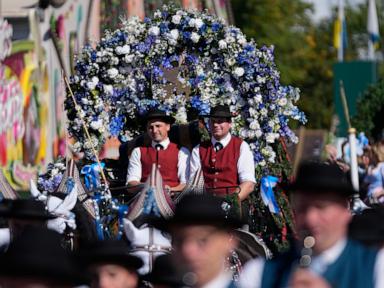
For international visitors standing in the crowd, the atmosphere is sensory overload. Brass bands strike up traditional oompah tunes instantly, locals dressed in authentic Lederhosen and Dirndls link arms on benches, and the air smells intensely of roasted almonds, grilled pork sausages, and damp wool.
Surviving the Madness on the Ground
If you plan on heading to Munich for the opening weekend, throw away any ideas of casually walking into a tent at noon. Regulars queue up outside the big tents as early as dawn to secure a spot. Security is tight, backpacks are heavily restricted, and finding an empty seat once the doors open is practically a contact sport.
Prices climb every year, with a single liter costing between €14.80 and €15.90. Yet, despite the commercialization and the millions of global tourists who descend on Munich, the core soul of the festival remains stubbornly local. The songs played by the bands are decades old, the rules of the tents are strictly enforced by no-nonsense servers, and the communal spirit kicks in the second you clink your heavy glass mug with a complete stranger.
Keep your eyes on the mallet strike, listen for the cannon fire, and make sure you have your first liter ordered before the tables fill to absolute capacity.
Munich Oktoberfest opening highlights and keg tapping ceremony
This video captures the lively atmosphere and the exact moment Munich's mayoral tradition kicks off the global celebration.