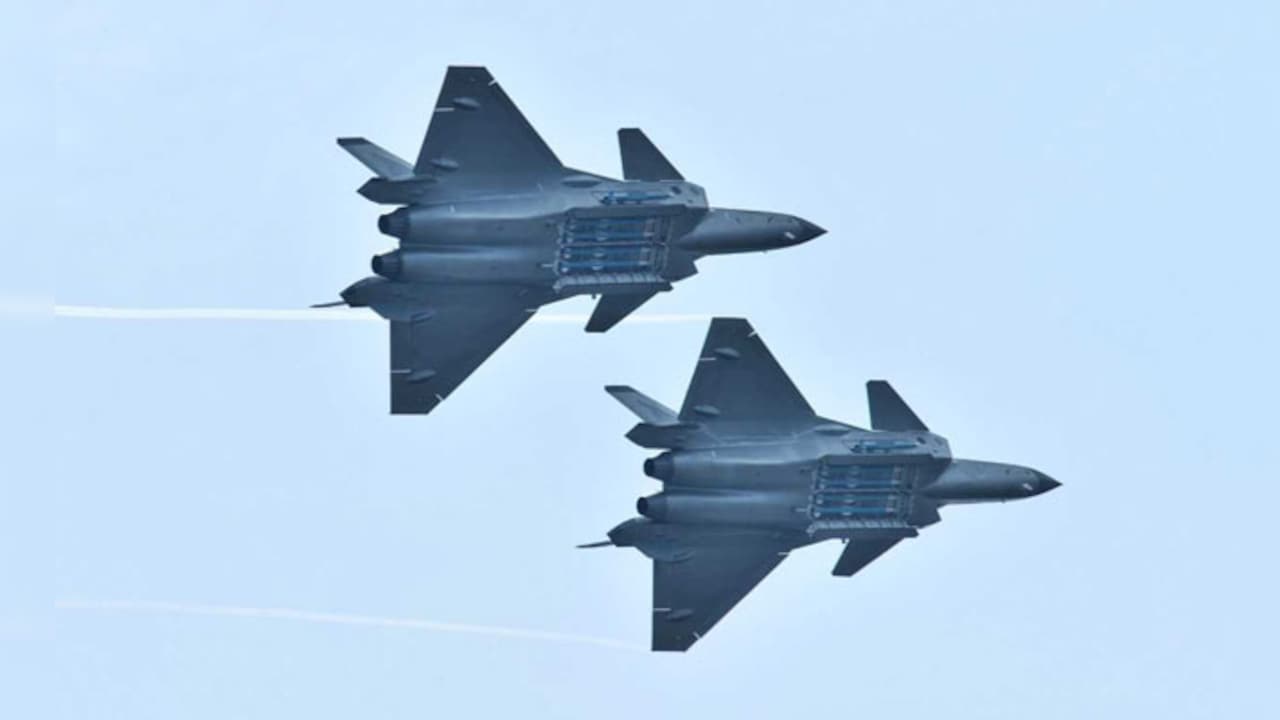
In the late 1980s, India and China shared almost the exact same dream. Both nations wanted to stop relying on Soviet hardware and build their own frontline combat jets from scratch. They needed domestic military jet engine programs to achieve real strategic autonomy. Four decades later, the contrast is stark.
China fields roughly 500 operational fifth-generation J-20 stealth fighters, backed by its indigenous WS-15 turbofan engines. India, on the other hand, relies on imported General Electric engines to power its Light Combat Aircraft (LCA) Tejas, while the indigenous Kaveri engine project remains stuck without ever reaching active combat deployment.
How did two countries starting from similar baseline technologies in the 1980s end up so far apart? The gap didn't open overnight. It stems from drastically different political approaches, industrial risk tolerance, and long-term research strategies.
Failure as Data Versus Failure as Embarrassment
Building a high-performance jet engine is often considered harder than constructing a nuclear weapon. Turbine blades must endure temperatures exceeding the melting point of their own metals while rotating thousands of times per minute under extreme pressure. There are no shortcuts here.
China's early attempts were notoriously messy. The WS-10 engine suffered from terrible reliability issues in its first iterations. Turbine blades cracked, engines seized during flight tests, and maintenance lifespans were measured in mere dozens of hours rather than thousands.
Beijing treated these early breakdowns as valuable engineering data rather than total project failures. They forced domestic airframes to fly with imperfect local engines, iterating continuously through hundreds of design tweaks. Over two decades, Chinese engineers improved engine overhaul lives from tens of hours to roughly 3,600 hours.
India chose a safer short-term path. When the Gas Turbine Research Establishment (GTRE) struggled to hit the required 90 to 95 kilonewton thrust target for the Kaveri engine, the Indian Air Force couldn't afford to wait. Operational readiness was priority number one. India turned to foreign powerplants, selecting the American GE F404 and later F414 engines to keep the Tejas program moving.
While that call preserved immediate air defense capabilities, it effectively starved the Kaveri project of operational flight testing and real-world development cycles.
The Cold Reality of Scale and Supply Chains
Aerospace development isn't just about design blueprints; it's heavily constrained by raw materials and manufacturing scale. Single-crystal turbine blades, advanced thermal barrier coatings, high-pressure compressors, and bladed disk (BLISK) manufacturing require immense industrial capital.
China poured billions into building an end-to-end domestic supply chain for metallurgy, rare earth processing, and precision machining. When Western sanctions hit or foreign technical assistance stalled, Chinese state enterprises absorbed the delays and funded parallel research lines until indigenous alternatives matured.
India's defense ecosystem remained heavily reliant on state-run monopolies like Hindustan Aeronautics Limited (HAL) without sufficient private sector integration. Key technologies like single-crystal blade casting took decades to develop locally, forcing defense agencies into repeated cycles of seeking foreign joint ventures that frequently ran into export control roadblocks.
Where the Airpower Asymmetry Stands Today
The operational consequences of this divide are now impossible to ignore along the disputed Himalayan border.
- China's Stealth Mass: The People's Liberation Army Air Force (PLAAF) operates an estimated 500 J-20 fighters. Chengdu Aircraft Corporation reportedly pumps out 100 to 120 airframes a year across multiple assembly lines, moving swiftly toward its carrier-capable J-35 platform.
- India's Fighter Deficit: India's fifth-generation project, the Advanced Medium Combat Aircraft (AMCA), remains years away from operational service, leaving the Indian Air Force dependent on fourth-generation platforms like the Su-30MKI and Rafale.
- Engine Independence: China is actively transitioning its J-20 fleet to the domestic WS-15 engine, eliminating dependence on Russian designs. India continues to await engine deliveries from foreign suppliers to power its production Tejas Mk1A units.
Building an Engine Ecosystem for the Next Decade
Catching up doesn't mean repeating the mistakes of the past 40 years. India cannot simply throw money at an isolated laboratory and expect a modern jet engine to appear overnight.
Real strategic progress requires a structural shift in how defense R&D works:
- Involve Private Consortia Early: The Ministry of Defence's move to invite private sector consortia into the AMCA prototype phase is a step in the right direction. Expanding high-precision manufacturing contracts to private aerospace firms builds broader industrial capacity.
- Accept Incremental Engine Testing: Instead of demanding a fully mature 110 kN engine from day one, testing lower-thrust derivative engines like Kaveri 2.0 on unmanned combat aerial vehicles (UCAVs) or trainer jets builds crucial flight data without risking frontline pilots.
- Focus on Co-Development with IP Transfer: True joint ventures must guarantee complete technology transfer for core metallurgy and hot-section manufacturing, ensuring future engine upgrades stay entirely under local control.
Aerospace leadership can't be bought off the shelf. It is accumulated through decades of uncomfortable failures, persistent capital investments, and a willingness to fly imperfect hardware until it becomes world-class.